





The LITIM Podcast
The Open Window
英検レベル別の解説
ポッドキャストで話している解説を、英検3級・2級・1級の3つのレベルの英語で書き直しました。 内容は同じなので、レベルを切り替えて読み比べられます。 色のついた単語をタップすると、やさしい英語で意味が出ます。
※ ポッドキャストの音声とは別の文章です。音声と同じ英文は ポッドキャストの原稿で読めます。
解説 1
The Open Window Story Summary
The Open Window is a short story by Saki. It came out in 1911. Saki is not the writer's real name. His real name is H. H. Munro. He was a British writer. His stories are funny, and they often have surprising endings. This is one of his most famous stories.
A man named Framton Nuttel is very nervous. He goes to the country for a rest. His sister gives him some letters. With these letters, he can meet the families there. He visits the house of Mrs. Sappleton. Her niece, Vera, meets him first. She is fifteen years old.
They wait for Mrs. Sappleton. While they wait, Vera tells him a strange and sad story. "Three years ago, my aunt's husband and her two young brothers went out to hunt. They did not come home again. They fell into very wet, soft ground and were lost."
Vera says, "My aunt still thinks they will come back some day. So she always keeps the big window open."
Framton feels very sorry for Mrs. Sappleton. Then Mrs. Sappleton comes into the room. She is happy and full of life. She talks about her husband and her brothers. She talks about them like they are still alive.
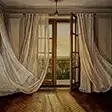
And then, three people slowly walk across the grass toward the open window.
解説 2
The Niece's Ghost Story
In this part, Vera tells Framton a sad story about the family.
"Three years ago," she says, "my aunt's husband and her two young brothers went out to hunt birds. They went out through this big window. But that day, the ground was very wet and soft. It was dangerous. They went down into it, and no one ever found them."
Vera says, "My aunt cannot believe they are dead. She thinks they will come home some day. So every evening, she keeps the big window open for them."
Framton feels very sorry for the poor woman. He thinks Vera is a kind and serious girl. He believes all of her story.
解説 3
The Returning Hunters
Soon Mrs. Sappleton comes into the room. She is happy and bright. "I'm sorry I'm late," she says.
She tells Framton, "I am waiting for my husband and my brothers. They are out hunting. They will come back through the window very soon. They always do."
Framton is very surprised. He thinks, "This poor woman lives in a sad dream." He wants to talk about something else. So he talks about his own health problems.
But Mrs. Sappleton does not really listen. She looks at the open window again and again.
Then her face lights up. She is very happy. "Here they are!" she cries.
Framton turns and looks. Through the window, he sees three people in the evening light. They are walking across the grass. They have guns. A little dog is running with them.
解説 4
Framton's Flight & the Twist
Framton sees the three people. They are walking to the window. He is very, very afraid. He thinks they are ghosts. "They are dead men, and they are coming back!" he thinks. It is just like Vera's story.
He does not say a word. He takes his hat and his stick and runs out of the house. He almost hits a man on the road.
Mrs. Sappleton's husband comes in through the window. "Who was that strange man?" he asks.
"A very strange man," Mrs. Sappleton says. "He only talked about his health. Then he ran away. He did not even say goodbye."
Then there is a surprise. Vera speaks to the family very calmly. She says, "Once, some wild dogs ran after that man in a place with many graves. So now he is afraid of dogs." This story is not true, either. Vera made up everything.
At the end, Saki writes a famous line. It says that Vera is very good at making up exciting stories very quickly.
Vera is not a sad girl with no parents. She is a very clever liar. She makes up stories just for fun.
解説 1
The Open Window Story Summary
The Open Window is a short story by Saki, first published in 1911. Saki was the pen name of H. H. Munro, a British writer famous for his clever humor and unexpected endings. This story is among his best-known works.
The main character is Framton Nuttel, a nervous man who has come to the countryside to rest his mind. His sister has given him letters of introduction so that he can meet some of the local families. When he arrives at Mrs. Sappleton's house, he is greeted by her fifteen-year-old niece, Vera.
While they are waiting for Mrs. Sappleton to come down, Vera tells him a strange and tragic story. According to her, three years ago Mrs. Sappleton's husband and her two young brothers went out hunting across the moor and never returned. They were swallowed up by a bog.
Vera explains that her aunt still believes they will come back one day. That is the reason she always leaves the large French window open.
Framton listens with growing sympathy. Then Mrs. Sappleton enters the room, cheerful and full of energy, and starts talking about her husband and brothers as if they were still alive.
And then, through the open window, three figures can be seen slowly walking across the lawn.
解説 2
The Niece's Ghost Story
In this part of the story, the young niece Vera tells Framton a tragic tale about her family.
She explains that three years ago, Mrs. Sappleton's husband and her two young brothers went out to shoot birds. They left the house through the very same French window. On that particular day, however, the ground was extremely dangerous. The three men sank into a bog, and their bodies were never found.
According to Vera, her aunt cannot accept what happened. She still believes they will return home someday, which is why she leaves the great window open every evening, waiting for them.
Framton feels deep sympathy for the poor woman. He sees Vera as a kind and serious girl, and he believes every word she says.
解説 3
The Returning Hunters
Before long, Mrs. Sappleton comes into the room. She is bright and cheerful, and she apologizes for having kept him waiting so long.
She explains that she is waiting for her husband and brothers to come back from hunting. She tells Framton they will return through the window at any moment, just as they always do.
Framton is shocked to hear this. He thinks the poor woman must be living in a sad dream, so he tries to change the subject by talking about his own weak nerves.
However, Mrs. Sappleton barely pays attention. Her eyes keep turning toward the open window.
Then, all of a sudden, her face lights up with joy. "Here they are at last!" she cries.
When Framton turns around, he sees three figures walking across the lawn in the evening light. They are carrying guns, and a little dog is running beside them.
解説 4
Framton's Flight & the Twist
When Framton sees the three figures coming toward the window, he is filled with terror. He believes they are ghosts returning from the dead, exactly as Vera described.
Without a word, he grabs his hat and walking stick and rushes out of the house in a panic. As he runs away, he almost knocks down a man on the road.
Mrs. Sappleton's husband steps in through the window, wondering who that strange man was.
"A most extraordinary man," she says. "He could only talk about his illnesses, and he dashed off without even saying goodbye."
Then comes the twist. Vera calmly explains to the family that Framton was once chased by a pack of wild dogs in a graveyard, and that ever since, he has been terrified of dogs. In fact, this story is also a lie. Vera made up everything from beginning to end.
The story closes with Saki's famous line: "Romance at short notice was her speciality."
Vera, it turns out, is not a sad orphan but a brilliant young liar who invents stories for her own amusement.
解説 1
The Open Window Story Summary
The Open Window, which first appeared in print in 1911, is a short story by Saki, the nom de plume of H. H. Munro, a British author renowned for his mordant wit and his penchant for confounding his readers' expectations at the last moment. It remains one of his most celebrated pieces.
The tale concerns Framton Nuttel, a man of fragile nerves who has retreated to the countryside in pursuit of a rest cure. Armed with letters of introduction furnished by his sister, he presents himself at the residence of Mrs. Sappleton, where he is received by her composed fifteen-year-old niece, Vera.
As they await the lady of the house, Vera regales him with a peculiar and harrowing account. Three years earlier, she relates, her aunt's husband and two young brothers set out across the moor on a shooting expedition, never to return; all three were engulfed by a treacherous bog.
Her aunt, Vera confides, clings to the conviction that they will one day come home, and it is for this reason that the large French window is perpetually left open.
Framton listens with mounting compassion. Presently Mrs. Sappleton sweeps into the room, brisk and vivacious, and proceeds to chatter about her husband and brothers as though they were very much alive.
And then, beyond the open window, three figures can be discerned advancing unhurriedly across the lawn.
解説 2
The Niece's Ghost Story
In this episode, the youthful Vera entertains Framton with a melancholy chronicle of her family's misfortune.
Three years ago, she recounts, her aunt's husband and two young brothers sallied forth to shoot game, departing through that very French window. That day, however, the terrain was perilously treacherous; the trio floundered into a bog and vanished without a trace, their remains never recovered.
Her aunt, Vera intimates, has never reconciled herself to the truth. Still harbouring the conviction that they will someday reappear, she keeps the great window ajar each evening in poignant anticipation of their return.
Framton is overcome with commiseration for the bereaved woman. Taking Vera for an earnest and kind-hearted girl, he accepts her account without the faintest suspicion.
解説 3
The Returning Hunters
Before long, Mrs. Sappleton bustles into the room, radiant and effervescent, offering profuse apologies for her tardiness.
She informs Framton that she is expecting her husband and brothers back from their shoot, and that they will doubtless stride in through the window at any moment, as is their invariable custom.
Framton is aghast. Convinced that the unfortunate woman inhabits a pitiful delusion, he endeavours to steer the conversation elsewhere, embarking on a laborious account of his own frayed nerves.
Mrs. Sappleton, however, scarcely attends to a word; her gaze strays incessantly toward the open window.
Abruptly, her countenance is suffused with delight. "Here they are at last!" she exclaims.
Framton wheels around. Through the window, bathed in the dusky glow of evening, three figures are making their way across the lawn, guns in hand, a small dog trotting at their heels.
解説 4
Framton's Flight & the Twist
At the sight of the three figures approaching the window, Framton is seized by sheer terror, convinced that they are spectres returning from the grave precisely as Vera foretold.
Without uttering a syllable, he snatches up his hat and walking stick and bolts from the house in headlong panic, very nearly colliding with a passer-by on the road outside.
Mrs. Sappleton's husband strolls in through the window, puzzled as to the identity of the peculiar visitor.
"A most extraordinary man," his wife remarks; "he could talk of nothing but his illnesses, and he dashed off without so much as a goodbye."
Then comes the masterstroke. With unruffled composure, Vera informs the family that their guest once endured the ordeal of being hunted by a pack of pariah dogs in a graveyard, leaving him with an abiding horror of the creatures. This account, too, is a sheer fabrication; Vera has concocted the entire affair from first to last.
The tale concludes with Saki's celebrated quip: "Romance at short notice was her speciality."
Vera, far from being a pitiable orphan, is revealed as a prodigiously gifted young fabulist who spins fictions purely for her own diversion.
