

















The LITIM Podcast
The Tell-Tale Heart
ポッドキャストの原稿
英検 2級〜準1級レベル · CEFR B1-B2(原稿の単語から判定した目安)
The LITIM Podcast のこの回で読んでいる英語の全文です。 色のついた単語をタップすると、やさしい英語で意味が出ます。 聴きながら目で追うのにも、聴いたあとの確認にもどうぞ。
前半:解説
解説 1
The Tell-Tale Heart Story Summary
This is the confession of a nameless narrator who insists he is not mad. He is haunted by one thing: the pale, filmy "vulture eye" of the old man he lives with. He loves the old man and has no other motive, yet the eye drives him to murder.
これは「自分は狂っていない」と言い張る、名もなき語り手の告白です。彼はただ一つのもの——同居する老人の、青白く膜の張った「ハゲワシの目」——にとり憑かれています。老人を愛し、他に動機もないのに、その目が彼を殺人へと駆り立てる。
For seven nights he creeps into the old man's room at midnight, but the eye is always closed. On the eighth night the old man wakes. The narrator hears the beating of a terrified heart, grows furious, and kills him, hiding the body beneath the floorboards.
七夜のあいだ真夜中に老人の部屋へ忍び込みますが、目はいつも閉じている。八日目の夜、老人が目を覚ます。語り手は恐怖に打つ心臓の音を聞き、逆上して老人を殺し、床板の下に死体を隠します。
When police arrive, he is calm and confident — until he begins to hear a low, dull sound: the beating of the dead man's heart, louder and louder. Convinced the officers hear it too and are mocking him, he breaks down and screams his confession.
警官が来ても彼は冷静で自信に満ちていた——低く鈍い音が聞こえ始めるまでは。それは死んだ男の心臓の鼓動、次第に大きくなる。警官にも聞こえていて自分を嘲っていると確信し、彼は錯乱して告白を叫ぶ。
Poe's masterpiece of psychological horror shows terror coming not from a ghost, but from a guilty mind turning against itself.
ポーの心理的恐怖の傑作は、恐怖が幽霊からではなく、自らに牙をむく罪の意識から来ることを描きます。
解説 2
The Madman's Voice and the Evil Eye
The story opens not with events but with a voice — a voice desperate to prove its own sanity. "True! nervous, very dreadfully nervous I had been and am; but why will you say that I am mad?" The narrator claims his disease has sharpened his senses, especially his hearing, and offers his calm storytelling as proof of reason.
物語は出来事ではなく、一つの声——自らの正気を必死に証明しようとする声——で始まります。「本当だ! 私はひどく、ひどく神経質だった、今もそうだ。だがなぜ私を狂っていると言うのか?」語り手は、病が自分の感覚、とりわけ聴覚を鋭くしたと主張し、冷静に物語れること自体を理性の証拠として差し出す。
But every protest deepens our doubt. His obsession fixes on the old man's eye: a "pale blue eye, with a film over it," which he calls the Evil Eye. He feels no hatred for the man himself — only for the eye.
しかし弁明のたびに、こちらの疑いは深まる。彼の執着は老人の目——「膜の張った青白い目」、彼が「邪眼」と呼ぶもの——に注がれます。老人自身への憎しみはない、ただその目だけを憎む。
This is the horror of the unreliable narrator: the more carefully he explains, the more clearly we see the madness he cannot see in himself.
これこそ信頼できない語り手の恐怖です。彼が丁寧に説明すればするほど、彼自身には見えていない狂気が、こちらにはくっきりと見えてくる。
解説 3
The Eighth Night and the Beating Heart
On the eighth night, the narrator's caution reaches its peak. He opens the door so slowly that it takes an hour. But his thumb slips, the old man springs awake, and cries out, "Who's there?" For a long hour, neither moves.
八日目の夜、語り手の慎重さは頂点に達します。ドアを開けるのに一時間かけるほどゆっくりと。しかし親指が滑り、老人が跳ね起きて叫ぶ——「誰だ?」長い一時間、どちらも動かない。
Then the narrator hears it: a low, quick sound "such as a watch makes when enveloped in cotton" — the beating of the old man's terrified heart. It grows louder and louder until he fears a neighbour will hear. With a yell he leaps into the room and kills the old man, then dismembers the body and hides it beneath three floorboards, certain no eye could detect his crime.
やがて語り手はそれを聞く。「綿にくるまれた時計のような」低く速い音——恐怖に打つ老人の心臓の鼓動です。音は次第に大きくなり、隣人に聞かれると恐れるほどに。彼は叫び声とともに部屋に飛び込んで老人を殺し、死体をばらばらにして三枚の床板の下に隠す。どんな目にも罪を見抜けまいと確信して。
Poe turns sound into dread: the heartbeat is the engine of the terror, felt before it is understood.
ポーは音を恐怖に変えます。心臓の鼓動こそ恐怖の原動力であり、理解される前にまず感じられるのです。
解説 4
The Heartbeat and the Confession
Three police officers arrive, sent by a neighbour who heard a shriek. The narrator is perfectly calm; he even places his own chair over the very spot where the body lies.
三人の警官が到着します。悲鳴を聞いた隣人が通報したのです。語り手は完全に冷静で、死体が横たわるまさにその場所に自分の椅子を据えることさえする。
But as the officers chat, a ringing begins in his ears. It grows into a low, dull sound — "such as a watch makes when enveloped in cotton" — the same sound as before. The heartbeat is back, louder and louder.
しかし警官たちが雑談するうち、耳鳴りが始まる。それは低く鈍い音——「綿にくるまれた時計のような」、あの同じ音——へと育っていく。心臓の鼓動が戻ってきたのです、次第に大きく。
Convinced the officers hear it too and are only pretending, mocking his horror, he can bear it no longer. "Villains!" he shrieks, "dissemble no more! I admit the deed! — tear up the planks! — here, here! — It is the beating of his hideous heart!"
警官にも聞こえていて、ただ知らぬふりをして自分の恐怖を嘲っているのだと確信し、彼はもう耐えられない。「悪党どもめ!」彼は絶叫する。「もう白を切るな! 私がやった! ——床板を剥がせ! ——ここだ、ここだ! ——こいつの忌まわしい心臓の音だ!」
The guilt he denied has become a sound only he can hear, and it destroys him. The true tell-tale heart is his own.
否認していた罪が、彼にしか聞こえない音となり、彼を破滅させる。真の「告げ口心臓」は、彼自身のものだったのです。
後半:John と Cale の会話
会話 1
Talking About The Tell-Tale Heart
Cale, have you read this one — Poe's "The Tell-Tale Heart"? I finished it last night and I still feel uneasy.
Cale、これ読んだ? ポーの「告げ口心臓」。昨夜読み終えたんだけど、まだ落ち着かないよ。
I have. It's short, but it gets under your skin. What unsettled you most?
読んだよ。短いのに、じわじわ来る。何が一番ざわついた?
The voice, I think. The narrator keeps insisting he isn't mad. But the more he insists, the less I believe him.
声だと思う。語り手はずっと、自分は狂っていないと言い張る。でも言い張るほど、信じられなくなる。
That's the whole trick of the story. It's told entirely in first person, by a man defending his own sanity.
それがこの物語の仕掛けそのものだ。全編が一人称で、自分の正気を弁護する男によって語られる。
And he opens by admitting he's nervous — "very, very dreadfully nervous." That's a strange way to prove you're sane.
しかも冒頭で、自分は神経質だと認めるんだ——「ひどく、ひどく神経質だ」と。正気を証明するには変なやり方だよ。
Exactly. He says his illness has sharpened his senses, especially his hearing. He treats that as evidence of reason, not madness.
まさに。彼は病が感覚を、とりわけ聴覚を鋭くしたと言い、それを狂気ではなく理性の証拠として扱う。
Then he tells us he killed an old man. But not out of hatred — he says he loved him.
それから、老人を殺したと語る。でも憎しみからじゃない——愛していたと言うんだ。
Right. There's no money motive, no revenge. The only thing that drives him is the old man's eye.
そう。金の動機も復讐もない。彼を駆り立てる唯一のものが、老人の目だ。
The "vulture eye." A pale blue eye with a film over it. He calls it the Evil Eye.
「ハゲワシの目」。膜の張った青白い目。彼はそれを邪眼と呼ぶ。
And that single detail becomes his entire obsession. He decides the eye must go, so the man must die.
そしてそのたった一つの細部が、彼のすべての執着になる。目を消さねばならない、だから男は死なねばならない、と決める。
It's such a thin reason for murder. That thinness is what makes it frightening.
殺人の理由としてはあまりに薄い。その薄さこそが恐ろしい。
Because the horror isn't in the reason — it's in the mind that finds the reason enough.
恐怖は理由の中にあるんじゃない——その理由で十分だと思ってしまう心の中にあるからだ。
So Poe isn't scaring us with a monster. He's scaring us with a point of view.
つまりポーは怪物で怖がらせているんじゃない。一つの視点で怖がらせている。
That's the genius of it. We're trapped inside the head of someone whose logic is broken, but who sounds perfectly calm.
そこが天才的だ。僕らは、論理が壊れているのに完全に冷静に聞こえる人間の頭の中に閉じ込められる。
Calm, and eager to be understood. He really wants us to agree that he was clever, not crazy.
冷静で、しかも理解されたがっている。彼は本当に、自分は狂気じゃなく賢かったと僕らに認めてほしいんだ。
And that's the invitation Poe sets up. By the end, we'll have to decide whether we believe a single word he says.
それがポーの仕掛けた誘いだ。最後には僕らは、彼の言葉を一言でも信じるかどうかを決めなきゃならない。
会話 2
Madness and the Evil Eye
So the narrator wants us to see him as sane. How does Poe make us doubt that from the start?
語り手は自分を正気だと見せたがっている。ポーは冒頭からどうやって、それを疑わせるんだろう。
Through contradiction. He claims calmness, but his sentences are broken, full of dashes and repetition. "Nervous — very, very dreadfully nervous."
矛盾によってだよ。彼は冷静だと主張するのに、文はダッシュと反復で途切れがちだ。「神経質——ひどく、ひどく神経質だった」。
The style itself feels agitated, even when he says he's calm.
文体そのものが、冷静だと言っている時ですら動揺して感じられる。
Exactly. The form contradicts the content. A truly calm man wouldn't need to insist on it so many times.
そう。形式が内容を裏切っている。本当に冷静な人間なら、何度もそう言い張る必要はない。
And his "proof" of sanity is strange — he says his senses became sharper.
しかも正気の「証拠」が変わっている——感覚が鋭くなったと言うんだ。
He treats heightened hearing as a gift of reason. "The disease had sharpened my senses, not destroyed them."
聴覚が鋭くなったことを理性の賜物として扱う。「病は私の感覚を鋭くした、損なったのではない」と。
But we read that as a symptom, not a strength.
でも僕らはそれを、強みじゃなく症状として読む。
Right. What he offers as evidence of clarity, we receive as evidence of illness. That gap is the engine of the story.
そう。彼が明晰さの証拠として差し出すものを、僕らは病の証拠として受け取る。そのズレが物語の原動力なんだ。
Then there's the eye. Why does everything fix on the old man's eye?
それから目だ。なぜすべてが老人の目に固定されるんだろう。
Because the narrator needs a target that isn't the man himself. He says he loved the old man — so he separates the eye from the person.
語り手には、老人本人ではない標的が必要だからさ。彼は老人を愛していたと言う——だから目を人格から切り離す。
"It was not the old man who vexed me, but his Evil Eye."
「私を苦しめたのは老人ではなく、彼の邪眼だった」。
By naming it the Evil Eye, he makes murder feel like removing a curse rather than killing a person.
それを「邪眼」と名づけることで、殺人が人殺しではなく、呪いを取り除く行為のように感じられるようにする。
That's a chilling bit of self-deception. He builds a logic that lets him feel innocent.
ぞっとする自己欺瞞だ。自分が無実だと感じられる論理を組み立てている。
And notice how patient he is — seven nights, watching, waiting. He calls that patience "wisdom."
しかも彼がどれほど辛抱強いかに注目して——七夜、見張り、待つ。彼はその忍耐を「知恵」と呼ぶ。
"Would a madman have been so wise as this?" He keeps appealing to us as the jury.
「狂人にこれほどの知恵があるだろうか?」彼はずっと僕らを陪審員として呼びかけてくる。
That direct address is deliberate. Poe forces us to judge, and the narrator can't see how badly his defense condemns him.
その直接の語りかけは意図的だ。ポーは僕らに判断を迫り、語り手は自分の弁明がどれほど自分を有罪にしているかに気づけない。
So the eye isn't really evil. It's a screen for something inside him.
つまり目は本当は邪悪じゃない。彼の内側の何かのスクリーンなんだ。
That's the reading most critics take. The horror he sees in the eye is his own mind, reflected back.
多くの批評家がとる読みだよ。彼が目に見る恐怖は、彼自身の心が跳ね返ってきたものなんだ。
会話 3
The Night of the Murder
Let's get to the eighth night. What changes that night?
八日目の夜に入ろう。あの夜、何が変わるんだろう。
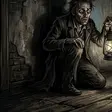
Everything. The narrator is at his most careful, opening the door inch by inch. But this time his thumb slips on the lantern.
すべてだよ。語り手は最も慎重になり、ドアを少しずつ開ける。でも今回は、ランタンの上で親指が滑る。
And the old man wakes with "Who's there?" That must break the tension.
そして老人が「誰だ?」と目を覚ます。緊張が破れるに違いない。
It sharpens it. Neither moves for a full hour. Poe stretches a single moment into unbearable length.
むしろ研ぎ澄まされる。どちらも丸一時間動かない。ポーは一つの瞬間を耐えがたい長さに引き伸ばす。
Then the narrator hears the heartbeat. He describes it so precisely — "a low, dull, quick sound."
それから語り手は心臓の音を聞く。とても精密に描写するんだ——「低く、鈍く、速い音」。
"Such as a watch makes when enveloped in cotton." That image is the heart of the story's dread.
「綿にくるまれた時計が立てるような」。あのイメージこそ、物語の恐怖の核心だ。
A muffled watch — something small and steady, but relentless.
くぐもった時計——小さくて一定で、それでいて容赦がない。
And it grows. Louder, quicker, until the narrator says he feared a neighbour would hear it.
そしてそれが育つ。大きく、速く、ついに語り手は隣人に聞かれると恐れたと言う。
Here's what I can't tell: is the sound real, or is it in his head?
ここが僕には判じかねる——その音は本物なのか、それとも彼の頭の中なのか。
Poe never lets us be sure. It could be the old man's terror, or the narrator's own pulse pounding in his ears.
ポーは決して確信させてくれない。老人の恐怖かもしれないし、語り手自身の脈が耳の中で打っているのかもしれない。
That ambiguity is the whole trick, isn't it? We can't trust the one voice we have.
その曖昧さこそ、まさに仕掛けなんだね。僕らが持つ唯一の声を信じられない。
Exactly. The sound belongs entirely to the narrator's perception, and we've already learned not to trust that.
そう。その音は完全に語り手の知覚に属していて、僕らはもうそれを信じてはいけないと学んでいる。
Then the violence comes fast. One yell, and it's done.
それから暴力が一気に来る。一つの叫びで、終わる。
Notice how quickly Poe moves through the actual killing. The murder takes a sentence; the waiting took pages.
ポーが実際の殺害をどれほど速く通り過ぎるかに注目して。殺人は一文、待つことは何ページも費やされた。
Because the horror was never the act. It was the anticipation.
恐怖は決して行為そのものじゃなかったからだ。それは予期だった。
Right. And afterward, the narrator is calm again — dismembering the body, hiding it under the floor, proud of his care.
そう。そのあと語り手はまた冷静になる——死体をばらばらにし、床下に隠し、自分の周到さを誇る。
"There was nothing to wash out — no stain of any kind." He's boasting.
「洗い流すものは何もなかった——どんな染み一つ」。彼は自慢している。
That pride is the setup for his fall. A man this sure of his own cleverness has nowhere to go but down.
その誇りが、彼の転落の伏線だ。ここまで自分の賢さを確信した男は、あとは落ちるしかない。
会話 4
The Heartbeat and the Confession
So the police arrive, and the narrator is completely calm. He even sits right over the body.
そして警官が到着し、語り手は完全に冷静だ。死体の真上に座りさえする。
That's his fatal overconfidence. He turns his own guilt into a stage, daring the world to catch him.
それが彼の致命的な過信だ。自分の罪を舞台に変え、捕まえてみろと世界に挑む。
Then the sound returns. The heartbeat, louder and louder, until he breaks.
それから音が戻ってくる。心臓の鼓動が、次第に大きくなり、ついに彼は崩れる。
And here's the crucial question: the officers show no sign of hearing anything. They chat pleasantly, they smile.
ここで決定的な問いだ——警官たちは何も聞こえている様子がない。愉快に雑談し、微笑んでいる。
So the sound is almost certainly not real. It's his guilt, made audible only to him.
つまりその音は、ほぼ確実に本物じゃない。彼の罪の意識が、彼にだけ聞こえるようになったものだ。
That's the reading the ending points to. The "tell-tale heart" isn't the old man's — it's the narrator's own conscience.
それが結末の指し示す読みだ。「告げ口心臓」は老人のものじゃない——語り手自身の良心だ。
This is where "unreliable narrator" really matters. Can you put it plainly?
ここで「信頼できない語り手」が本当に効いてくる。平たく言える?
An unreliable narrator is one whose account we can't fully trust — because of madness, bias, or self-deception. We read past their words to a truth they can't see.
信頼できない語り手とは、その語りを全面的には信じられない語り手のことだ——狂気、偏り、自己欺瞞ゆえに。僕らはその言葉の先に、彼には見えない真実を読み取る。
And Poe does it entirely from the inside. There's no outside voice to correct him.
しかもポーはそれを完全に内側からやる。彼を正す外部の声がない。
That's what makes it so powerful. We only have his perspective, so we have to actively doubt the very person telling the story.
それがこれほど強力な理由だよ。僕らは彼の視点しか持たないから、物語を語るその人自身を能動的に疑わなければならない。
Every "proof" of sanity he offered has become proof of the opposite.
彼が差し出した正気の「証拠」は、すべて逆の証拠になってしまった。
Right. The sharp senses, the patience, the calm — all of it now reads as the machinery of a disturbed mind.
そう。鋭い感覚、忍耐、冷静さ——そのすべてが今や、病んだ心の仕掛けとして読める。
So his confession isn't forced by evidence. It's forced by himself.
つまり彼の自白は、証拠に迫られたものじゃない。自分自身に迫られたものだ。
Exactly. No one accuses him. He destroys himself, driven by a sound no one else can hear.
その通り。誰も彼を告発しない。彼は自滅する、他の誰にも聞こえない音に駆り立てられて。
"It is the beating of his hideous heart!" But the heart is really his own.
「こいつの忌まわしい心臓の音だ!」でも、その心臓は本当は彼自身のものだ。
That's the final irony. He set out to prove he wasn't mad, and the telling of the story is the very thing that proves he is.
それが最後の皮肉だ。彼は自分が狂っていないと証明しようとして、物語を語ること自体が、狂っていると証明してしまう。
So the story is a trap that closes on its own narrator.
つまりこの物語は、語り手自身の上に閉じる罠なんだ。
And on us, a little. We listened, we judged, and Poe made us complicit in watching a mind come apart.
そして僕らの上にも、少しね。僕らは耳を傾け、判断した——ポーは僕らを、一つの心が壊れていくのを見つめる共犯者にしたんだ。
