









The LITIM Podcast
The Little Match Girl
ポッドキャストの原稿
The LITIM Podcast のこの回で読んでいる英語の全文です。 色のついた単語をタップすると、やさしい英語で意味が出ます。 聴きながら目で追うのにも、聴いたあとの確認にもどうぞ。
前半:解説
解説 1
The Little Match Girl Story Summary
The Little Match Girl is a fairy tale by Hans Christian Andersen, the Danish writer who also wrote The Ugly Duckling and The Little Mermaid. It was first published in Denmark in 1845. This English translation is from the Victorian era, so the language sounds a little old-fashioned.
『マッチ売りの少女』は、ハンス・クリスチャン・アンデルセンによる童話です。彼は『みにくいアヒルの子』や『人魚姫』も書いたデンマークの作家です。原作は 1845 年、デンマークで初めて出版されました。今回の英訳はヴィクトリア朝時代のもので、言葉づかいが少し古風に響きます。
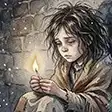
The story takes place on New Year's Eve. A poor little girl walks through the snowy streets, bareheaded and with no shoes. She has lost her slippers. Nobody has bought a single match all day. She is cold, hungry, and afraid to go home, because her father will beat her if she comes back with no money.
物語の舞台は大晦日の夜。貧しい一人の少女が、雪の降る街を歩いています。頭には何もかぶらず、靴も履いていません。スリッパは落としてしまったのです。一日中、誰もマッチを一本も買ってくれませんでした。寒く、ひもじく、家に帰るのも怖い——お金を持たずに帰れば、父親に殴られるからです。
She finds a small corner between two houses and sits down. Her hands are almost numb with cold. To warm herself, she dares to strike just one match. The flame is bright and warm — and in the light, she sees something wonderful. But when the match goes out, the vision fades.
少女は二軒の家のあいだの小さな隅にうずくまります。手はかじかんで、ほとんど感覚がありません。少しでも暖まろうと、思い切ってマッチを一本だけ擦ります。炎は明るく、暖かく——その光の中に、少女は何か素晴らしいものを見ます。けれどマッチが消えると、幻も消えてしまいます。
She strikes another, and another. Each match shows her something more beautiful than the last. The fourth match brings her grandmother — the only person who ever loved her, and who is now long dead.
少女はもう一本、また一本とマッチを擦ります。マッチを擦るたび、見えるものはより美しくなっていきます。四本目のマッチが運んでくるのは、自分を愛してくれた唯一の人——とうの昔に亡くなった祖母の姿でした。
What happens to the little girl as the cold night deepens? Andersen's tale is short, but its ending is one of the most famous in all of children's literature.
寒さの増す夜の中で、少女はどうなっていくのか。アンデルセンのこの短い物語の結末は、児童文学のなかでも最も知られたもののひとつです。
解説 2
First Visions: The Stove and the Goose
The little girl strikes her first match against the wall. "Rischt!" — that is the sound the old translation uses. The flame is bright. To her, it seems she is sitting before a great iron stove, with shining brass feet. She stretches out her cold feet to warm them. But the match goes out, and the stove vanishes.
少女は壁にマッチを一本擦りつけます。「リシッ!」——古い英訳ではマッチを擦る音をこう書きます。炎は明るく燃えあがります。少女には、自分が大きな鉄のストーブの前に座っているように見えます。真鍮の脚がぴかぴかと光っています。冷えた足を伸ばして暖めようとした、その瞬間、マッチは消えてしまい、ストーブも消えてしまいます。
She strikes a second match. The light shines on the wall, and the wall becomes thin like a veil. Through it, she sees a room — a white tablecloth, fine plates, and a roast goose steaming with apple and dried plums. The goose hops down from the dish and walks toward her with a knife and fork in its breast. Then the second match goes out. Only the cold, damp wall is left.
少女はもう一本マッチを擦ります。光が壁に映ると、壁はベールのように薄くなります。その向こうに部屋が見えます——白いテーブルクロス、立派なお皿、そしてりんごと干しすももを詰めた焼きガチョウが湯気を立てています。ガチョウはお皿から飛び降り、ナイフとフォークを胸に刺したまま、少女のほうへ歩いてきます。けれど二本目のマッチも消え、後にはただ、冷たく湿った壁だけが残ります。
解説 3
The Tree, the Star, and the Grandmother
The girl lights a third match. Now she sits beneath a magnificent Christmas tree. Thousands of candles burn on its green branches, and bright pictures look down on her — even more wonderful than the ones she has seen in shop windows. She reaches out her hands. The match goes out. The lights of the tree rise higher and higher, until they become stars in the sky. One falls, drawing a long line of fire across the heavens.
少女は三本目のマッチを擦ります。今度は、見事なクリスマスツリーの下に座っているように見えます。緑の枝には何千ものろうそくが灯り、お店のショーウィンドウで見たものよりずっと美しい色とりどりの絵が、少女を見下ろしています。少女が手を伸ばすと、マッチは消えてしまいます。けれどクリスマスツリーの灯りはどんどん高く昇っていき、やがて空の星になります。そのうちの一つが、長い火の尾を引いて空を流れ落ちます。
"Someone has just died," the girl says. Her grandmother — the only one who ever loved her, and who is now long dead — once told her: when a star falls, a soul rises to God.
「誰かが亡くなったのね」と少女はつぶやきます。少女を愛してくれた唯一の人——とうに亡くなった祖母——がかつて教えてくれたのです。星がひとつ落ちる時、魂がひとつ神のもとへ昇っていくのだ、と。
She strikes another match. In the bright light stands her grandmother — kind, gentle, full of love. The girl cries out, "Grandmother! Take me with you!"
少女はもう一本マッチを擦ります。明るい光のなかに、祖母が立っています——優しく、穏やかで、愛情に満ちた姿で。少女は叫びます。「おばあちゃん!どうかわたしを連れていって!」
解説 4
The Cold Morning
Afraid that her grandmother will vanish like the stove, the goose, and the Christmas tree, the girl strikes the whole bundle of matches at once. The light is brighter than noonday. Her grandmother takes her in her arms, and together they fly upward — high, very high — to a place where there is no cold, no hunger, no fear.
祖母までもが、ストーブやガチョウやクリスマスツリーのように消えてしまうのを恐れて、少女は手元にあったマッチをいっぺんに全部擦ります。光は真昼よりもまばゆく輝きます。祖母は少女を腕に抱き、ふたりは高く、とても高く——寒さも、ひもじさも、恐れもない場所へと昇っていきます。
The next morning, in the cold corner between the two houses, people find the little girl. She has frozen to death, with rosy cheeks and a smile on her face. "She wanted to warm herself," they say. No one knows what beautiful things she had seen, or how she had entered the new year with her grandmother.
翌朝、二軒の家のあいだの冷たい隅で、人々はあの少女を見つけます。少女は凍え死んでいました。頬は紅く、口元には微笑みが浮かんでいます。「暖まろうとしたんだろうね」と人々は言います。誰も知らないのです——少女がどれほど美しいものを見たか、祖母とともにどのように新年を迎えたかを。
This ending is famous, but it is not just a sad story. Andersen wrote about poor children whose suffering was real and visible in 19th-century Europe — children no one helped, even on a holy night. The girl's joy and the city's indifference stand side by side. Look out for the older English in this translation: words like "livelong," "capitally," "famously" all carry old meanings. The Victorian voice gives the tale much of its sorrow.
この結末は有名ですが、ただの悲しい物語ではありません。アンデルセンが描いたのは、19 世紀ヨーロッパに現実に存在し、見過ごされていた貧しい子どもたちです——聖なる夜にすら、誰の手も差し伸べられない子どもたちです。少女の喜びと、街の無関心とが、隣り合わせに置かれています。今回の英訳には古風な言葉づかいが残っていることにも注目してみてください——livelong, capitally, famously といった単語はすべて、現代とは違う古い意味で使われています。ヴィクトリア朝の語り口が、この物語の哀しみの多くを支えているのです。
後半:John と Cale の会話
会話 1
Talking About The Little Match Girl
So I just finished reading The Little Match Girl. Have you read it?
『マッチ売りの少女』を読み終わったところなんだ。読んだことある?
Yes, I read it as a kid. But like with Wilde, reading it again as an adult is a different experience.
うん、子どものころに読んだよ。でもワイルドと同じで、大人になってから読み直すとまったく違う体験になるね。
Right? I remembered it as a sad winter story. Now it feels much darker than that.
そうなんだよ。子どもの頃はただの「悲しい冬の話」として覚えていた。今読むと、もっとずっと暗い物語に感じる。
That's the thing about Andersen. People file him under "children's writer," but most of his stories have a strange double layer.
そこがアンデルセンなんだよね。世間は「児童文学作家」として彼を括るけど、ほとんどの物語に二重の層がある。
The setting alone is already hard. New Year's Eve, snow, a small girl walking barefoot in the street.
設定だけでもう辛い。大晦日、雪、小さな女の子が裸足で通りを歩いている。
And she's selling matches. Nobody buys one. Nobody really sees her.
しかもマッチを売っている。誰も買わない。誰もちゃんと彼女を見ない。
She's afraid to go home, because her father will beat her if she comes back with no money.
家にも帰れない。お金を持って帰らないと父親に叩かれるから。
So she's freezing on the outside, and there's no safe place on the inside either. There's no good direction for her to walk in.
つまり外は凍えるほど寒くて、内側にも安全な場所はない。どの方向に歩いても、彼女には行き場がないんだ。
Then she starts lighting the matches just to warm her hands. And each match shows her something.
それから手を温めようとマッチを擦り始める。一本擦るたびに、何かが見える。
A warm stove. A roast goose. A Christmas tree. And finally, her grandmother.
暖かいストーブ。ローストグース。クリスマスツリー。そして最後におばあちゃん。
The order really got me. She doesn't start with a vision of heaven. She starts with a stove. Just heat.
あの順番がすごく刺さった。彼女はいきなり天国を見るわけじゃない。最初はストーブなんだよ。ただの熱。
Yes. The wishes are tiny. Andersen knows what a poor child actually wants in that moment. Not gold, not magic — warmth, food, someone who loved her.
そう。願いは小さい。アンデルセンは、貧しい子どもがその瞬間に本当に欲しがるものをわかっている。金でも魔法でもない——温かさ、食べ物、自分を愛してくれた誰か。
And by morning, she's gone. People walking past say "she must have wanted to warm herself," and that's the end for them.
それで朝になると、彼女は亡くなっている。通りすがりの人は「体を温めようとしたんだろう」と言って、それで終わり。
That's the line that breaks me. The town has a whole explanation ready. They don't have to feel anything.
あの一文に打ちのめされる。街にはもう説明が用意されている。何も感じなくていいように。
So is Andersen writing a fairy tale, or is he writing a protest?
アンデルセンはこれを童話として書いたのかな、それとも抗議として書いたのかな?
I think he's doing both at once. The grandmother takes her into the light. The street keeps walking past. Both endings are in the same story, and he refuses to choose between them.
両方を同時にやっていると思う。おばあちゃんは少女を光の中へ連れていく。通りはそのまま彼女を素通りしていく。両方の結末が同じ物語の中にあって、アンデルセンはどちらか一方を選ばない。
会話 2
Where Andersen Got This Story
So we talked about how dark this story really is. But I keep wondering — where does Andersen get this from? It's almost too specific.
この物語が本当はどれだけ暗いか、前回話したよね。でも、どうしてもひっかかるんだ——アンデルセンはこれをどこから持ってきたんだろう。あまりにも具体的すぎる。
It's not really fiction. Andersen grew up poor in Odense in the early nineteenth century. His father was a shoemaker who died young. His mother washed clothes in the river for almost nothing.
ほぼフィクションじゃないんだよ。アンデルセンは19世紀初頭のオーデンセで貧しく育った。父親は靴職人で、若くして亡くなっている。母親は川で洗濯をして、ほとんどお金にならない仕事をしていた。
So he saw cold and hunger from the inside.
つまり寒さと飢えを、内側から見てきたわけだ。
Yes. And his mother actually was sent out to beg as a child. He wrote about that in his autobiography. The little match girl isn't invented from nowhere — she's pulled out of family memory.
そう。それに彼の母親は子どものころ、物乞いに出されていた。アンデルセン自身が自伝に書いている。マッチ売りの少女はゼロから作った話じゃない——家族の記憶から引き出されているんだ。
That changes how I read the story. The barefoot girl isn't a symbol he chose. She's someone he almost knew.
それを聞くと読み方が変わるな。あの裸足の少女は彼が選んだ象徴じゃない。彼にとって、ほぼ知っている誰かなんだ。
And Copenhagen at that time had a serious problem with child poverty. Many children worked on the streets — selling matches, flowers, newspapers. Some never made it home.
そして当時のコペンハーゲンには、子どもの貧困という深刻な問題があった。たくさんの子どもが通りで働いていた——マッチを売り、花を売り、新聞を売る。家にたどり着けない子もいた。
Wait, was selling matches actually a real job for children?
え、子どもがマッチを売るって、実際にあった仕事なの?
It really was. Matches were a new product in the early nineteenth century, and they were cheap enough that even the poorest could try to sell them. Street selling was one of the few things a small child could do.
本当にあった。マッチは19世紀初頭の新しい商品で、いちばん貧しい人でも仕入れて売れるくらい安かった。通りで物を売るのは、小さな子どもができる数少ない仕事のひとつだったんだ。
So Andersen isn't using a fairy-tale prop. He's pointing at something his readers would have seen that week.
じゃあアンデルセンは童話的な小道具を使っているわけじゃないんだ。当時の読者がその週に見ていた光景を指している。
Exactly. For his first audience, this girl was on their street. They had walked past her.
そういうこと。最初に読んだ人たちにとって、この少女は自分の街にいた。彼らはその子の前を通り過ぎていたんだ。
That makes the line about the townspeople much heavier. "She must have wanted to warm herself." They had been saying that kind of thing all winter.
そうすると、街の人たちのあのセリフがずっと重くなるな。「体を温めようとしたんだろう」——その冬じゅう、ああいうことを言い続けていたわけだ。
Yes. And here is what I find brave about Andersen. He doesn't write a charity appeal. He doesn't tell the reader to give more money.
そう。そしてここがアンデルセンの勇気だと思う。彼はチャリティの訴えを書かない。「もっと寄付をしましょう」とは言わない。
He just shows her dying.
ただ少女が死ぬところを見せる。
He shows her dying, and he shows the explanation the town gives itself. He trusts the reader to feel the gap between those two things.
少女が死ぬところを見せて、街がそれをどう説明するかも見せる。その二つのあいだの隔たりは、読者が感じ取ってくれると信じている。
That's a strong choice. A weaker writer would have added a moral at the end.
それは強い選択だな。腕の弱い作家なら、最後に教訓を付け足したと思う。
A weaker writer would have made the reader feel good for crying. Andersen doesn't let you off that easily.
腕の弱い作家なら、泣いた読者を気持ちよくさせていたと思う。アンデルセンはそんなに簡単に逃がしてくれない。
So in a way, the cruelty of the story is part of the protest.
つまり、この物語の残酷さも、抗議の一部だってことか。
I think so. He grew up among people the world overlooked. He's writing about one of them, and he refuses to soften it for comfort.
そう思う。彼は世間が見落としていた人たちのあいだで育った。そのひとりについて書いていて、読者の慰めのために柔らかくすることを拒んでいる。
会話 3
The Four Visions
So the four visions. I want to talk about those in order. Why these four, and why in this order?
4つの幻影について、順番に話したいんだ。なぜこの4つで、なぜこの順番なんだろう。
I think Andersen is climbing a ladder. Each match shows her something a little deeper than the last.
アンデルセンは梯子を登らせていると思う。マッチ1本ごとに、前より少し深いものを見せていく。
Let's start with the first one. She lights a match and sees a warm iron stove.
1本目から行こう。マッチを擦ると、温かい鉄のストーブが見える。
The most basic thing. Her body is freezing. Before anything else, she just wants to stop being cold.
いちばん基本的なもの。体が凍えている。他の何より前に、まず寒くない状態が欲しい。
So the first wish isn't a dream. It's survival.
つまり最初の願いは夢じゃない。生存なんだ。
Yes. Andersen is honest about the order. You can't long for beauty when your hands are turning blue. You long for heat.
そう。アンデルセンはこの順番に対して誠実なんだ。手が青くなりかけているときに、美しいものを夢見ることなんてできない。熱を夢見るんだよ。
Then the second match shows a roast goose, with knife and fork already in it, walking toward her.
2本目を擦ると、ナイフとフォークが刺さったままのローストグースが、彼女のほうへ歩いてくる。
Now her body has moved past cold and noticed it's starving. The goose is funny and grotesque at the same time. It's the wish of someone who has watched other families eat through a window.
体が寒さから抜けて、こんどは飢えに気づいた段階。あのガチョウは滑稽でもあるし、不気味でもある。窓ごしに他の家族が食べているのを見てきた子どもの願いなんだ。
The third match is the Christmas tree. That feels like a jump.
3本目はクリスマスツリー。ここは飛躍に感じる。
It is a jump. Now she isn't asking for her own body anymore. She's asking to be inside the celebration. To be one of the children the candles are lit for.
飛躍なんだ。もう自分の体の話じゃなくなっている。お祝いの内側に入れてくれと言っている。蝋燭が灯される側の子どもになりたい、と。
So the wishes are growing. Heat, food, belonging.
つまり願いはだんだん大きくなっていく。熱、食べ物、居場所。
And then the fourth match. Her grandmother. The only person in the story who ever loved her.
そして4本目。おばあちゃん。この物語のなかで彼女を愛した唯一の人。
And this is the one she can't let go of. She lights the whole bundle so the vision won't disappear.
そしてこの幻だけは彼女が手放せない。消えないようにマッチを束ごと擦るんだ。
That's the moment that breaks the pattern. Until now she's been careful with the matches. Now she burns them all at once, because losing her grandmother again is worse than freezing.
それまでのパターンが崩れる瞬間だね。それまでは彼女もマッチを慎重に使ってきた。でもここでは全部一度に燃やす。おばあちゃんをまた失うことのほうが、凍えることよりつらいから。
So the matches themselves are doing something too, not just the visions.
じゃあマッチそのものも何かを語っているんだね、幻影だけじゃなくて。
I think so. A match gives light for a few seconds and then it's gone. You have to keep striking new ones. And the more you burn, the fewer you have left.
そう思う。マッチは数秒だけ光って、消える。次を見るには新しく擦らなきゃいけない。そして燃やせば燃やすほど、手元の本数は減っていく。
That's almost the shape of her life. Brief warmth, paid for in what little she had.
それはほとんど彼女の人生の形だな。短い暖かさを、わずかな手持ちで買っていく。
Yes. And the last bundle is everything she had left. She trades her whole stock for one more moment of being loved. Andersen makes that trade look like the only sane choice in the story.
そう。そして最後の束は、彼女に残っていた全部なんだ。愛されるもう一瞬のために、在庫を丸ごと差し出す。アンデルセンはその取引を、この物語のなかでいちばんまともな選択に見せている。
会話 4
Three Ways to Read the Ending
So we have to talk about the ending. The grandmother takes her up into the light, "where there was no cold, no hunger, no pain." And in the morning, she's dead in the corner. How do we read that?
結末について話さないといけないね。おばあちゃんは彼女を光の中へ連れていって、「寒さも飢えも痛みもない場所へ」。そして朝、彼女は隅で亡くなっている。これをどう読めばいいんだろう。
This is the question the story keeps open on purpose. There are at least three honest ways to read it, and I don't think Andersen wants us to pick just one.
この物語がわざと開いたままにしている問いだね。誠実な読み方が少なくとも3つある。アンデルセンはそのうちのひとつを選ばせようとしていないと思う。
Let's go through them. What's the first one?
順番に行こう。1つ目は?
The religious reading. In nineteenth-century Denmark, this would have been the natural one. The grandmother is real. Heaven is real. She has been received into God's mercy, and her suffering is over.
宗教的な読み。19世紀のデンマークなら、これが自然な読み方だっただろうね。おばあちゃんは本当にいる。天国は本当にある。彼女は神の慈悲に受け入れられて、苦しみは終わった。
Under that reading, the ending is actually a happy ending.
その読み方だと、結末は実はハッピーエンドってことになる。
In a sense, yes. The cold and the hunger don't follow her. The last image is not the frozen body — it's the two of them rising into joy. For a believing reader, that's where the story ends.
ある意味そう。寒さも飢えも、もう彼女についてこない。最後の像は凍えた体じゃない——ふたりが喜びの中に昇っていくところだ。信仰のある読者にとって、物語はそこで終わる。
Okay. What's the second reading?
わかった。2つ目の読み方は?
The protest reading. The "vision" is just hypothermia. A freezing brain produces warm hallucinations near the end. The grandmother isn't really there. The town finds a small dead girl in the snow, and tells itself a comfortable story about her.
抗議としての読み。あの「幻」は、ただの低体温症なんだ。凍えていく脳は、最期に温かい幻覚を見せる。おばあちゃんは本当にはそこにいない。街は雪の中で小さな女の子の死体を見つけて、自分たちが楽になる物語を、その子について語る。
And under that reading, the heavenly language is bitter, not beautiful.
その読み方をすると、天国っぽい言葉は美しいんじゃなくて、苦いってことになる。
Very bitter. Andersen is showing us the lie we tell ourselves when a child dies on our street. We say she's "in a better place" so we don't have to ask why she was on our street in the first place.
とても苦い。アンデルセンは、街角で子どもが死んだときに自分たちが言いがちな嘘を見せている。「もういい場所にいるよ」と言うのは、「そもそもなぜその子が街角にいたのか」を問わずに済むためなんだ。
Those two readings almost contradict each other.
この2つは、ほぼ正反対だね。
They do. And yet both of them are clearly in the text. That's what's strange about this story — it refuses to settle.
正反対なんだ。それでも両方ともテキストにはっきり書かれている。それがこの物語の不思議なところで——どちらにも落ち着いてくれない。
What's the third reading?
3つ目は?
A more modern one. We notice that the story does both at once, and we stop trying to choose. The grandmother is true for her. The cold morning is true for the town. Andersen lets the two truths stand side by side without harmonizing them.
もっと現代的な読み方。物語が両方を同時にやっていることに気づいて、選ぶのをやめる。おばあちゃんは彼女にとっては本当のことだ。冷たい朝は街にとっては本当のことだ。アンデルセンは、その2つの真実を並べたまま、まとめようとしない。
So it's not "which one is real." It's "both, and that's the point."
つまり「どちらが本当か」じゃなくて、「両方が本当で、それこそが眼目」ってことか。
Yes. The comfort is real. The injustice is real. Neither cancels the other. A modern reader can hold both without forcing a verdict.
そう。慰めも本当だし、不正義も本当だ。どちらかがもう片方を打ち消さない。現代の読者は、判決を下さずに両方を抱えることができる。
That's a hard place to leave a reader. Most stories rescue you at the end.
それは読者を厳しい場所に置きっぱなしにする結末だね。たいていの物語は最後に救ってくれるのに。
Andersen doesn't. He gives the girl her grandmother and gives the town its excuse, in the same paragraph, and walks away.
アンデルセンは救ってくれない。少女におばあちゃんを与え、街に言い訳を与える——同じ段落の中でね。そしてそのまま立ち去る。
