
Commentary 2
Town lights and a human hand
雪で遊んで帰ってきた子ぎつねの両手は、冷たく、赤くなっていました。お母さんぎつねは思いました。しもやけができてはかわいそうだから、夜になったら町へ行って、この子の手に合う毛糸の手袋を買ってやろう。
When the fox cub came home from playing in the snow, both his hands were cold and red. His mother thought: it would be a pity if he got chilblains, so when night comes, I'll go to town and buy him woolen mittens that fit his hands.
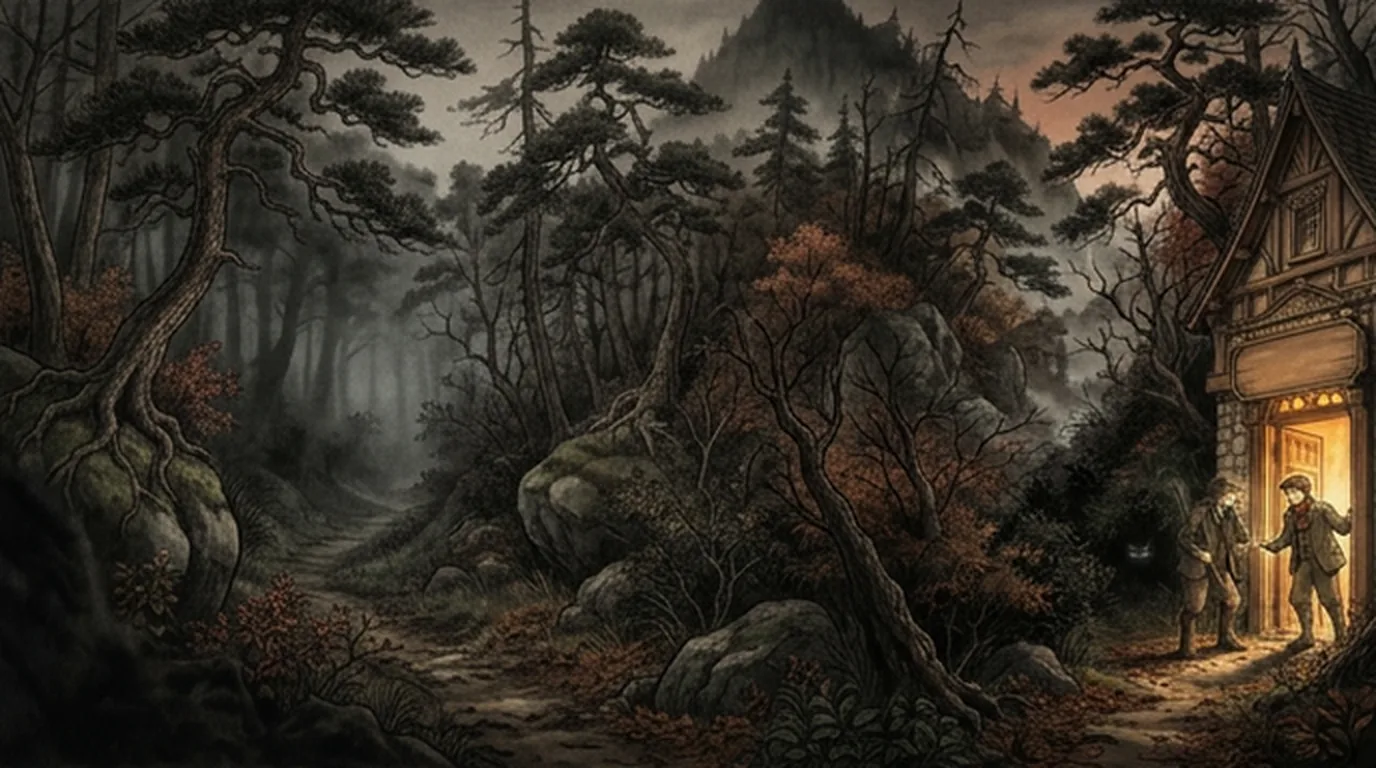
夜、二匹は森を出ました。やがて、遠くに明かりが一つ見えてきます。それは町の明かりでした。お母さんぎつねの足は、そこで止まってしまいます。前に町へ行ったとき、友だちのきつねがあひるを盗もうとして、命からがら逃げたことを思い出したのです。
At night, the two of them left the forest. Soon, a single light came into view in the distance. It was the light of the town. There, the mother fox's legs stopped. She had remembered that the last time she went to town, a fox friend of hers had tried to steal a duck and barely escaped with his life.
そこで、子ぎつねを一人で町へ行かせることにしました。お母さんぎつねは、子ぎつねの片方の手をにぎって、人間の子どもの手に変えてやります。そして言いました。ぼうしの看板のある店を見つけたら、戸のすきまから、こっちの人間の手を出して、手袋をちょうだいと言うんだよ。決して、こっちの手を出してはいけないよ。人間は、相手がきつねだとわかると、つかまえて、おりに入れてしまうからね。
So she decided to send the cub into town alone. The mother fox took one of the cub's hands and turned it into a human child's hand. And she said: when you find a shop with a hat sign, put out this human hand through the gap in the door and say, "Mittens, please." Never put out this other hand. Because if humans find out you're a fox, they'll catch you and put you in a cage.
Commentary 3
The wrong hand and a lullaby
子ぎつねはぼうし屋を見つけて、戸をたたきました。戸が少しあいて、光の帯が、雪の上に長くのびます。子ぎつねは、その光がまぶしくてあわててしまい、出してはいけないほうの手を、すきまからさし入れてしまいました。
The cub found the hat shop and knocked on the door. The door opened a little, and a band of light stretched long across the snow. The light dazzled the cub and flustered him, and he pushed the hand he must not put out through the gap.
ぼうし屋さんは、きつねの手だと気づきます。きっと木の葉で買いに来たんだろうと思って、先にお金をください、と言いました。二枚のお金をカチ合わせてみると、チンチンといい音がします。これは木の葉じゃない、本物のお金だ。ぼうし屋さんは、子ども用の毛糸の手袋を、持たせてやりました。
The hatter sees that it is a fox's hand. Thinking it must have come to buy with leaves, he says, "Money first, please." When he clinks the two coins together, they ring with a nice "chin, chin." These aren't leaves; it's real money. The hatter let the cub take a pair of children's woolen mittens.
帰り道、子ぎつねは、ある窓の下で、人間のお母さんの子守唄を聞きます。人間の子どもが、こんな寒い夜は、森の子ぎつねは寒い寒いと鳴いているでしょうね、と言いました。お母さんは、森の子ぎつねもお母さんの唄を聞いて眠ろうとしているでしょう、とこたえます。子ぎつねは、急にお母さんが恋しくなりました。
On the way home, under a certain window, the cub hears a human mother's lullaby. The human child said that on a cold night like this, the little fox in the forest must be crying, "I'm cold, I'm cold." The mother answers that the little fox in the forest must be listening to its mother's song and trying to go to sleep, too. Suddenly, the cub missed his mother.
森へ帰る道で、子ぎつねは言います。人間って、ちっともこわくないや。まちがえて本当の手を出したけど、ぼうし屋さんはつかまえなかった。お母さんぎつねは、あきれて、それからつぶやきました。「ほんとうに人間はいいものかしら。ほんとうに人間はいいものかしら。」
On the way back to the forest, the cub says: humans aren't scary at all. I put out my real hand by mistake, but the hatter didn't catch me. The mother fox was dumbfounded, and then she murmured, "I wonder if humans really are good. I wonder if humans really are good."
Commentary 4
Three things to notice
読みどころを三つ挙げます。
Here are three things to notice.
一つ目は、まちがえた手です。あれほど言われていたのに、子ぎつねは、きつねの手を出してしまいます。けれども、その失敗があったからこそ、子ぎつねは、人間はこわくないと思うことができました。
The first is the wrong hand. Even though he had been told so firmly, the cub puts out his fox hand. But it was because of that mistake that the cub could come to think humans are not scary.
二つ目は、ぼうし屋さんです。ぼうし屋さんは、相手がきつねだと気づいていました。それでも手袋を売ったのは、お金が本物だったからです。やさしい人なのか、商売をしただけなのか。物語は、ぼうし屋さんの気持ちを、それ以上は書いていません。
The second is the hatter. The hatter had noticed that his customer was a fox. Even so, he sold the mittens because the money was real. Is he a kind person, or did he just do business? The story says nothing more about how the hatter felt.
三つ目は、人間のお母さんの子守唄です。人間の親子も、きつねの親子と同じように、寒い夜に寄りそっています。そして人間の子どもは、森の子ぎつねのことを気にかけていました。
The third is the human mother's lullaby. The human parent and child, just like the fox parent and child, are close together on a cold night. And the human child was thinking about the little fox in the forest.
「ごん狐」では、人間はきつねを銃でうってしまいました。この作品では、人間はきつねに手袋を売ります。けれども物語は、お母さんぎつねの問いのまま終わります。
In "Gon, the Little Fox," a human shoots the fox with a gun. In this story, a human sells the fox mittens. But the story ends with the mother fox's question.
同じ言葉を二回くりかえしたとき、お母さんぎつねは、人間を信じはじめていたのでしょうか。
When she repeated the same words twice, had the mother fox begun to trust humans?
Commentary 1
About Buying Mittens
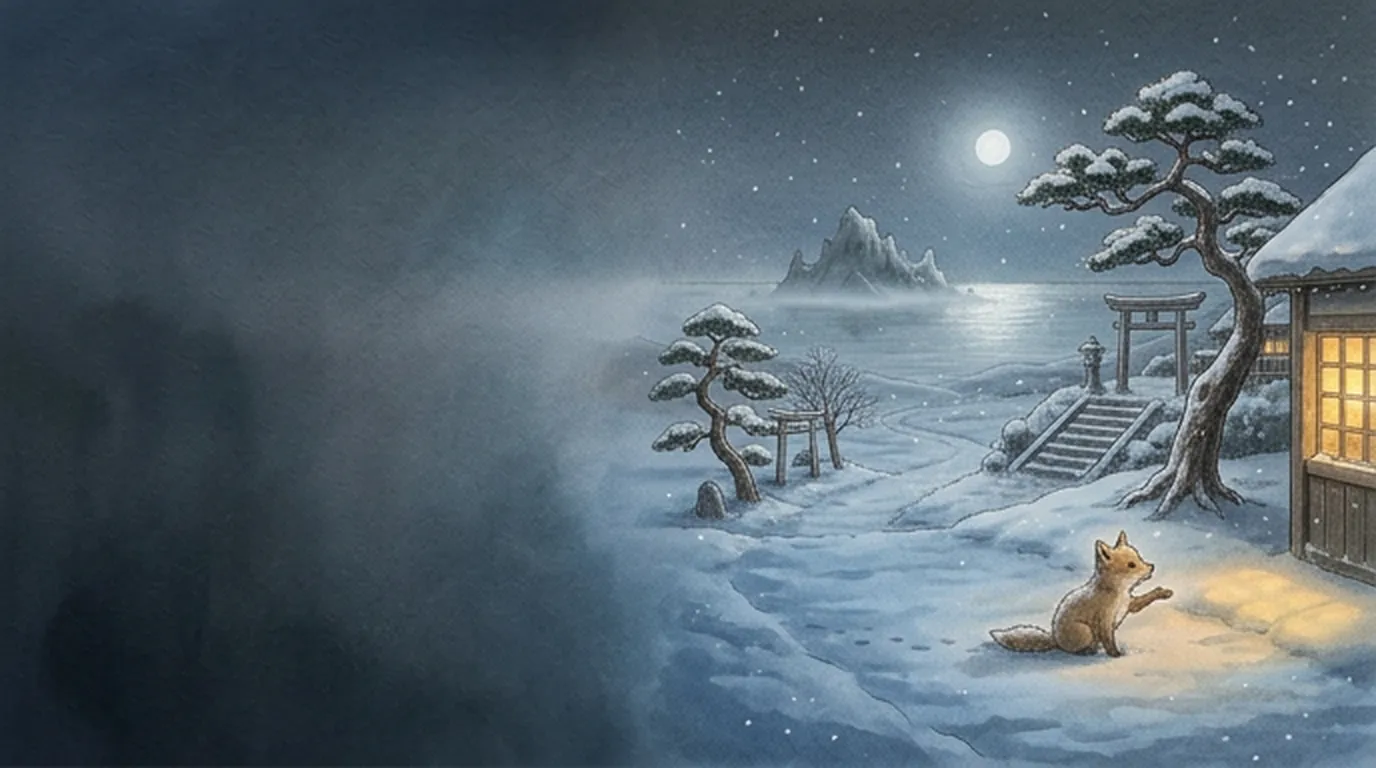
冬の朝、森のほら穴から、子ぎつねが外へ出ようとしました。ところが、「あっ」とさけんで、お母さんぎつねのところへころげて戻ってきます。目に何かささった、と言うのです。でも、何もささってはいませんでした。夜のうちに、まっ白な雪がたくさん降っていたのです。はじめて見る雪が、朝の光でまぶしく光っていたのでした。
On a winter morning, a fox cub tries to go outside from a hole in the forest. But he cries "Ah!" and comes tumbling back to his mother. Something has stuck in his eyes, he says. But nothing had stuck in them at all. During the night, a lot of pure white snow had fallen. The snow, which he was seeing for the first time, was shining so brightly in the morning light that it dazzled him.
今回の作品は、新美南吉の「手袋を買いに」です。前に取り上げた「ごん狐」と同じ作者で、こちらもきつねと人間のお話です。南吉は、1943年の三月に、二十九歳で亡くなりました。この作品は、その年の九月に出た童話集、「牛をつないだ椿の木」に収められています。小学三年生の教科書に、五十年以上載っていました。
This time, the story is Nankichi Niimi's "Buying Mittens." The author is the same as for "Gon, the Little Fox," which we covered before, and this too is a story about foxes and humans. Nankichi died in March 1943, at the age of twenty-nine. This story is in a collection of children's stories that came out in September of that year, "The Camellia Tree Where the Ox Was Tied." It was in third-grade elementary school textbooks for more than fifty years.