
Folktale · Lower-intermediate · JLPT N4 · 20 min

桃太郎

Momotaro

Japanese folk tale (日本の昔話)

A boy born from a peach sets out with a dog, a monkey and a pheasant to fight the demons of Onigashima.

作品について

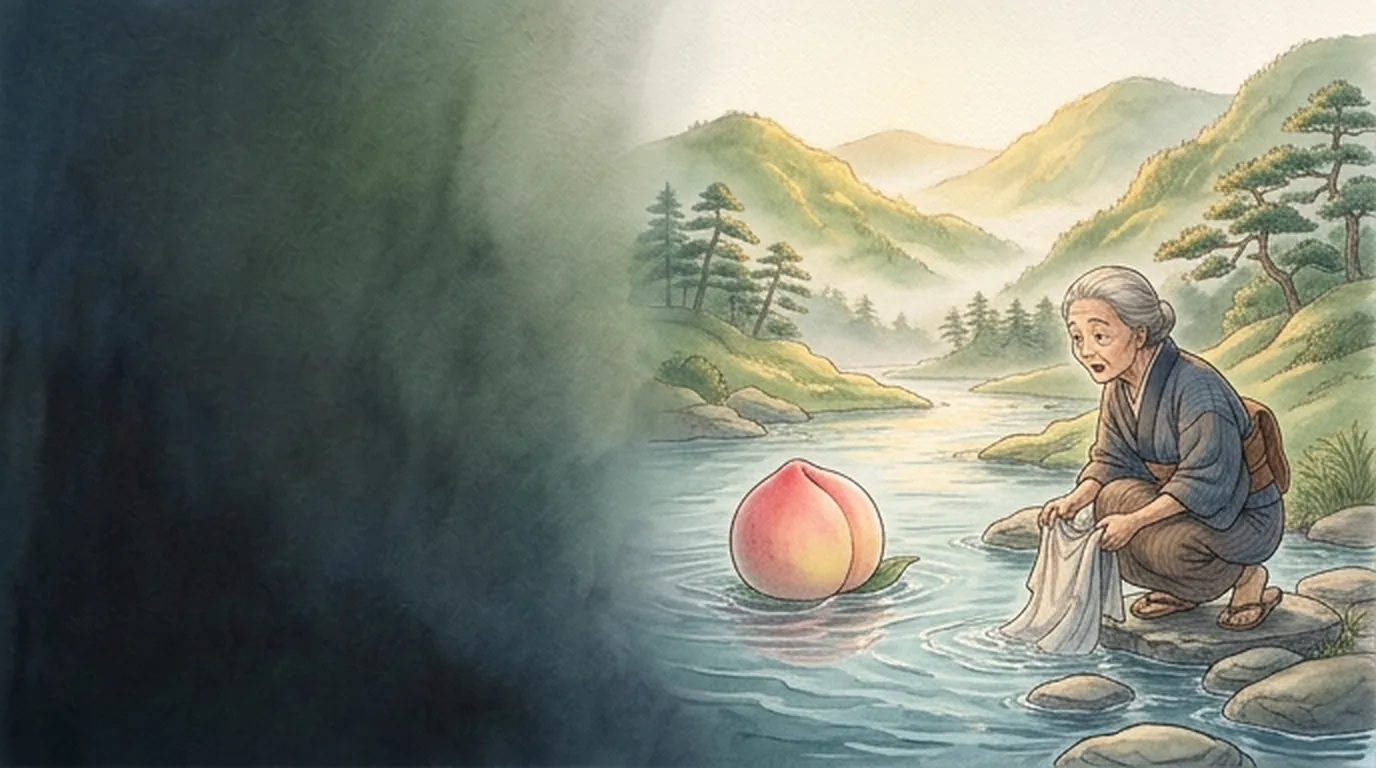
Momotaro ("Peach Boy") is the best-known folk tale in Japan. It has no author. It was passed on by word of mouth for hundreds of years, and the oldest books of it that survive are from the Edo period. In those early picture books the old couple eat the peach, grow young again, and have a child. The boy who jumps out of the peach became the standard version after the story went into school textbooks in the Meiji period, and since then almost every child in Japan has grown up with it. The story is famous for its sounds, too: どんぶらこ, the sound of the floating peach, is used for this story and almost nothing else. Not everyone has cheered for the hero. Fukuzawa Yukichi told his own children that the treasure belonged to the demons, and in 1924 Akutagawa wrote a version in which the demons are the peaceful ones. This is our own retelling in easy modern Japanese, with furigana on every kanji and grammar around JLPT N4. It follows the story as it is usually told: the peach, the millet dumplings, the dog, the monkey and the pheasant, and the island of demons. The three animals ask the same questions in the same words, so by the third time you will be reading without tapping.

Short Story · Retold in Easy Japanese

Contents

Read · Discover · Enjoy.

📖
Reading

Read the story retold in easy Japanese, with furigana on every kanji. Tap any word to see an easy English meaning without leaving the story.

📚
Idioms & Expressions

Idioms, sound words, old-style expressions and similes from the story. Filter by type and check each one in its sentence.

✍️
Grammar Patterns

Grammar patterns used in the story, with examples from the text. Filter by (estimated) JLPT level.

📝
Blog

Articles about the story's background, its author and its expressions (1 article).

📜
About this retelling

This is our own retelling of 桃太郎 in easy modern Japanese. It follows the story as it has long been told, but the words are ours.