
Historical · Advanced · JLPT N1 · 40 min

羅生門

Rashōmon

Ryūnosuke Akutagawa (芥川龍之介) · 1915

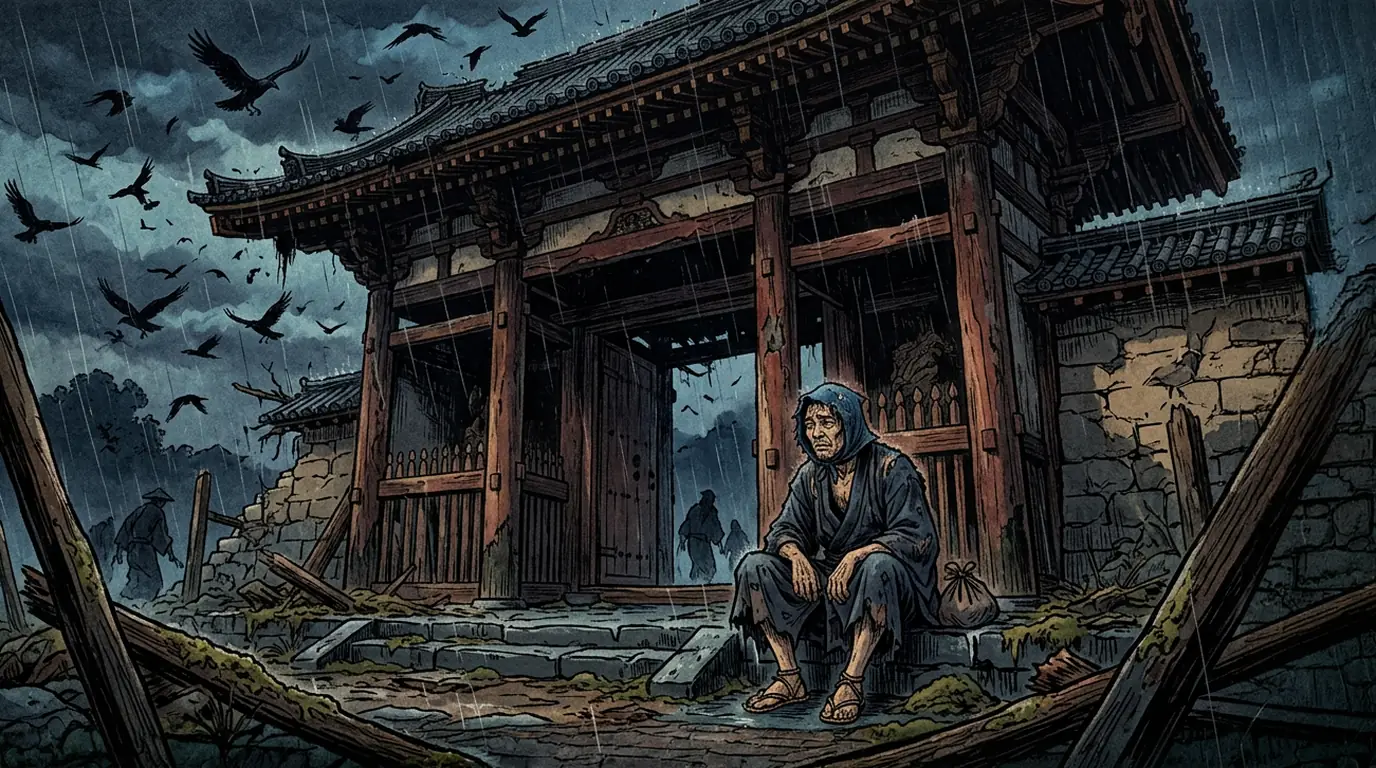
A dismissed servant, a ruined capital, and a choice between starving and stealing.

作品について

Ryūnosuke Akutagawa was only 23 when he published this story, retelling a tale from a 12th-century collection of Japanese legends. It became one of the most-read works in Japan: almost every Japanese high school student studies it in class. In 1950, director Akira Kurosawa borrowed its title and gloomy gate for his film Rashomon, which won the Golden Lion at Venice and introduced Japanese cinema to the world. Today, "the Rashomon effect" is used in English to describe how people remember the same event in completely different ways. Japan's most famous literary award, the Akutagawa Prize, is named after him. The story is short, but every sentence is carefully built, and the narrator's cool, detached voice makes the moral question at its center hit even harder.

Short Story · Single Volume

Contents

Read · Discover · Enjoy.

📖
Reading

Read the original Japanese text with furigana. Tap any word to see an easy English meaning without leaving the story.

📚
Idioms & Expressions

Idioms, sound words, old-style expressions and similes from the story. Filter by type and check each one in its sentence.

✍️
Grammar Patterns

Grammar patterns used in the story, with examples from the text. Filter by (estimated) JLPT level.

📝
Blog

Articles about the story's background, its author and its expressions (1 article).

📜
Source Text

This story comes from Aozora Bunko, a library of free Japanese e-books in the public domain.