
Commentary 2
Town lights and a human hand
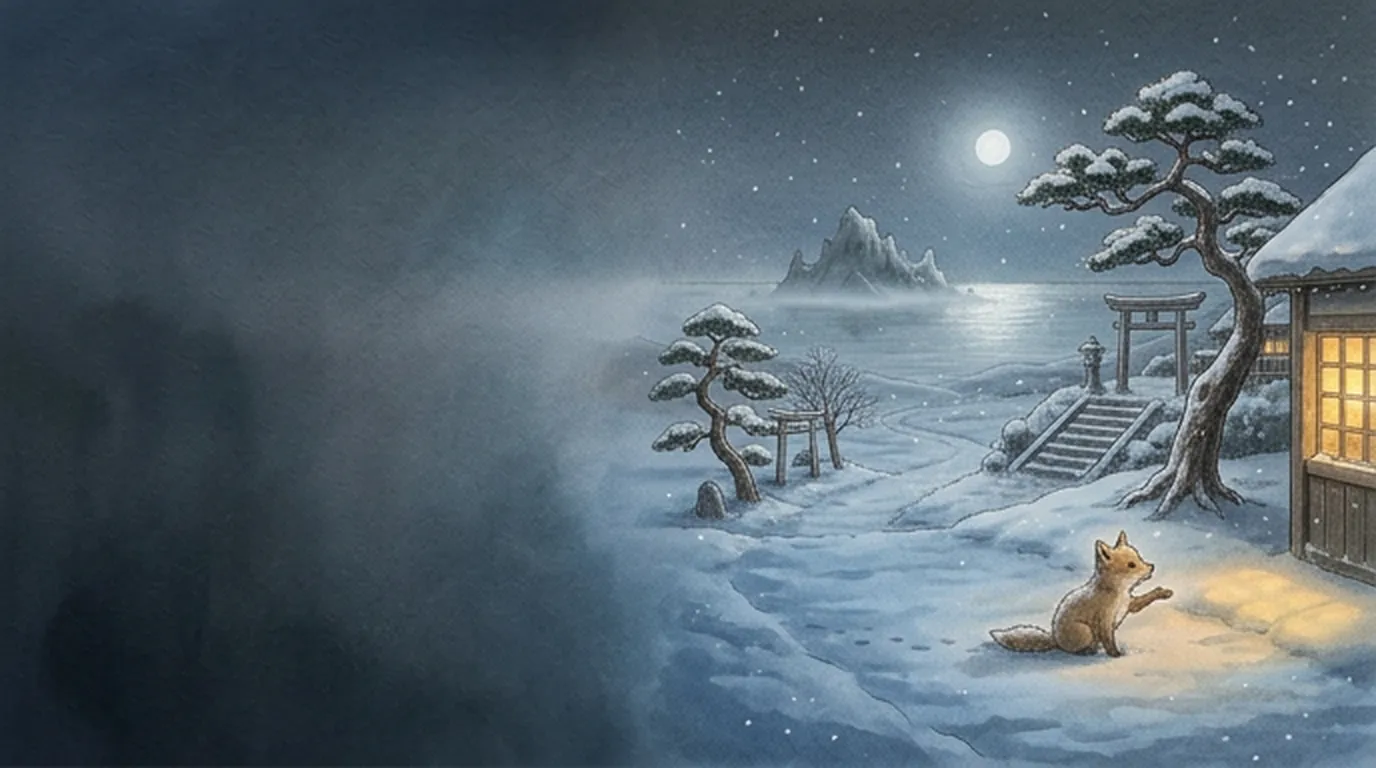
雪遊びから戻った子狐の両手は、冷たさで赤く染まっていた。しもやけになってはかわいそうだと、母狐は、夜を待って町へ出かけ、わが子の手に合う毛糸の手袋を買ってやろうと心に決める。
When the cub came back from playing in the snow, both his hands were dyed red with cold. It would be a pity if he got chilblains, the mother fox thinks, and she makes up her mind to wait for night, go out to town, and buy woolen mittens that fit her child's hands.
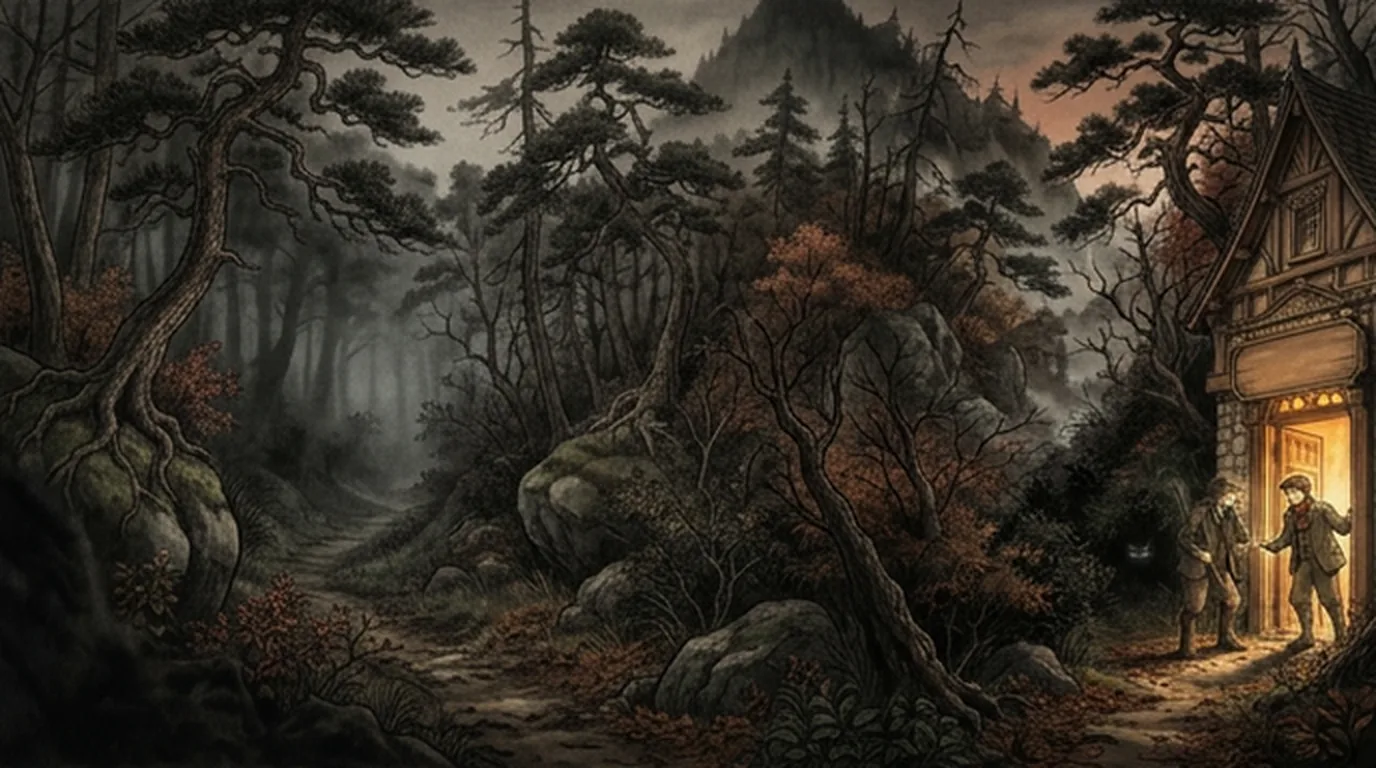
夜、二匹は森を後にした。やがて彼方に、町の明かりが一つ見えはじめる。そこで、母狐の足はすくんでしまった。かつて町へ出たとき、連れの狐があひるを盗もうとして百姓に見つかり、命からがら逃げ帰った。その記憶がよみがえったのである。
At night, the two of them left the forest behind. Before long, a single light of the town begins to show in the distance. There, the mother fox's legs froze. Once, when she had gone out to town, a fox companion had tried to steal a duck, been found by a farmer, and barely escaped with his life. That memory had come back to her.
やむなく母狐は、子狐を一人で町へ行かせることにした。子狐の片手を握って人間の子どもの手に変えてやり、こう言い聞かせる。帽子の看板のかかった店を見つけたら、戸の隙間からこちらの人間の手を差し入れ、手袋をちょうだいと言いなさい。もう一方の手は、決して出してはならない。相手が狐だと知れば、人間は捕まえて檻に入れてしまうのだから、と。
With no other choice, the mother fox decided to send the cub into town alone. She took one of the cub's hands, turned it into a human child's hand, and told him firmly: when you find a shop with a hat sign hanging out front, push this human hand through the gap in the door and say, "Mittens, please." You must never put out the other hand. If humans learn they are dealing with a fox, they will catch you and put you in a cage.
Commentary 3
The wrong hand and a lullaby
子狐は帽子屋を見つけ、戸を叩いた。わずかに開いた戸の隙間から、光の帯が雪の上に長く伸びる。その眩しさにうろたえた子狐は、出してはならないほうの手を、隙間から差し入れてしまった。
The cub found the hat shop and knocked on the door. From the gap of the slightly opened door, a band of light stretches long across the snow. Flustered by its brightness, the cub pushed the hand he must not put out through the gap.
帽子屋は、それが狐の手であることに気づく。どうせ木の葉で買いに来たのだろうと考え、まず代金を求めた。受け取った二枚の白銅貨をカチ合わせてみると、チンチンと澄んだ音が響く。木の葉ではない、本物の金である。帽子屋は、子ども用の毛糸の手袋を、子狐に持たせてやった。
The hatter notices that it is a fox's hand. Thinking it has surely come to buy with leaves, he first asked for payment. When he clinks together the two nickel coins he has received, they ring out with a clear "chin, chin." These are not leaves; this is real money. The hatter let the cub take a pair of children's woolen mittens.
帰り道、ある家の窓の下を通りかかった子狐は、人間の母親が歌う子守唄を耳にする。幼い子が言う。こんな寒い夜は、森の子狐は寒い寒いと鳴いているでしょうね、と。母親は答える。森の子狐も、お母さんの歌を聞いて、洞穴の中で眠ろうとしているでしょうね、と。その言葉を聞くなり、子狐は無性に母が恋しくなった。
On the way home, passing under the window of a certain house, the cub hears a human mother singing a lullaby. The little child says that on a cold night like this, the little fox in the forest must be crying, "I'm cold, I'm cold." The mother answers that the little fox in the forest must be listening to its mother's song and trying to sleep inside its hollow, too. The moment he heard those words, the cub longed terribly for his mother.
森へ戻った子狐は、母に告げる。人間なんて、ちっとも怖くないや。うっかり本当の手を出したのに、帽子屋は捕まえなかった。母狐はあきれ、やがて独り言のようにつぶやいた。「ほんとうに人間はいいものかしら。ほんとうに人間はいいものかしら。」
Back in the forest, the cub tells his mother: humans aren't scary at all. I carelessly put out my real hand, but the hatter didn't catch me. The mother fox was dumbfounded, and then she murmured, as if to herself, "I wonder if humans really are good. I wonder if humans really are good."
Commentary 4
Three things to notice
本作の読みどころを三つ挙げたい。
I would like to point out three things worth noticing in this work.
第一に、取り違えた手である。あれほど念を押されていながら、子狐は狐の手を差し出してしまう。だが、まさにその失敗があったからこそ、子狐は人間を怖くないと思うに至ったのである。
First, the wrong hand. Even though he had been warned so firmly, the cub puts out his fox hand. And yet it was precisely because of that mistake that the cub came to think humans are not scary.
第二に、帽子屋である。彼は、客が狐であることを承知していた。それでも手袋を売ったのは、代金が本物だったからだ。情け深い人物なのか、単に商売をしたにすぎないのか。物語は、彼の胸の内をそれ以上語らない。
Second, the hatter. He knew full well that his customer was a fox. Even so, he sold the mittens because the payment was real. Is he a kind-hearted person, or did he merely do business? The story tells us nothing more of what was in his heart.
第三に、人間の母親の子守唄である。寒い夜に身を寄せ合う人間の親子の姿は、狐の親子と何ら変わらない。しかも人間の子は、森に住む子狐の身を案じてさえいた。
Third, the human mother's lullaby. The human parent and child, huddled together on a cold night, are no different from the fox parent and child. What is more, the human child was even worried about the cub living in the forest.
「ごん狐」において、人間は狐を銃で撃った。本作では、人間は狐に手袋を売る。にもかかわらず、物語は母狐の問いを残したまま幕を閉じる。
In "Gon, the Little Fox," a human shot the fox with a gun. In this work, a human sells the fox mittens. Nevertheless, the story draws to a close leaving the mother fox's question unanswered.
同じ言葉を二度繰り返したとき、母狐は人間を信じはじめていたのだろうか。その答えは、読者に委ねられている。
When she repeated the same words twice, had the mother fox begun to trust humans? The answer is left to the reader.
Commentary 1
About Buying Mittens
冬の朝、森の洞穴から外へ出ようとした子狐が、「あっ」と叫んで母狐のもとへ転げ戻ってくる。目に何か刺さった、と訴えるのだ。だが、何も刺さってなどいない。夜のうちに降り積もった純白の雪が、朝の光を照り返していたのである。生まれて初めて目にする雪は、子狐にはあまりにまぶしかった。
One winter morning, a fox cub trying to step out of a hollow in the forest cries "Ah!" and comes tumbling back to his mother. Something has stuck in his eyes, he complains. Yet nothing has stuck in them at all. Pure white snow, piled up during the night, was throwing back the morning light. The snow, which he was seeing for the first time in his life, was far too dazzling for the cub.
今回取り上げるのは、新美南吉の「手袋を買いに」である。かつて紹介した「ごん狐」と同じ作者による、やはり狐と人間の物語だ。南吉は1943年三月、二十九歳の若さで世を去った。本作は、同年九月に刊行された童話集「牛をつないだ椿の木」に収録されている。小学校三年生の国語の教科書に、半世紀以上にわたって掲載されてきた作品でもある。
The work taken up this time is Nankichi Niimi's "Buying Mittens." It is by the same author as "Gon, the Little Fox," which we introduced before, and it too is a story of foxes and humans. Nankichi left this world in March 1943, at the young age of twenty-nine. This work is included in the collection of children's stories "The Camellia Tree Where the Ox Was Tied," published in September of the same year. It is also a work that appeared in third-grade elementary school Japanese textbooks for more than half a century.