
Commentary 2
The Emperor, a shadow, and tears at the moon
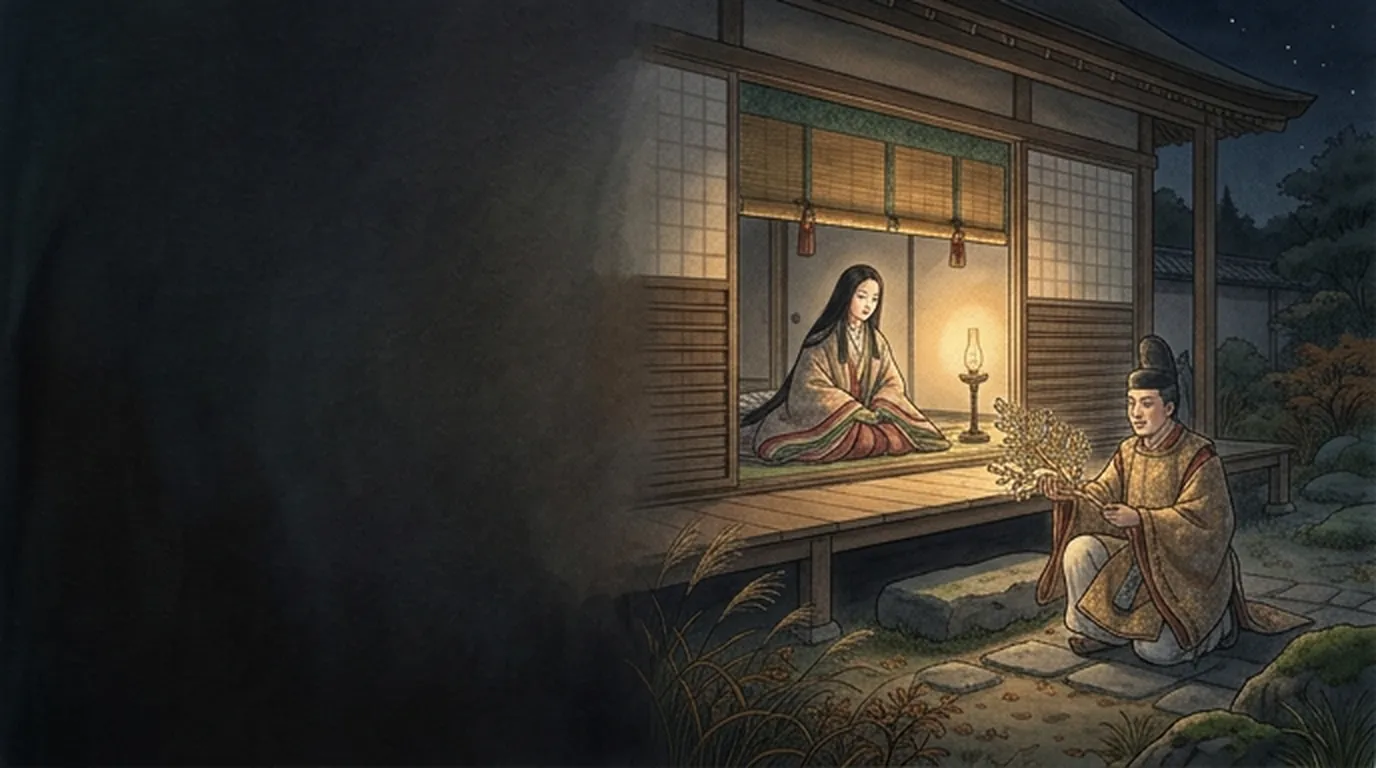
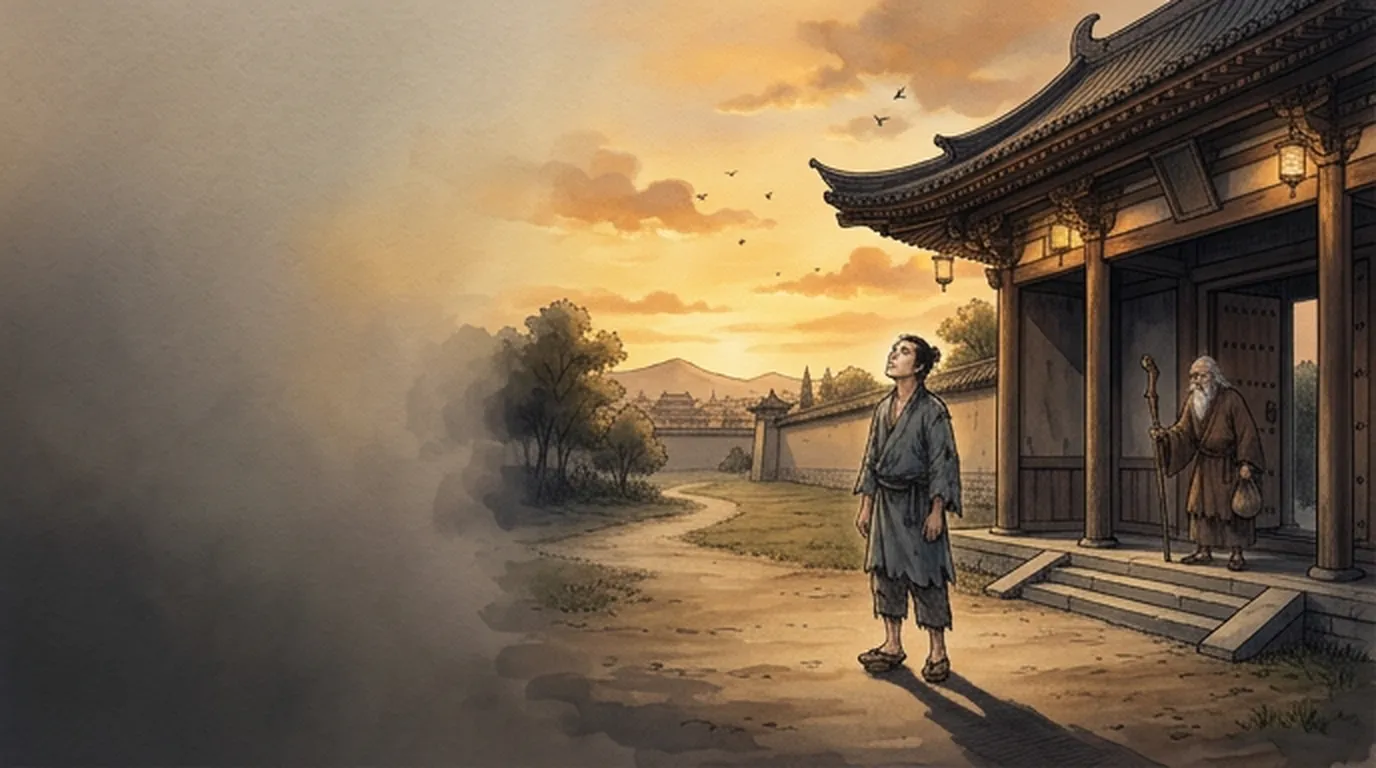
天皇は使いを送りますが、かぐや姫は会おうとしません。おじいさんに高い位を約束しても、だめでした。そこで天皇は、狩りに行くふりをして、とつぜん家に入りました。光の中に、美しい人が座っています。袖をつかんで連れて帰ろうとすると、かぐや姫は、さっと影になって消えてしまいました。この人は、ふつうの人ではない、と天皇は思いました。そして、連れて帰るのをあきらめます。それから三年、二人は手紙のやりとりを続けました。
The Emperor sends a messenger, but Kaguya-hime will not meet him. Even promising the old man a high rank did no good. So the Emperor pretended to go hunting and suddenly went into the house. In the light, a beautiful person is sitting. When he took hold of her sleeve and tried to take her back with him, Kaguya-hime suddenly became a shadow and vanished. This is no ordinary person, the Emperor thought. And so he gives up on taking her back with him. After that, for three years, the two kept writing letters to each other.
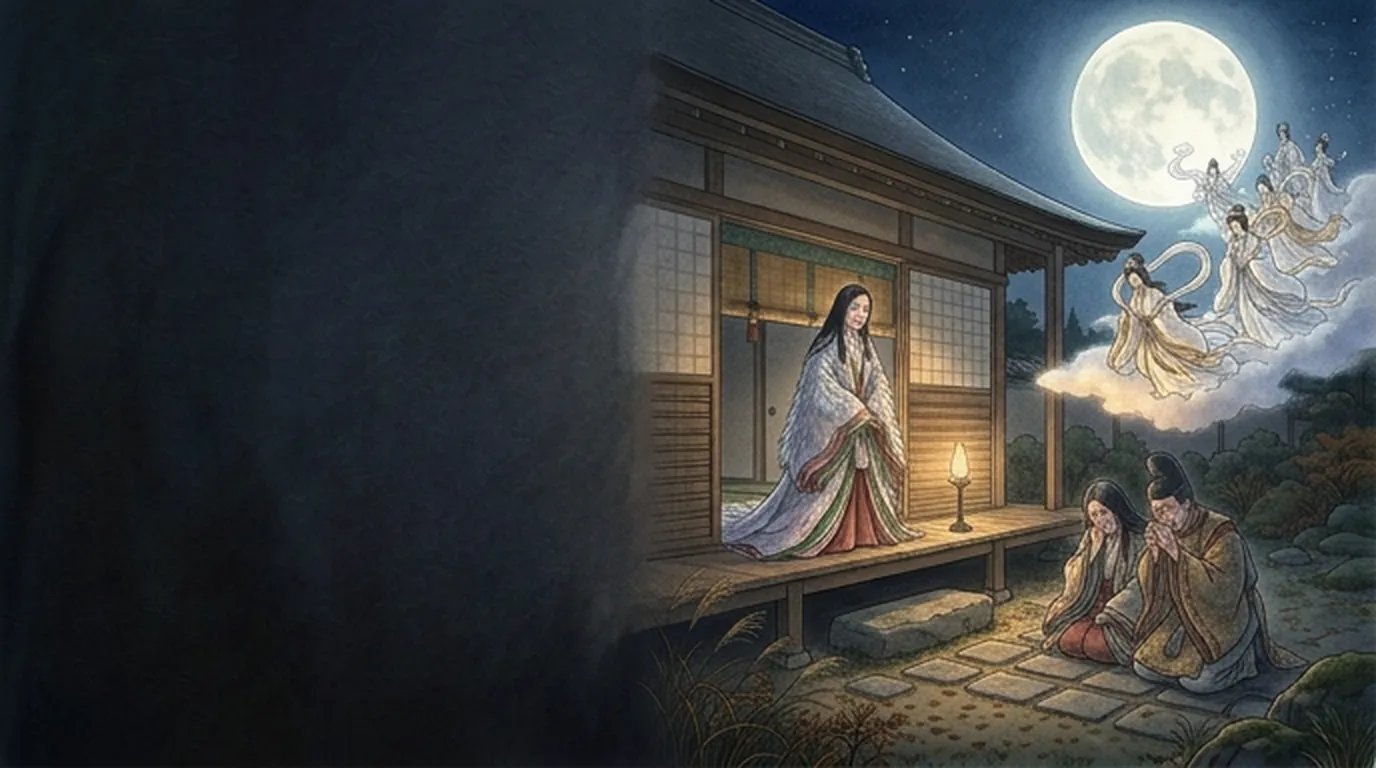
三年たった春のころから、かぐや姫は、月を見ては考えこむようになります。八月の満月が近づくと、人の前でも泣くようになりました。そして、とうとう打ち明けます。わたしは、この国の人ではありません。月の都の人です。今月の十五日に、迎えが来ます。
From around the spring after those three years, Kaguya-hime starts to look at the moon and fall deep into thought. As the full moon of the eighth month drew near, she began to cry even in front of people. And at last she tells the truth. I am not a person of this country. I am a person of the Capital of the Moon. On the fifteenth of this month, they will come for me.
月の都の人は、とても美しく、年をとらず、悩むこともないといいます。それでも、かぐや姫は言いました。帰るのは、うれしくありません。お二人と別れるのが、悲しくてたまらないのです。
The people of the Moon Capital are said to be very beautiful, never to grow old, and never to have any worries. Even so, Kaguya-hime said: I am not happy to go back. Parting from you two is so sad I cannot bear it.
Commentary 3
Two thousand soldiers, a robe of feathers, and Mount Fuji
おじいさんの願いで、天皇は二千人の兵士を送ります。おばあさんは奥の部屋でかぐや姫を抱き、おじいさんは戸に鍵をかけて、その前に座りました。
At the old man's request, the Emperor sends two thousand soldiers. The old woman held Kaguya-hime in her arms in a room at the back of the house, and the old man locked the door and sat down in front of it.
けれども、あの光の中では、だれも戦えません。弓を引く力も出ず、ただぼんやりと見ているだけです。閉めた戸は、ひとりでに開きました。
But in that light, no one can fight. They do not even have the strength to draw their bows, and they can only stare blankly. The door they had shut opened by itself.
月の人たちは、箱を二つ持っていました。一つには、天の羽衣。もう一つには、飲めば死ななくなる薬が入っています。この羽衣を着た人は、心が変わってしまうといいます。
The people of the moon had two boxes with them. In one, the robe of feathers from heaven. In the other is a medicine that keeps you from dying if you drink it. It is said that when a person puts on this robe, their heart changes.
かぐや姫は言いました。少し待ってください。そして天皇に手紙と歌を書き、薬をそえます。羽衣を着る今になって、あなたのことをしみじみと思い出しています、という歌でした。書き終わると、羽衣が着せられます。おじいさんをかわいそうだ、いとしい、と思う気持ちも消えました。かぐや姫は車に乗り、百人ほどの月の人と、空へのぼっていきます。
Kaguya-hime said: Please wait a moment. Then she writes a letter and a poem to the Emperor and adds the medicine to them. The poem said: now, as I put on the robe of feathers, I am remembering you with deep feeling. When she has finished writing, the robe is put on her. Her feeling that the old man was pitiful and dear to her disappeared too. Kaguya-hime gets into a carriage and rises into the sky with about a hundred people of the moon.
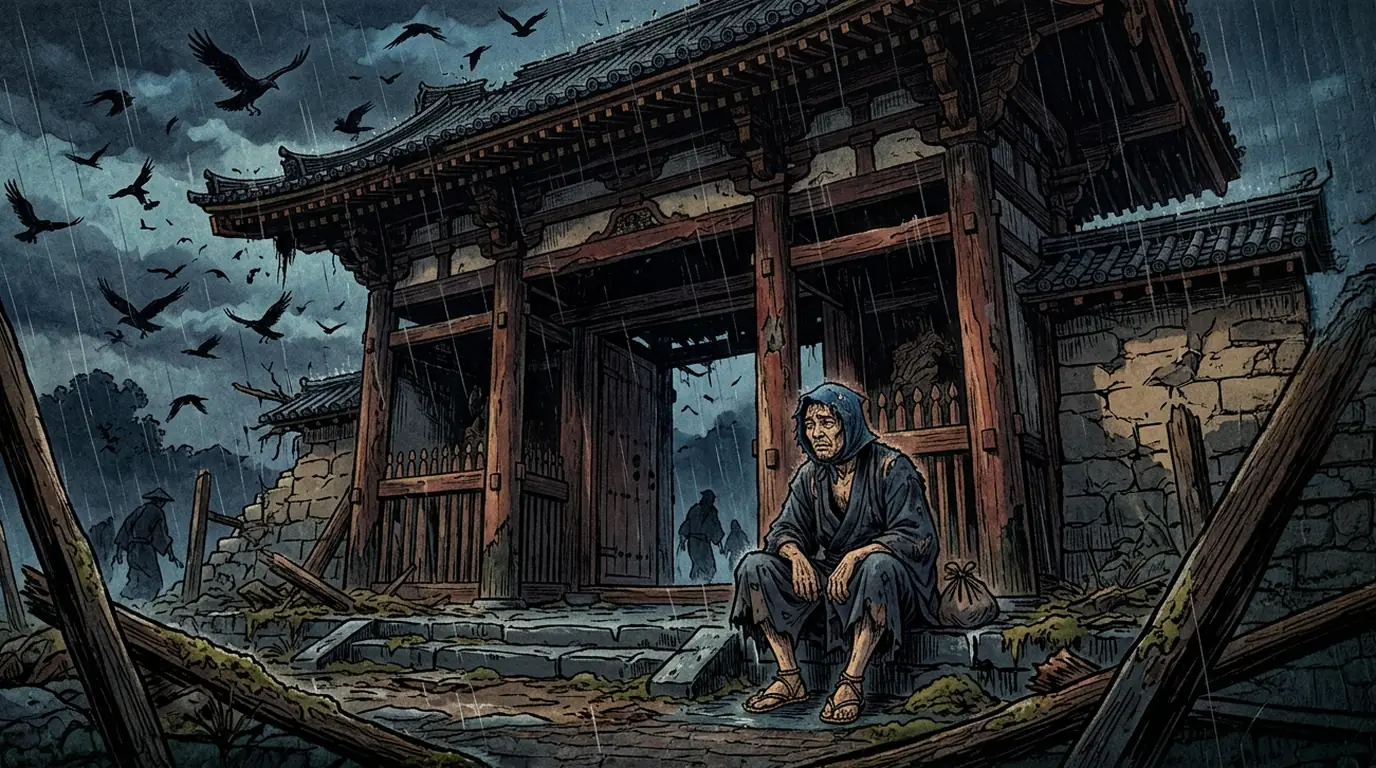
おじいさんとおばあさんは、血の涙を流して泣き、そのまま病気になって寝こんでしまいました。天皇は手紙を読んで、たずねます。天にいちばん近い山はどこか。もう会えないのなら、死なない薬に何の意味があるだろう。そして、その山の上で、手紙と薬を燃やさせました。その山が、富士山です。煙は今も雲の中へのぼっている、と言って、物語は終わります。
The old man and the old woman wept tears of blood, and then they fell ill and took to their beds. The Emperor reads the letter and asks: Which mountain is closest to heaven? If I can never see her again, what meaning is there in a medicine that keeps you from dying? And he had the letter and the medicine burned at the top of that mountain. That mountain is Mount Fuji. The story ends by saying that the smoke still rises into the clouds today.
Commentary 4
Three things to notice
読みどころを三つ挙げます。
Here are three things to notice.
一つ目は、最後の言葉あそびです。物語は、兵士がたくさん登ったので「ふじ」の山と名づけた、と説明します。けれども、もう一つの言葉も聞こえてきます。死なないことを、日本語で「ふし」と言います。「ふし」の薬を燃やした、「ふじ」の山です。
The first is the wordplay at the very end. The story explains that the mountain was named "Fuji" because many soldiers climbed it. But another word can be heard too. In Japanese, not dying is called "fushi." It is the mountain of "Fuji," where the medicine of "fushi" was burned.
二つ目は、かぐや姫の変化です。第二話で、男が亡くなったと聞いたとき、かぐや姫は「少し」かわいそうだと思っただけでした。その人が第三話では、月を見て泣き、悲しくてたまらないと言います。地上で暮らすうちに、かぐや姫は変わったのです。
The second is the change in Kaguya-hime. In Part 2, when she heard that a man had died, Kaguya-hime felt only "a little" sorry for him. In Part 3, that same person cries as she looks at the moon, and says she is so sad she cannot bear it. While she lived on earth, Kaguya-hime changed.
三つ目は、罪です。月の王らしい人が、おじいさんに言いました。かぐや姫は罪をおかしたので、しばらくの間、おまえのところにいたのだ。どんな罪なのかは、どこにも書かれていません。その人は、地上を「きたない所」と呼びます。けれども、かぐや姫にとっては、泣くほど離れたくなかった所です。その「きたない所」から、かぐや姫は羽衣を着せられ、何も思わずに帰っていきました。
The third is her sin. Someone who seemed to be the King of the Moon said to the old man: Kaguya-hime committed a sin, and so she stayed with you for a while. What the sin was is not written anywhere. That person calls the earth an "unclean place." But for Kaguya-hime, it was a place she did not want to leave, so much that she cried. Yet once the robe of feathers was put on her, she went back from that "unclean place" without a thought.
悲しみを忘れて月へ帰ったかぐや姫は、幸せなのでしょうか。
Kaguya-hime forgot her sadness and went back to the moon. Is she happy?
Commentary 1
About The Tale of the Bamboo Cutter, Part 3
八月十五日の夜です。屋根の上に千人、塀の上に千人。天皇が送った二千人の兵士が、弓を持って空を見上げています。真夜中、あたりが昼よりも明るくなりました。満月を十も合わせたような光です。その光の中を、雲に乗った人たちが下りてきます。
It is the night of the fifteenth day of the eighth month. A thousand on the roof, a thousand on the wall. Two thousand soldiers sent by the Emperor are holding their bows and looking up at the sky. At midnight, everything around became brighter than the daytime. It is a light like ten full moons put together. Through that light, people riding on clouds come down.
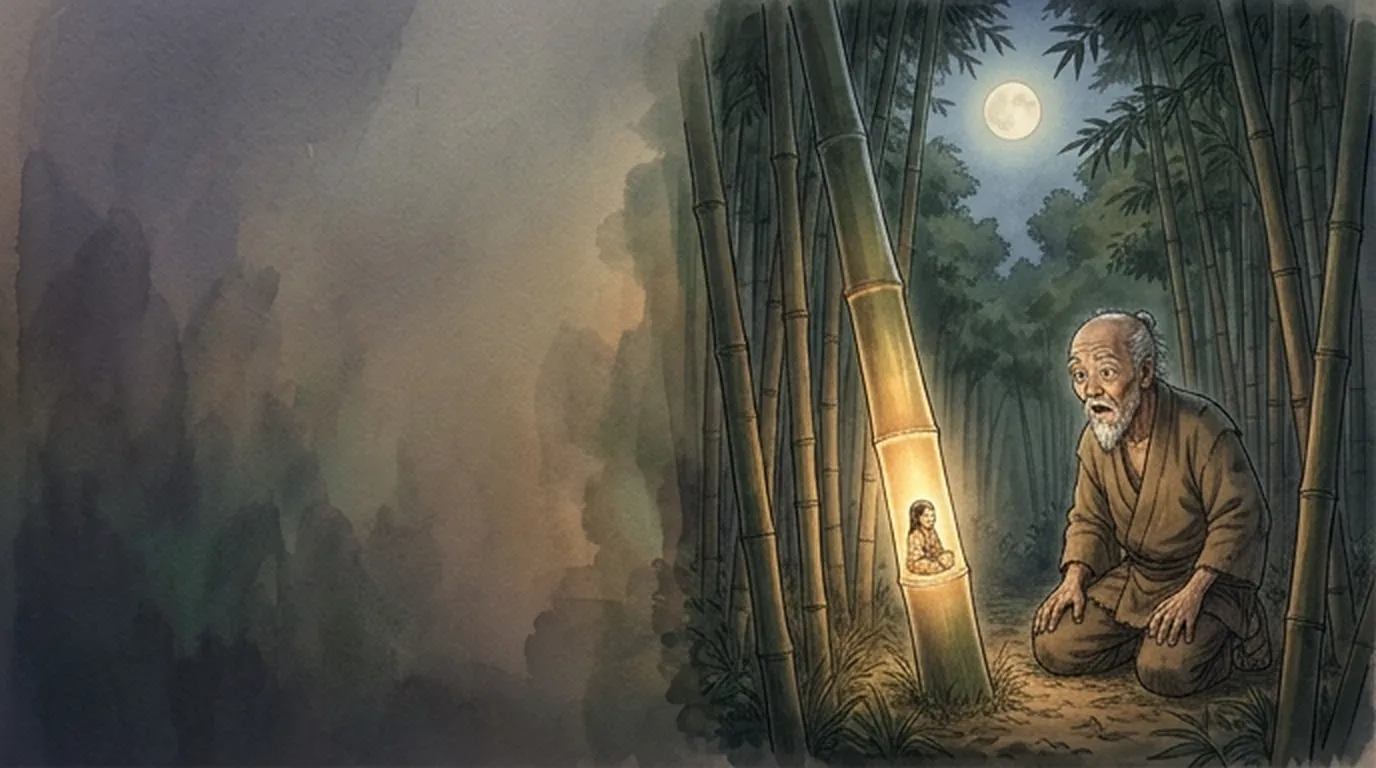
今回は「竹取物語」の第三話、最後の話です。千年以上前に書かれた、日本でいちばん古い物語を、やさしい今の日本語に書き直して、三回に分けてお届けしてきました。
This time, it is Part 3 of "The Tale of the Bamboo Cutter," the last part. We have rewritten the oldest story in Japan, written more than a thousand years ago, in easy modern Japanese, and we have been bringing it to you in three parts.
第二話では、五人の男が宝物をさがして、五人とも失敗しました。そして、かぐや姫のうわさは、天皇の耳にも届きます。
In Part 2, five men went looking for treasures, and all five of them failed. And then word of Kaguya-hime reaches the ears of the Emperor too.