
Commentary 2
The Emperor, a shadow, and tears at the moon
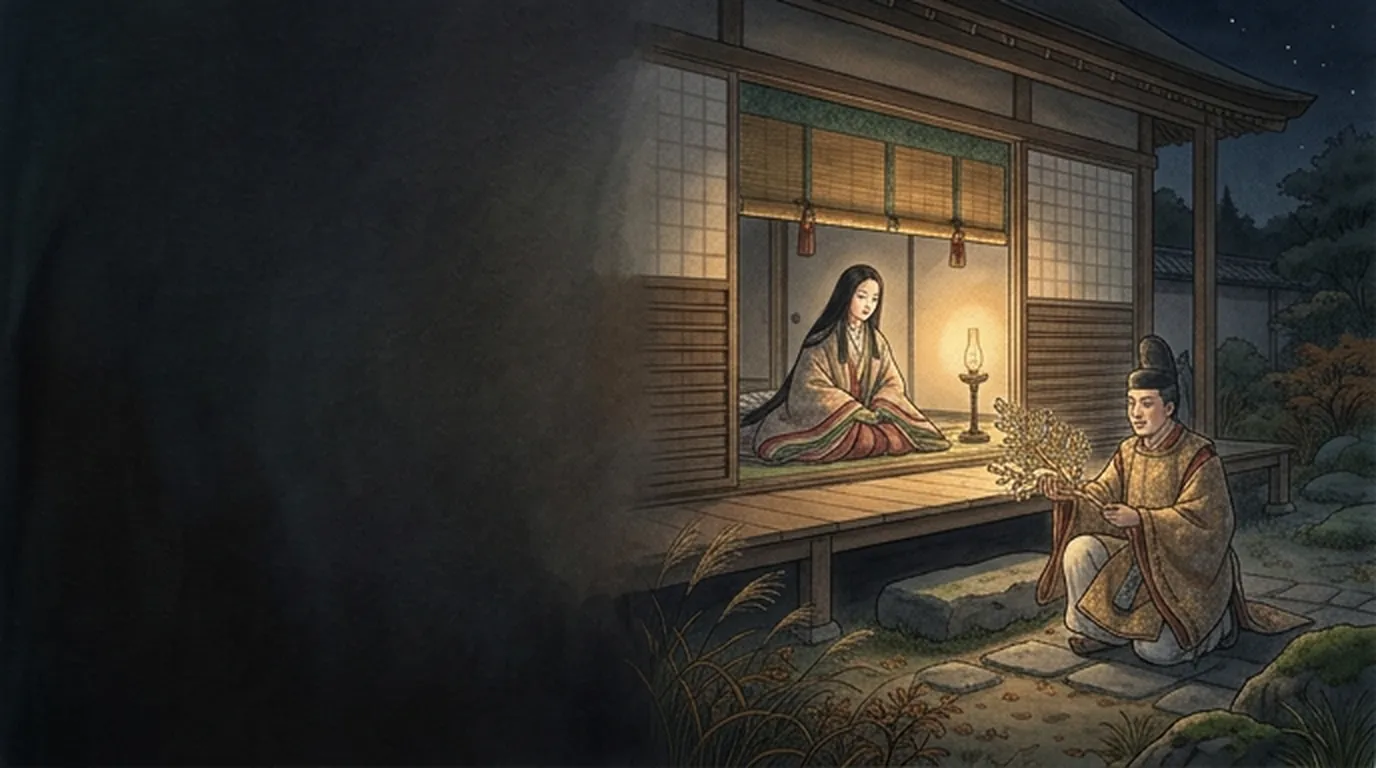
帝は使者を遣わすが、かぐや姫は頑として会おうとしない。翁に高い位を約束しても、徒労に終わった。そこで帝は、狩りに出るふりをして、不意に屋敷へ踏み込む。光の中に、麗しい人が座している。袖を捉えて連れ帰ろうとした刹那、かぐや姫はふっと影と化し、姿を消してしまった。この人は、ただの人ではない。そう悟った帝は、連れ帰ることを断念する。以後三年、二人は文を交わし続けた。
The Emperor sends a messenger, but Kaguya-hime stubbornly refuses to meet him. Even promising the old man a high rank came to nothing. So the Emperor, pretending to go out hunting, bursts into the house without warning. In the light, a lovely person is seated. The instant he seized her sleeve to take her back with him, Kaguya-hime turned into a shadow and vanished. This is no mere human. Realizing this, the Emperor abandons the idea of taking her back. For the three years that followed, the two kept exchanging letters.
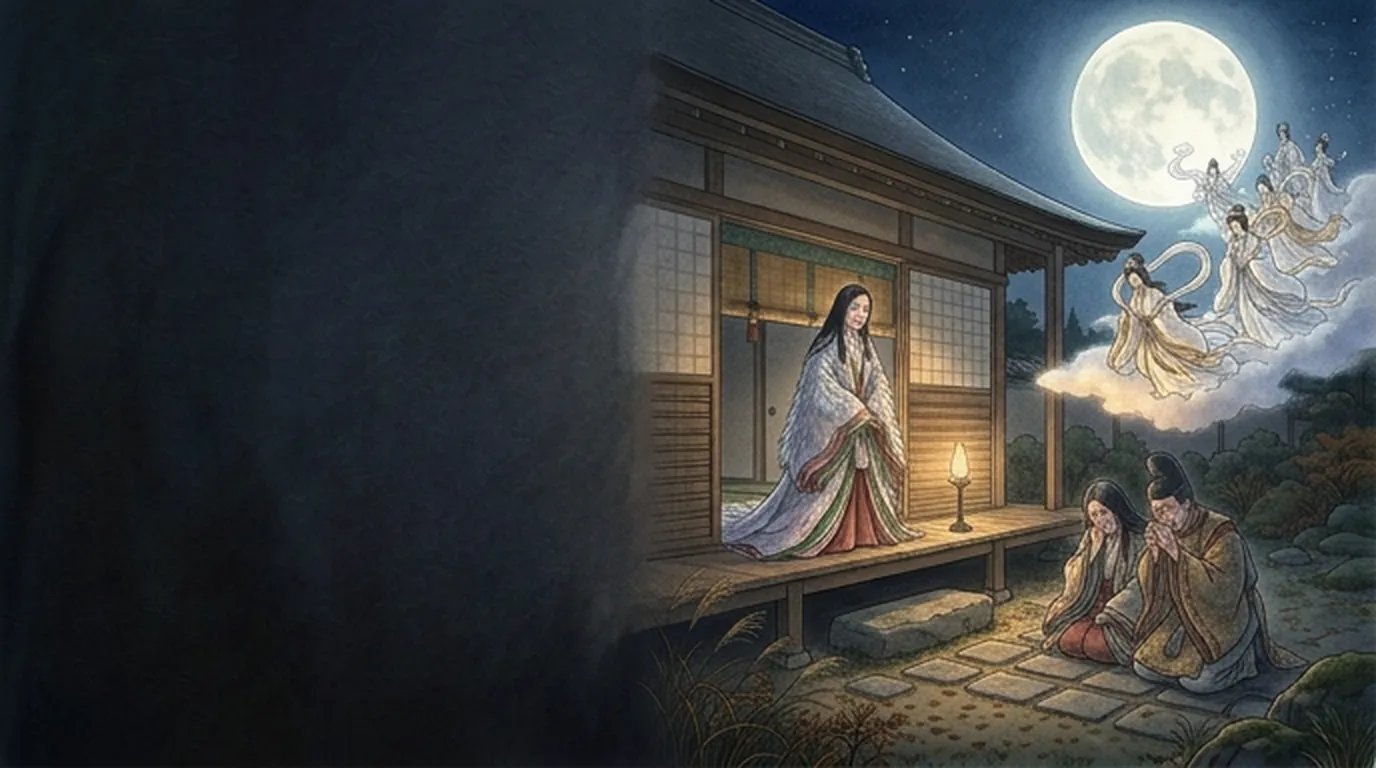
三年を経た春の頃から、かぐや姫は月を眺めては物思いに沈むようになる。八月の満月が近づくと、人目もはばからず涙を流すようになった。そして、ついに胸の内を明かす。わたしはこの国の者ではありません。月の都の者です。今月の十五日に、迎えが参ります。
From around the spring after three years had passed, Kaguya-hime takes to gazing at the moon and sinking into reverie. As the full moon of the eighth month drew near, she came to weep without caring who saw her. And at last she reveals what is in her heart. I am not of this country. I am of the Capital of the Moon. On the fifteenth of this month, they will come for me.
月の都の人々は、この上なく美しく、老いることも、思い悩むこともないという。それでもなお、かぐや姫はこう語った。帰ることは、うれしくありません。お二人とお別れするのが、悲しくてなりません。
The people of the Moon Capital are said to be beautiful beyond compare, and neither to grow old nor to be troubled by worries. Yet even so, Kaguya-hime spoke thus: I am not glad to go back. Parting from you two is unbearably sad.
Commentary 3
Two thousand soldiers, a robe of feathers, and Mount Fuji
翁の願いを受け、帝は二千の兵を差し向ける。嫗は奥の間でかぐや姫を抱きかかえ、翁は戸に錠を下ろして、その前に陣取った。
At the old man's plea, the Emperor dispatches two thousand soldiers. The old woman holds Kaguya-hime tight in an inner room, and the old man bolts the door and takes up his position in front of it.
しかし、あの光の前では、誰一人として戦うことができない。弓を引く力さえ失せ、ただ呆然と見守るばかりである。固く閉ざした戸も、ひとりでに開いた。
But before that light, not a single one of them is able to fight. Even the strength to draw a bow deserts them, and they can only look on in a daze. Even the tightly shut door opened by itself.
月の者たちは、二つの箱を携えていた。一方には天の羽衣、もう一方には、飲めば不死となる薬が収められている。この羽衣を身にまとった者は、心が変わってしまうのだという。
The people of the moon carried two boxes. In one was the robe of feathers from heaven; in the other, a medicine that makes whoever drinks it immortal. Whoever wraps themselves in this robe, it is said, has their heart changed.
かぐや姫は言った。しばしお待ちください。そして帝に宛てて文と歌をしたため、薬を添える。羽衣を着る今になって、あなたのことがしみじみと思い出されます、という歌であった。書き終えるや、羽衣が着せかけられる。翁を気の毒に思い、いとおしむ心も、そこで消え失せた。かぐや姫は車に乗り、百人ほどの月の者とともに、天へと昇っていく。
Kaguya-hime said: Wait a little while, please. Then she writes a letter and a poem addressed to the Emperor, and adds the medicine. It was a poem that said: now, as I put on the robe of feathers, you come back to my mind with deep feeling. No sooner has she finished writing than the robe is draped over her. Her heart that pitied the old man and held him dear vanished then and there. Kaguya-hime boards a carriage and ascends to the heavens with some hundred people of the moon.
翁と嫗は血の涙を流して泣き、そのまま病の床に伏してしまった。帝は文を読み、問う。天に最も近い山はどこか。もはや会えぬのなら、不死の薬に何の意味があろうか。そして、その山の頂で、文と薬を焼かせた。その山こそが、富士山である。その煙は今も雲の中へ立ち昇っている、と記して、物語は幕を閉じる。
The old man and the old woman wept tears of blood, and then took to their sickbeds. The Emperor reads the letter and asks: Which mountain is closest to heaven? If I can never meet her again, what meaning could a medicine of immortality have? And on the summit of that mountain, he had the letter and the medicine burned. That very mountain is Mount Fuji. With the words that its smoke still rises into the clouds today, the story draws to a close.
Commentary 4
Three things to notice
本作の読みどころを、三点挙げたい。
I would like to point out three highlights of this work.
第一に、結末の言葉遊びである。物語は、兵士が大勢登ったことから「ふじ」の山と名づけた、と説明する。だが、そこにはもう一つの言葉が響いている。死なないことを、日本語で「ふし」という。「ふし」の薬を焼いた、「ふじ」の山なのである。
First, the wordplay at the end. The story explains that the mountain was named "Fuji" because a great many soldiers climbed it. But another word echoes there too. In Japanese, not dying is called "fushi." It is the mountain of "Fuji," where the medicine of "fushi" was burned.
第二に、かぐや姫の変化である。第二話において、求婚者の死を聞いたかぐや姫は、「少し」哀れに思ったにすぎなかった。その彼女が第三話では、月を見ては涙し、悲しくてならないと口にする。地上で暮らすうちに、かぐや姫は変わったのである。
Second, the change in Kaguya-hime. In Part 2, on hearing of a suitor's death, Kaguya-hime felt no more than "a little" pity. In Part 3, that same woman weeps as she looks at the moon, and says she is unbearably sad. While she lived on earth, Kaguya-hime changed.
第三に、罪である。王とおぼしき人は、翁にこう告げた。かぐや姫は罪を犯したゆえに、しばしそなたのもとにいたのだ。いかなる罪であったのかは、どこにも記されていない。その者は、地上を「きたなき所」と呼ぶ。だがそこは、かぐや姫が涙するほど離れがたく思っていた地であった。その「きたなき所」から、羽衣をまとったかぐや姫は、もはや何の思いも抱かずに去っていったのである。
Third, sin. One who appeared to be the king declared to the old man: Kaguya-hime committed a sin, and for that reason she was with you for a while. What kind of sin it was is recorded nowhere. That figure calls the earth an "unclean place." Yet it was a land Kaguya-hime had found so hard to leave that she wept. Once wrapped in the robe of feathers, she departed from that "unclean place" without a single thought.
悲しみを忘れて月へ帰ったかぐや姫は、果たして幸福なのだろうか。その答えは、読者に委ねられている。
Kaguya-hime forgot her sorrow and went back to the moon. Is she truly happy? The answer is left to the reader.
Commentary 1
About The Tale of the Bamboo Cutter, Part 3
八月十五日の夜。屋根の上に千人、塀の上に千人。帝が遣わした二千の兵が、弓を携えて夜空を仰いでいる。夜半、辺りは白昼をしのぐ明るさに包まれた。満月を十も合わせたかのような光である。その光の中を、雲に乗った者たちが降りてくる。
The night of the fifteenth day of the eighth month. A thousand on the roof, a thousand on the wall. Two thousand soldiers dispatched by the Emperor gaze up at the night sky, bows in hand. At midnight, the surroundings were bathed in a brightness surpassing broad daylight. It is a light as though ten full moons had been joined together. Through that light, beings riding on clouds descend.
今回は「竹取物語」の第三話、すなわち最終話である。千年以上前に成立した日本最古の物語を、平易な現代語に改め、三回に分けてお届けしてきた。
This time it is Part 3 of "The Tale of the Bamboo Cutter," that is to say, the final part. We have rendered Japan's oldest story, composed more than a thousand years ago, into plain modern Japanese, and brought it to you in three parts.
第二話では、五人の求婚者がそれぞれ宝物を求め、ことごとく失敗に終わった。そして、かぐや姫の噂は、ついに帝の耳にまで達する。
In Part 2, the five suitors each sought a treasure, and every one of them ended in failure. And then the rumor of Kaguya-hime at last reaches even the ears of the Emperor.