
Blog · Momotaro
Momotaro (1): 4 Expressions
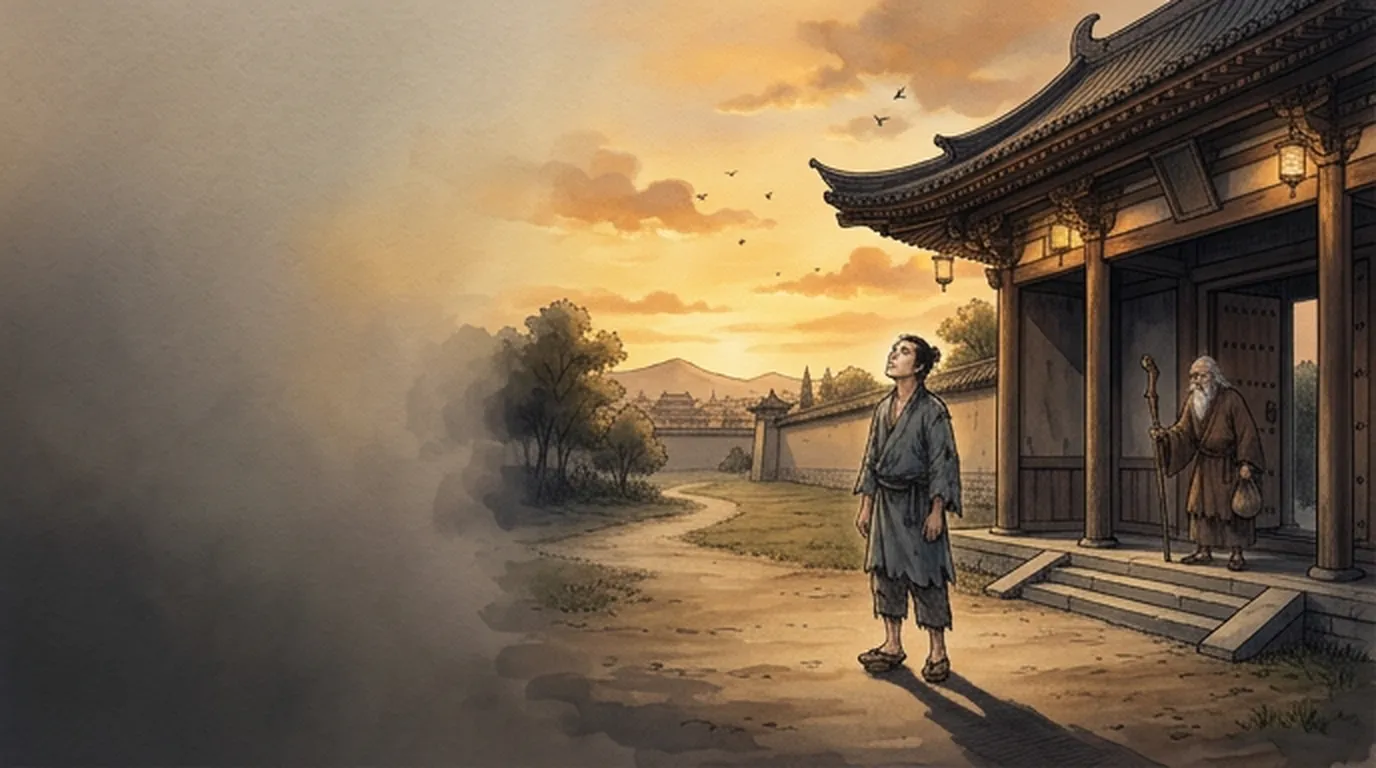
Momotaro(桃太郎)is the best-known folk tale in Japan. Nobody wrote it. It was passed on by word of mouth for hundreds of years, and every child in Japan can tell you how it goes: the peach, the millet dumplings, the dog, the monkey and the pheasant.
Our version is a retelling in easy modern Japanese. This week we look at twelve expressions from it, in three articles. Part 1: the peach, and the boy who jumps out of it.
1. むかしむかし — once upon a time
むかし is "long ago." Said twice, むかしむかし is the set opening of a Japanese folk tale, just like "once upon a time."
むかしむかし、あるところに、おじいさんとおばあさんが住んでいました。
Once upon a time, in a certain place, there lived an old man and an old woman.
Notice あるところに, "in a certain place." Folk tales do not say when or where. An old man and an old woman, somewhere, long ago: that is all you need.
Today:
- 昔は、よくこの公園で遊んだ。
I often played in this park a long time ago. - 昔々のことなので、よく覚えていません。
It was ages ago, so I don't remember it well.
Tip: Many folk tales end with めでたし、めでたし — "and they all lived happily ever after."
2. どんぶらこ — the sound of a floating peach
どんぶらこ is the sound of something big and heavy floating down a river, bobbing up and down.
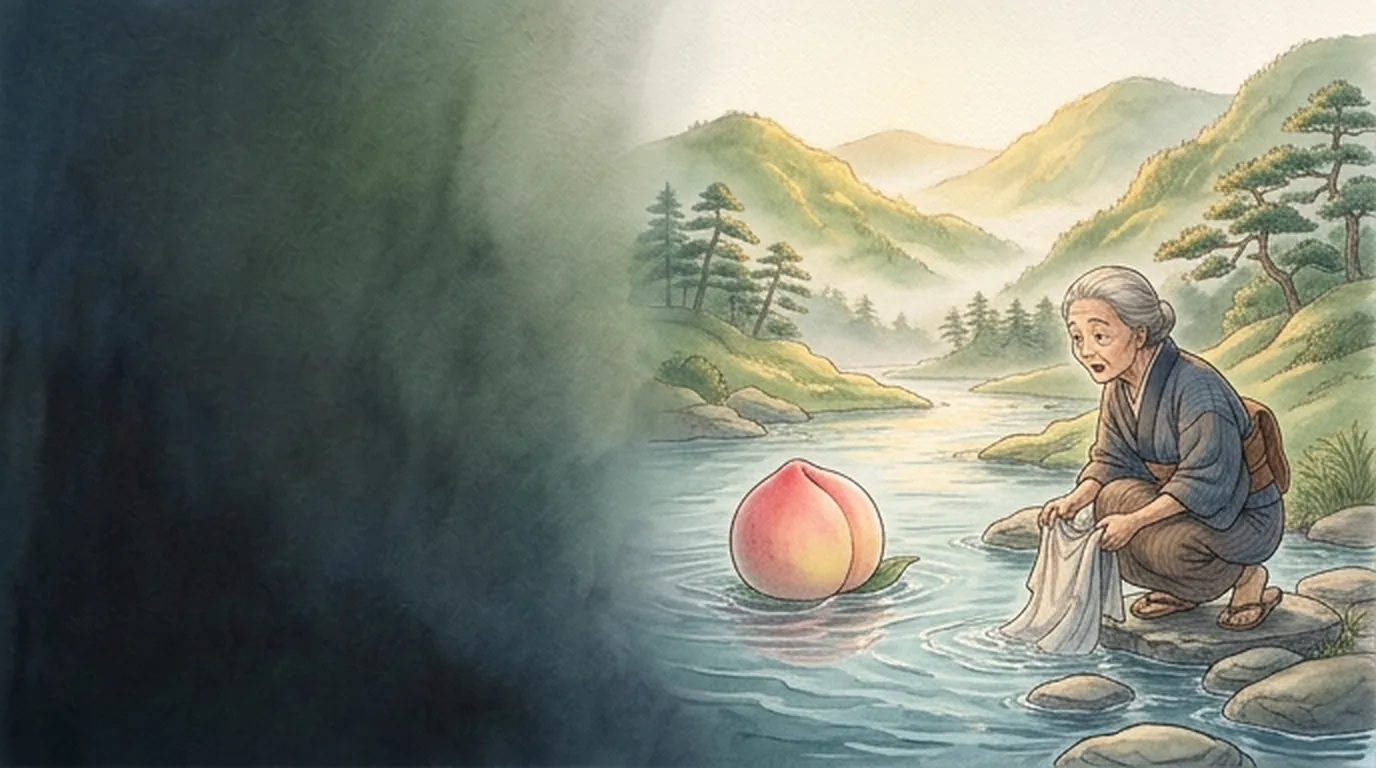
どんぶらこ、どんぶらこ。桃は、おばあさんの前までゆっくり流れてきます。
Donburako, donburako. The peach slowly floated right up to where the old woman was.
This word belongs to this story. People almost never use it for anything else, but say どんぶらこ to anyone in Japan and they will think of the peach.
Today:
- ボールが、池にぷかぷかうかんでいる。
A ball is floating lightly on the pond. - 「どんぶらこ」と聞くと、桃太郎を思い出す。
When I hear "donburako," I think of Momotaro.
Tip: For light things that float, the everyday word is ぷかぷか.
3. 〜ていると — while ...ing, (something happened)
Verb ている+と means "while I was doing A, B happened." B is usually a surprise.
おじいさんが桃を両手にのせてながめていると、とつぜん、桃が中からぽんと二つに割れました。
As the old man held the peach in both hands and looked at it, the peach suddenly split in two from the inside with a pop.
In older versions of the story, the old couple eat the peach, grow young again, and have a baby. The boy who jumps out of the peach is the version that went into school textbooks, and it is the one everybody knows now.
Today:
- 本を読んでいると、電話が鳴った。
While I was reading a book, the phone rang. - 道を歩いていると、知らない人に話しかけられた。
As I was walking down the street, a stranger spoke to me.
Tip: The second half is something you did not plan. You can't use this pattern for your own decision: ✕ 本を読んでいると、コーヒーを飲んだ.
4. それでいて — and yet
それでいて adds something you would not expect after what was just said. It often joins two good points that do not usually go together.
相撲をとっても、村じゅうで桃太郎に勝てる人はだれもいません。それでいて、心のやさしい子でした。
Even at sumo, no one in the whole village could beat Momotarō. And yet he was a kind-hearted boy.
Momotarō is the strongest boy in the village, and he is gentle. The story wants you to remember both.
Today:
- この店は安くて、それでいて、おいしい。
This restaurant is cheap, and yet the food is good. - 彼は静かで、それでいて、強い人だ。
He is quiet, and yet he is a strong person.
Tip: それなのに also means "and yet," but it complains: 約束したのに、それなのに来なかった — "He promised, and yet he didn't come."
Read it in the story
Next time: Momotarō hears about an island of demons, and three animals ask him the same two questions.