
Blog · The Tale of the Bamboo Cutter, Part 3
The Tale of the Bamboo Cutter, Part 3 (3): 4 Expressions
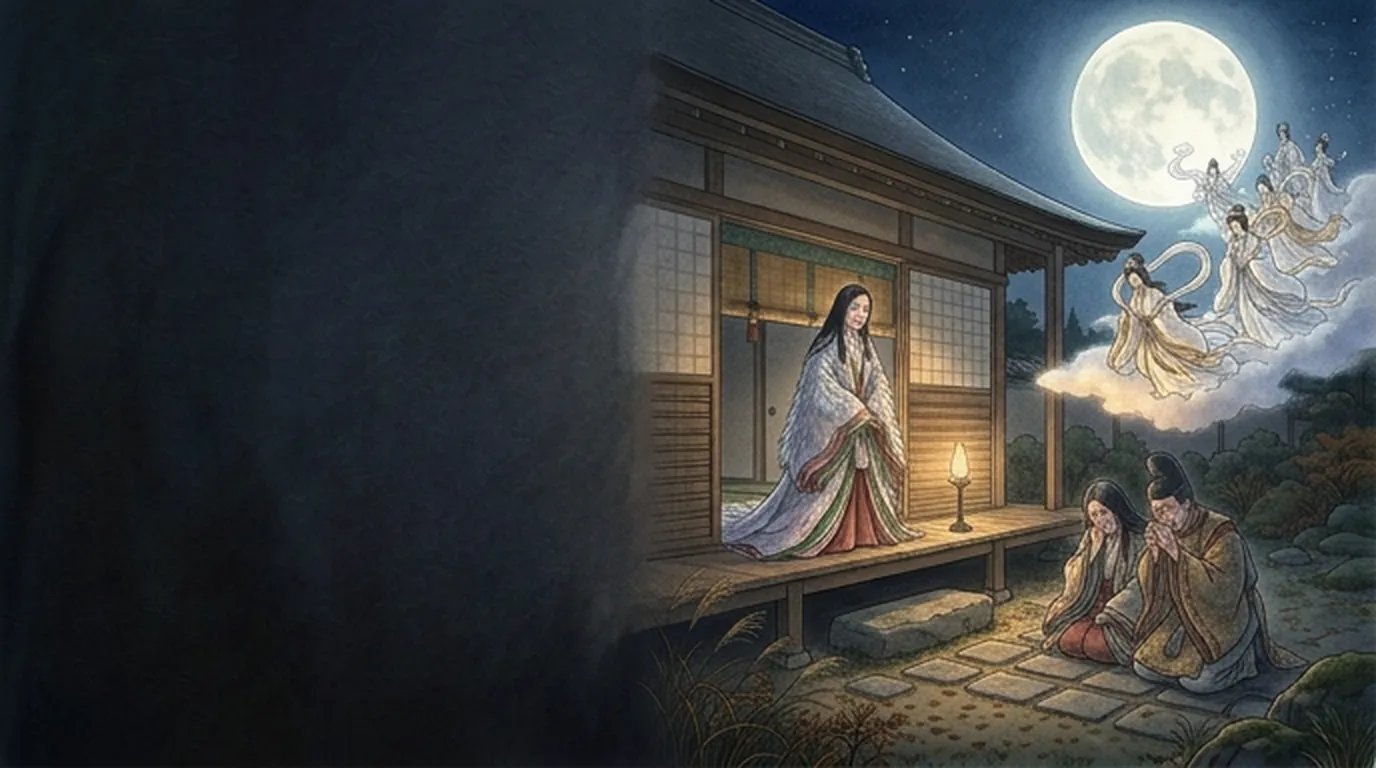
This is the last article on The Tale of the Bamboo Cutter. In the last article, the people of the moon came down on clouds, and the locked door opened by itself.
They have brought two boxes. One holds 天の羽衣, the robe of heaven. The other holds 不死の薬, the drug of immortality.
1. 〜ずに — without ...ing
〜ずに is the written-style form of 〜ないで: "without doing."
そして、あわてずに、帝に手紙を書きました。
Then, without hurrying, she wrote a letter to the Emperor.
Whoever puts on the robe of heaven loses all human feeling. The moon people are ready to dress her, but Kaguya-hime says 少し待ってください, "please wait a little," and takes her time.
Today:
- 朝ごはんを食べずに、学校へ行った。
I went to school without eating breakfast. - あきらめずに、もう一度やってみよう。
Let's try once more without giving up.
Tip: する becomes せずに: 何もせずに一日が終わった — "The day ended without my doing anything."
2. しみじみ — deeply; from the bottom of one's heart
しみじみ describes a feeling that sinks in slowly and stays. It is quiet, not loud.
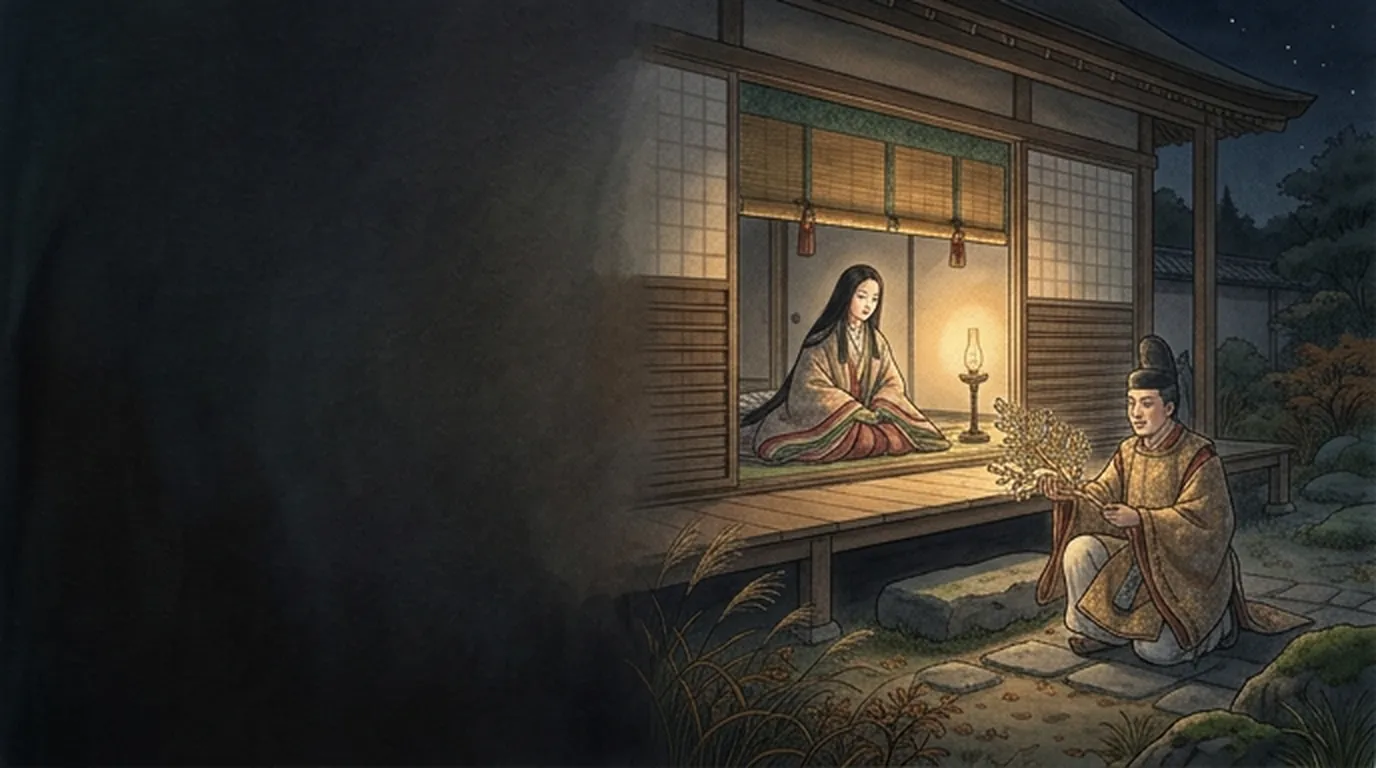
「羽衣を着る今になって、あなたのことをしみじみと思い出しています。」
"Now, at the moment I put on the robe of feathers, I find myself thinking of you with all my heart."
This is her last poem, and it is for the Emperor, the man she met only once and wrote to for three years. Then the robe goes on, and her love and pity for the old man are gone. She rises into the sky with about a hundred people of the moon.
Today:
- 一人で暮らして、親のありがたさをしみじみ感じた。
Living alone, I came to feel deeply how much I owe my parents. - 古い友だちと、しみじみ昔の話をした。
I had a long, quiet talk about old times with an old friend.
Tip: しみじみ often goes with 感じる, 思う and 話す.
3. 〜だろう(か)— a question that is really an answer
Japanese often says "there is no point" by asking "what point is there?" The answer is understood: none.
「もうかぐや姫に会えないのなら、死なない薬に何の意味があるだろう。」
"If I can never see Kaguya-hime again, what use to me is a drug that keeps me from dying?"
The old couple say almost the same thing: 長く生きて何になるだろう, "what is the use of living long?" They will not even take medicine. Kaguya-hime forgets. The people she leaves behind refuse to.
Today:
- こんなに高い服を、だれが買うだろうか。
Who would buy clothes this expensive? (No one would.) - 今から行っても、何になるだろう。
What good would it do to go now?
Tip: In Part 2, Kaguya-hime's poem did the same thing: どうして光がありましょう — "How could there be any light?"
4. 不死(ふし)— and how Mount Fuji got its name
不死 means "not dying." 不 is "not," and 死 is "death."
たくさんの兵士が登ったので、この山は「士に富む山」、つまり「ふじの山」と名づけられたといいます。
Because so many soldiers climbed it, they say, this mountain was named "the mountain rich in soldiers," that is, Fuji-no-yama.
The Emperor has the letter and the drug burned on the mountain closest to heaven. The story explains the name with 士 (soldier) and 富む (to be rich in): 富士. But listen to the other word, too. The drug they burned was the drug of 不死, fushi, on the mountain called Fuji. Like the puns in Part 2, this is a joke and not real word history.
Today:
- 不死の薬は、まだだれも見つけていない。
No one has found a drug of immortality yet. - 富士山は、日本でいちばん高い山です。
Mount Fuji is the highest mountain in Japan.
Tip: 不 makes many "not" words: 不便(ふべん, inconvenient), 不安(ふあん, uneasy), 不可能(ふかのう, impossible).
Read it in the story
The tale ends with smoke: その煙は、今も雲の中へのぼっていると、言い伝えられています — "It is said that the smoke still rises into the clouds to this day." Mount Fuji erupted several times in the 800s and 900s, around the time this story was written, so its first readers may really have seen that smoke.
Next Monday, October 26, we go back to Niimi Nankichi with Buying Mittens(手袋を買いに).