

Blog · The Tale of the Bamboo Cutter, Part 3
The Tale of the Bamboo Cutter, Part 3 (1): 4 Expressions
The Tale of the Bamboo Cutter ends with Part 3. In Part 2, five noblemen failed to bring the treasures Kaguya-hime asked for, and word of her reached the Emperor.
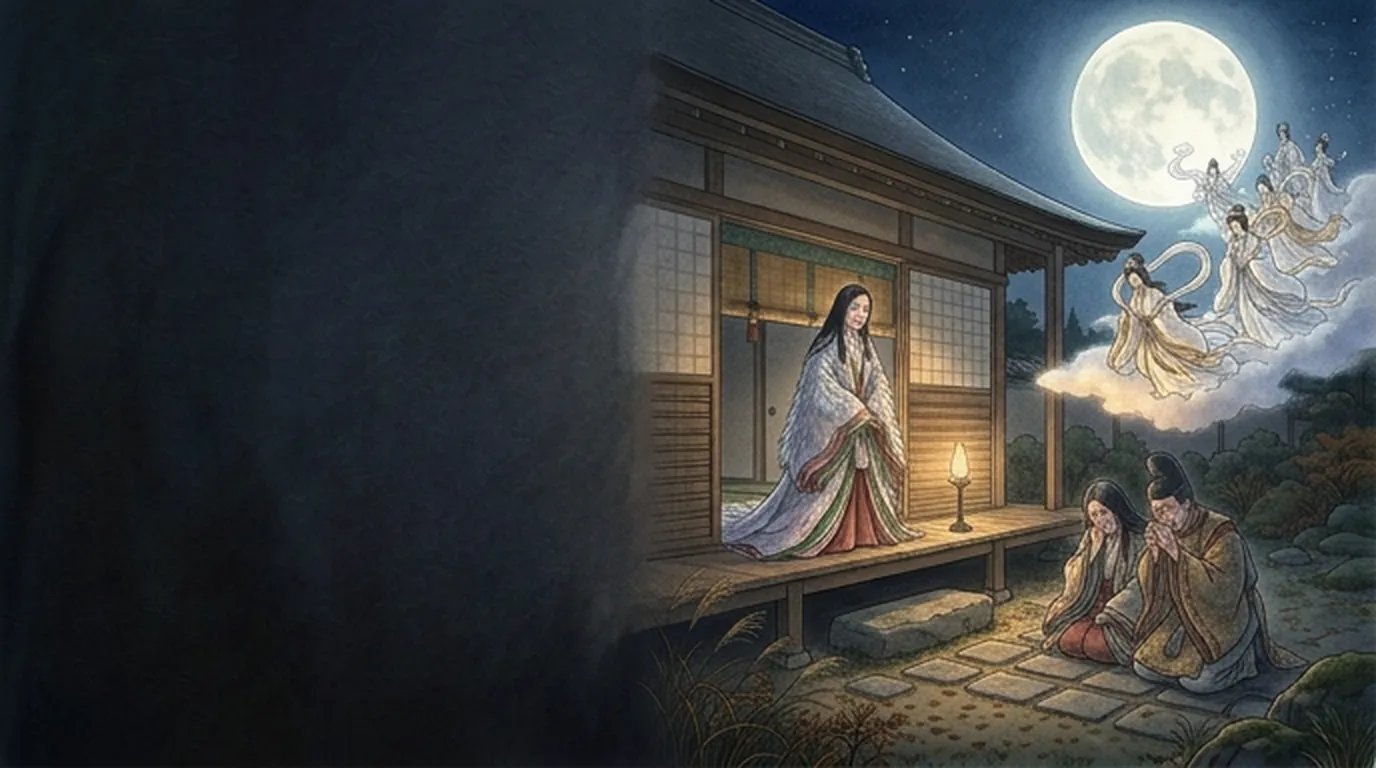
The comedy is over. This part is about the Emperor, the full moon, and a secret that Kaguya-hime has kept from the old couple who raised her.
1. 〜くらいなら — if I have to ..., I would rather ...
〜くらいなら shows that the first thing is so unwelcome that anything else is better.
「帝のところへ行かされるくらいなら、わたしは消えてしまいます。」
"If I am to be sent to the Emperor, I would rather disappear."
The Emperor promises the old man a high rank. It makes no difference. 行かされる is the causative-passive of 行く: "to be made to go."
Today:
- 謝るくらいなら、会社をやめます。
I'd rather quit the company than apologize. - 途中でやめるくらいなら、最初からやらないほうがいい。
If you're going to give up halfway, it's better not to start at all.
Tip: The second half is often 〜ほうがいい or 〜ほうがましだ ("would be better").
2. さっと — in a flash
さっと describes a quick, light movement that is over in a moment.
すると、かぐや姫は、さっと影になって消えてしまいました。
At that, Kaguya-hime turned into a shadow in an instant and vanished.
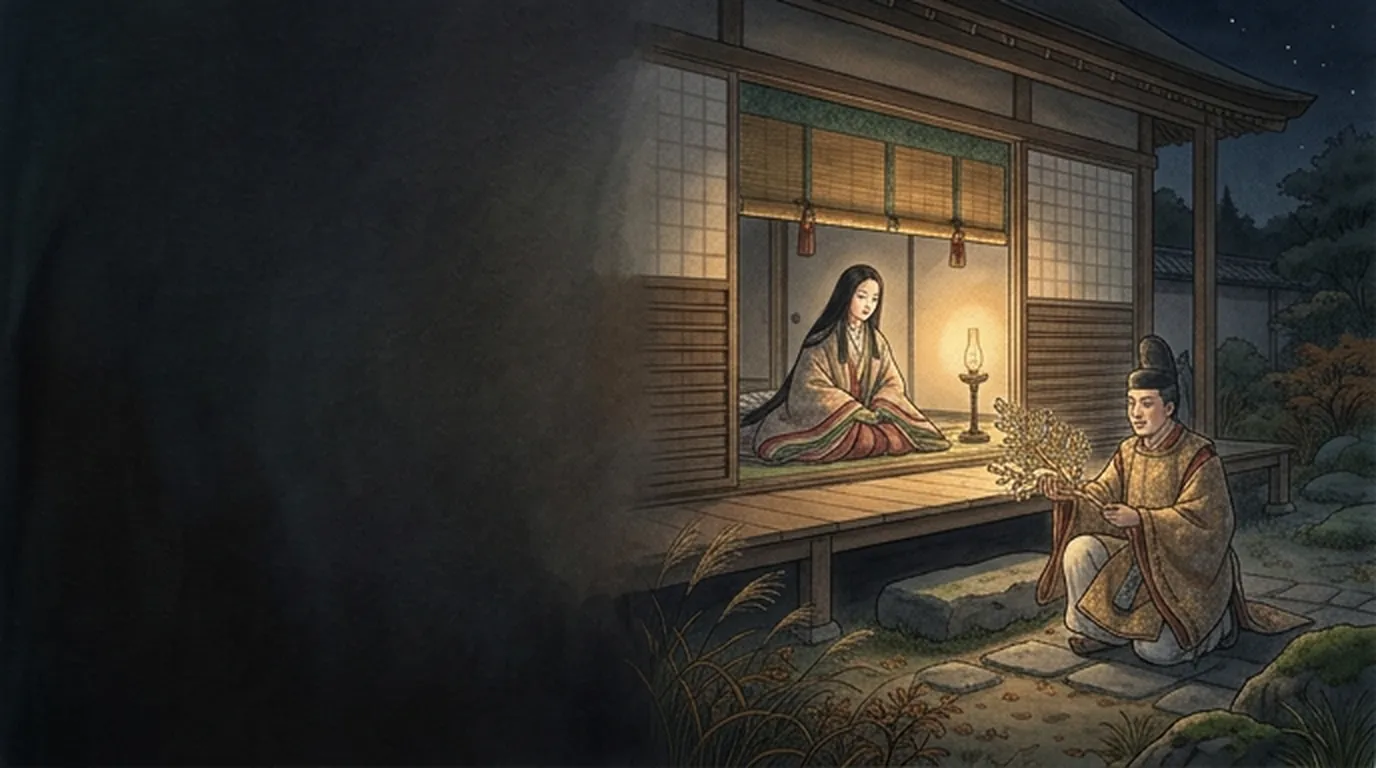
The Emperor pretends to go hunting, walks into the house, and takes hold of her sleeve. She becomes a shadow in his hand. Only when he promises not to take her away does she come back. He goes home alone, and for three years the two of them exchange letters.
Today:
- 雨が降ってきたので、さっと洗濯物を入れた。
It started to rain, so I quickly brought the laundry in. - 野菜は、さっとゆでるだけでいいです。
You only need to boil the vegetables for a moment.
Tip: さっさと looks similar but pushes someone to hurry up: さっさと食べなさい — "Hurry up and eat."
3. 〜ては — every time ...
Verb て-form+は, followed by a repeated result, means "each time A happens, B follows."
三年がたった春のころから、かぐや姫は、月を見ては考えこむようになりました。
From the spring when three years had passed, Kaguya-hime began to sink into thought every time she looked at the moon.
Something has changed in her. As the full moon of the eighth month comes near, she starts to cry even in front of other people.
Today:
- 祖母は、古い写真を見ては、昔の話をする。
Every time my grandmother looks at old photos, she talks about the old days. - 子どもは、転んでは起き、転んでは起きて、歩けるようになる。
A child falls and gets up, falls and gets up, and so learns to walk.
Tip: 〜てはいけない ("must not") uses the same ては, but there it is a fixed pattern. Here ては just links two things that keep happening.
4. 打ち明ける(うちあける)— to confide; to tell the truth at last
打ち明ける means to tell someone something you have been keeping to yourself.
おじいさんとおばあさんが心配してわけをたずねると、かぐや姫は、とうとう打ち明けました。
When the old man and the old woman, worried, asked her the reason, Kaguya-hime at last told them everything.
She is not from this world. She is from the Capital of the Moon, and on the fifteenth of the month her people will come to take her back.
Today:
- 親友に、なやみを打ち明けた。
I told my best friend what was troubling me. - 彼は、本当の気持ちをだれにも打ち明けなかった。
He never told anyone how he really felt.
Tip: A secret you finally tell is a 打ち明け話(うちあけばなし).
Read it in the story
Next time: two thousand soldiers on the roof and the wall, and a light like ten full moons.