
Blog · The Tale of the Bamboo Cutter, Part 3
The Tale of the Bamboo Cutter, Part 3 (2): 4 Expressions
This is the second article on The Tale of the Bamboo Cutter, Part 3. In the last article, Kaguya-hime told the old couple the truth: she is from the Capital of the Moon, and her people are coming for her.
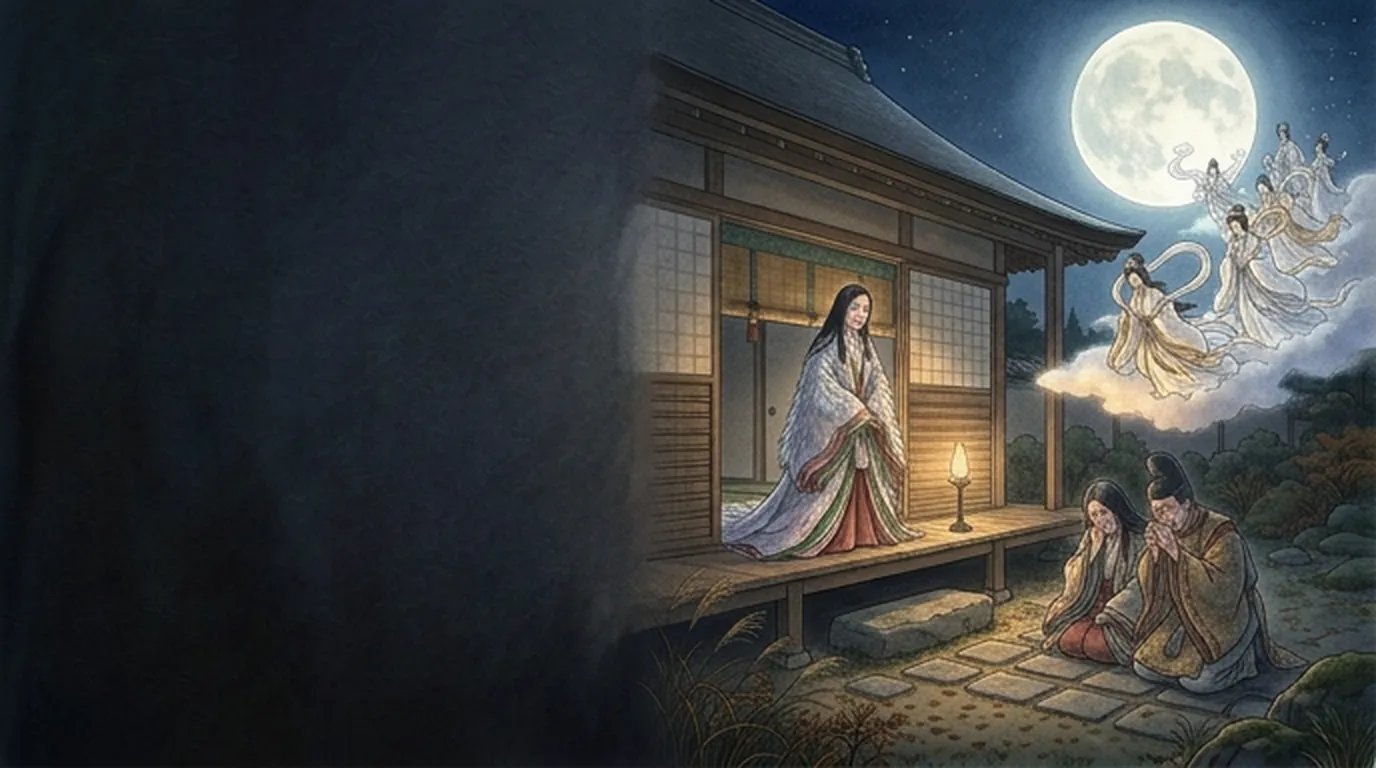
The Emperor sends two thousand soldiers to stop them. It is the night of the fifteenth.
1. 年をとる(としをとる)— to grow old
年 is "year" or "age," and 年をとる is "to get older." 年をとらない is "to never grow old."
月の都の人は、とても美しく、年をとらず、悩むこともないといいます。
They say the people of the Capital of the Moon are very beautiful, never grow old, and have no worries.
It sounds like a perfect world. And yet Kaguya-hime says she is not glad to go back: parting from the old couple is more than she can bear.
Today:
- 年をとると、朝早く目がさめる。
When you get older, you wake up early in the morning. - 祖母は年をとっても、とても元気だ。
My grandmother is old now, but she is full of energy.
Tip: To ask someone's age politely, say おいくつですか. 年 can also be written 歳 when it means age.
2. どんなに〜ても — no matter how ...
どんなに with 〜ても means "however much you do it, the result is the same."
「どんなに戸を閉めても、月の人が来れば、みんな開いてしまうでしょう。」
"However firmly you shut the doors, they will all open when the people of the moon come."
The old man has locked the door and sat down in front of it. A thousand soldiers stand on the roof, and a thousand on the wall. Kaguya-hime already knows it will not help.
Today:
- どんなに急いでも、もう間に合わない。
No matter how much we hurry, we won't make it now. - どんなに疲れていても、日記は毎日書く。
However tired I am, I write in my diary every day.
Tip: いくら〜ても means the same thing and is a little more casual: いくら呼んでも、返事がない.
3. ぼんやり — blankly; in a daze
ぼんやり describes something unclear. For light, it means "dim." For people, it means your mind is empty and you are not really thinking.
弓を引く力も出ず、ただぼんやりと見ているだけです。
They did not even have the strength to draw their bows, and only stared blankly.
At midnight it becomes brighter than day, and people riding on clouds come down from the sky. Not one of the two thousand soldiers can fight.
Today:
- 窓の外を、ぼんやりながめていた。
I was gazing absently out of the window. - 寝不足で、頭がぼんやりしている。
I didn't get enough sleep, and my head is foggy.
Tip: In Part 1, the bamboo was ぼんやりと光っています, "glowing faintly." Same word, used for light.
4. ひとりでに — by itself
ひとりでに means something happens on its own, with no one doing it.
すると、閉めてあった戸が、ひとりでに開きました。
Then the door that had been shut opened by itself.
A man who seems to be the king of the moon says that Kaguya-hime did something wrong, and that this is why she was sent to live here for a while. Then he calls the human world きたない所, "an unclean place." The story never says what she did.
Today:
- だれもいないのに、ドアがひとりでに開いた。
No one was there, but the door opened by itself. - この電気は、暗くなるとひとりでにつく。
This light comes on by itself when it gets dark.
Tip: Don't mix it up with ひとりで, "alone; by oneself": ひとりで行く is "to go alone."
Read it in the story
Next time: a robe that takes away human feelings, a last letter, and the smoke over Mount Fuji.