


Blog · Night on the Galactic Railroad, Part 1
Night on the Galactic Railroad, Part 1 (2): 4 Expressions
This is Part 2 of our articles on Night on the Galactic Railroad, Part 1. In the last article, Giovanni could not answer in class, and went to work at a printing shop while the other children made plans for the star festival.
Now he goes home to his sick mother, and then out to fetch her milk. The whole town is celebrating.
1. からかう — to tease; to make fun of
からかう means to say things to someone for fun, to see them get upset.
それで学校の子どもたちは、ジョバンニをからかうのです。
That was why the children at school made fun of Giovanni.
Giovanni's father went north to fish and has not come home for a long time. Some people say he has been locked up. Before he left, he promised to bring back a coat made from a sea otter (ラッコ). So the children shout at Giovanni: ラッコの上着が来るよ — "Your sea otter coat is coming!"
Today:
- 兄は、いつも弟をからかって笑っている。
The older brother is always teasing his little brother and laughing. - からかわないでください。本気なんです。
Please don't make fun of me. I'm serious.
Tip: それで at the start of a sentence means "that is why." The reason comes first, and それで gives the result.
2. 気の毒(きのどく)— feeling sorry for someone
気の毒 is what you feel when something bad has happened to another person. With 〜そうに it means "looking sorry."
カムパネルラは、気の毒そうに、だまって少し笑って、ジョバンニの方を見ていました。
Campanella looked sorry for him and, smiling a little without a word, kept his eyes on Giovanni.
Campanella is standing with the children who are shouting. He does not shout. But he does not stop them either, and Giovanni cannot bear to meet his eyes. He hurries past, 逃げるように, "as if running away."
Today:
- けがをした選手が、とても気の毒だった。
I felt very sorry for the player who got hurt. - それは、お気の毒に。
I'm very sorry to hear that. (a set phrase)
Tip: かわいそう is close in meaning, but it is warmer and more direct, and is often used about children and animals. 気の毒 sounds more grown-up and polite.
3. 何とも言えず(なんともいえず)— more than words can say
何とも言えない is "cannot say anything about it." So 何とも言えず describes a feeling too strong, or too mixed, to put into words.
そして、何とも言えずさびしくなって、町の外の黒い丘の方へ走り出しました。
Then, lonelier than he could say, he ran off toward the black hill outside the town.
走り出す is "to start running." Verb stem+出す shows an action that begins suddenly. On the hill, the same phrase comes back: watching a train cross the fields far away, Giovanni feels 何とも言えず悲しく, "sadder than he could say."
Today:
- 手紙を読んで、何とも言えない気持ちになった。
Reading the letter, I felt something I can't put into words. - 山の上から見た朝日は、何とも言えず美しかった。
The sunrise from the mountaintop was beautiful beyond words.
Tip: 言えず is a written form of 言えないで. You met 〜ずに in The Tale of the Bamboo Cutter, Part 3.
4. 〜ば〜ほど — the more ..., the more ...
Say the verb twice: first in the ば-form, then in the dictionary form with ほど.
見れば見るほど、小さな林や牧場のある野原のように見えるのです。
The more he looked, the more it seemed like a field with little woods and pastures.
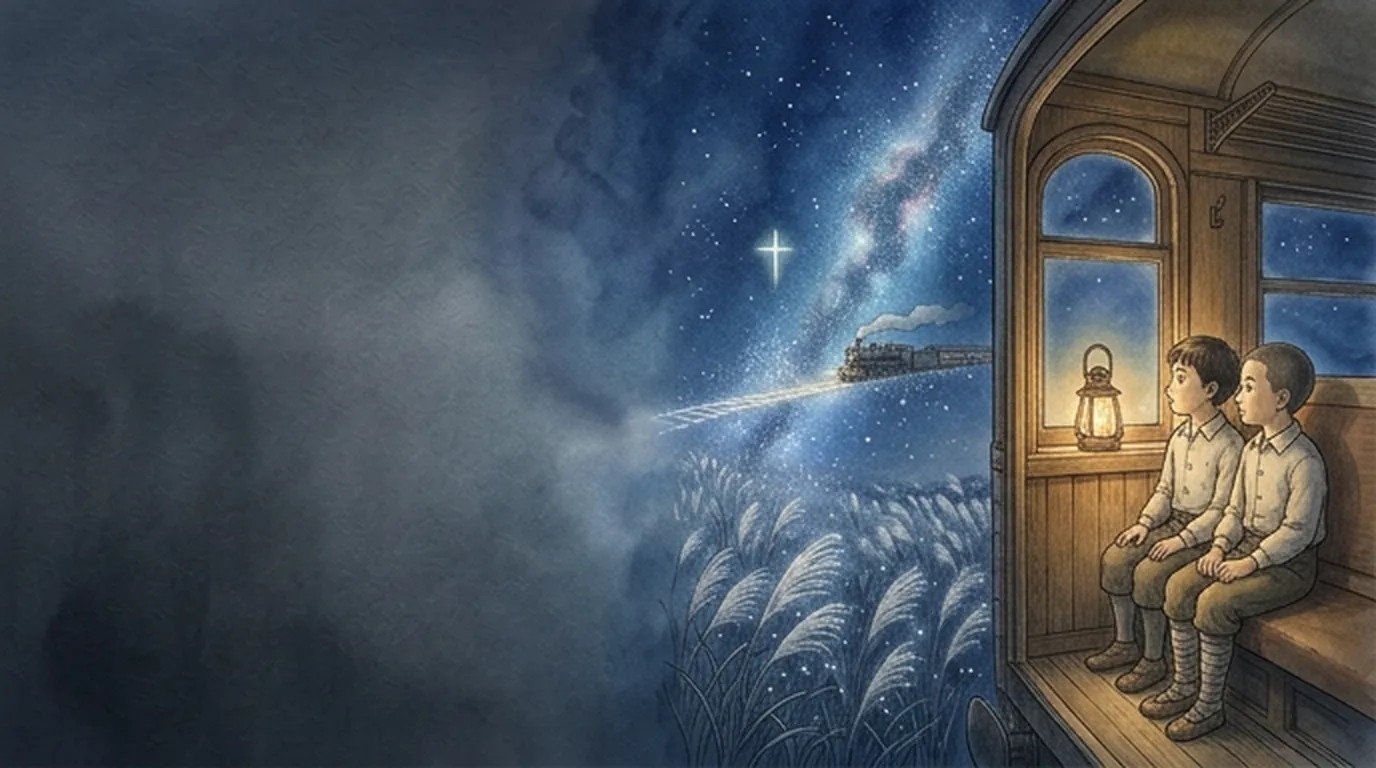
Giovanni is lying on the grass at the top of the hill, looking up at the Milky Way. He has learned at school that it is made of stars. But to him the sky does not look cold and empty. It looks like a place you could walk in. That is where the story goes next.
Today:
- 考えれば考えるほど、わからなくなる。
The more I think about it, the less I understand. - 日本語は、勉強すればするほどおもしろい。
The more you study Japanese, the more interesting it gets.
Tip: It works with adjectives too: 早ければ早いほどいい — "the sooner, the better."
Read it in the story
Next time: a voice calls out the name of a station, and Giovanni is suddenly somewhere else.