


Blog · Night on the Galactic Railroad, Part 1
Night on the Galactic Railroad, Part 1 (1): 4 Expressions
Night on the Galactic Railroad(銀河鉄道の夜)is the best-known story by Kenji Miyazawa, the author of The Restaurant of Many Orders. A lonely boy named Giovanni rides a train along the Milky Way with his friend Campanella. Kenji went on rewriting it until he died, and the Japanese is rich and sometimes difficult. So LITIM Japanese is retelling it in easy modern Japanese, in parts.
This week we read Part 1 in three short articles. The Japanese is at about JLPT N4–N3 level. Today: an afternoon lesson about the Milky Way, and a boy who cannot answer.
1. 〜たり〜たり — things like ... and ...
Verb た-form+り, used twice, gives two examples out of several. Here both verbs are passive: 言われる, "to be called."
「では、みなさん。川だと言われたり、乳の流れたあとだと言われたりしてきた、このぼんやりと白いものは、本当は何でしょう。」
"Now, everyone. People have called it a river, and they have called it the trail left by flowing milk. But what is this hazy white thing really?"
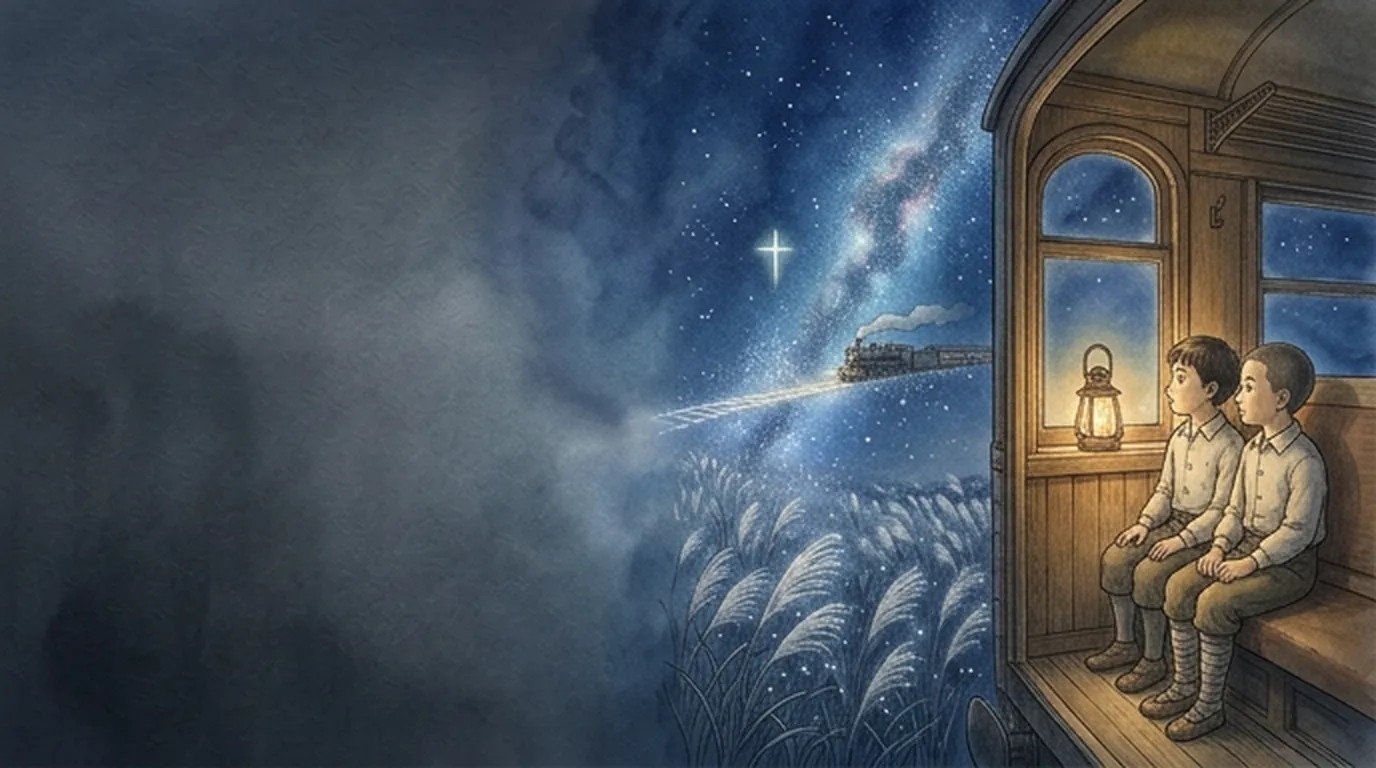
This is the first line of the story. The teacher is pointing at the Milky Way on a star chart. In Japanese it is 天の川(あまのがわ), "the river of heaven." In English it is a way of milk. Both pictures are in his question.
Today:
- 休みの日は、本を読んだり、映画を見たりします。
On my days off, I do things like read books and watch movies. - 朝から、雨が降ったりやんだりしている。
It has been raining on and off since morning.
Tip: ぼんやり means "dim, not clear." You can also use it for a person: ぼんやりしている — "to be spaced out."
2. 〜はずはない — there is no way that ...
はず shows what you expect because you have a good reason. 〜はずはない (or 〜はずがない) means "that cannot be true."
カムパネルラが知らないはずはありません。
There was no way Campanella did not know.
Giovanni knows the answer: it is all stars. But he is so tired these days that he cannot say it, and a boy named Zanelli laughs at him. Then Campanella is asked, and he says nothing either. Giovanni is sure that Campanella knows, because the two of them once looked at photographs of the Milky Way together.
Today:
- 彼がうそをつくはずがない。
He would never tell a lie. - かぎは、かばんの中にあるはずです。
The key should be in my bag.
Tip: Without the negative, 〜はずだ means "it should be so": もうすぐ着くはずだ — "they should arrive soon."
3. わざと — on purpose
わざと means that someone does a thing knowingly, often a thing that looks like a mistake.
ぼくをかわいそうに思って、わざと答えなかったのだ。
He felt sorry for me, so he did not answer on purpose.
This sentence is Giovanni's own thought. You can tell from ぼく ("I") and from the plain ending 〜のだ. Giovanni thinks Campanella kept silent because he felt sorry for him. Thinking of it, Giovanni's eyes fill with tears.
Today:
- 弟は、わざとゆっくり歩いている。
My little brother is walking slowly on purpose. - わざとじゃないよ。ごめんね。
I didn't do it on purpose. Sorry.
Tip: わざわざ looks similar but is different: "taking the trouble to." わざわざ来てくれて、ありがとう — "Thank you for coming all this way."
4. 一つ一つ(ひとつひとつ)— one by one
Saying a counter twice means "each one, in turn."
そこで、小さな金属の字を一つ一つ拾う仕事をしているのです。
There, his job was to pick out small pieces of metal type, one by one.
After school, the other children make plans for the star festival. Giovanni goes to work at a printing shop instead. In those days every letter on a page was a tiny piece of metal, and someone had to pick each one up by hand. He is paid one silver coin, and he spends it on bread and sugar for his sick mother.
Today:
- 先生は、名前を一つ一つ読み上げた。
The teacher read the names out one by one. - 問題を、一つ一つ解いていきましょう。
Let's solve the problems one at a time.
Tip: The same works with other counters: 一人一人 (each person), 一日一日 (day by day).
Read it in the story
Next time: Giovanni goes home to his mother, and then out into the festival night.