
Part 1 · Commentary
Commentary 2
Town lights and a human hand
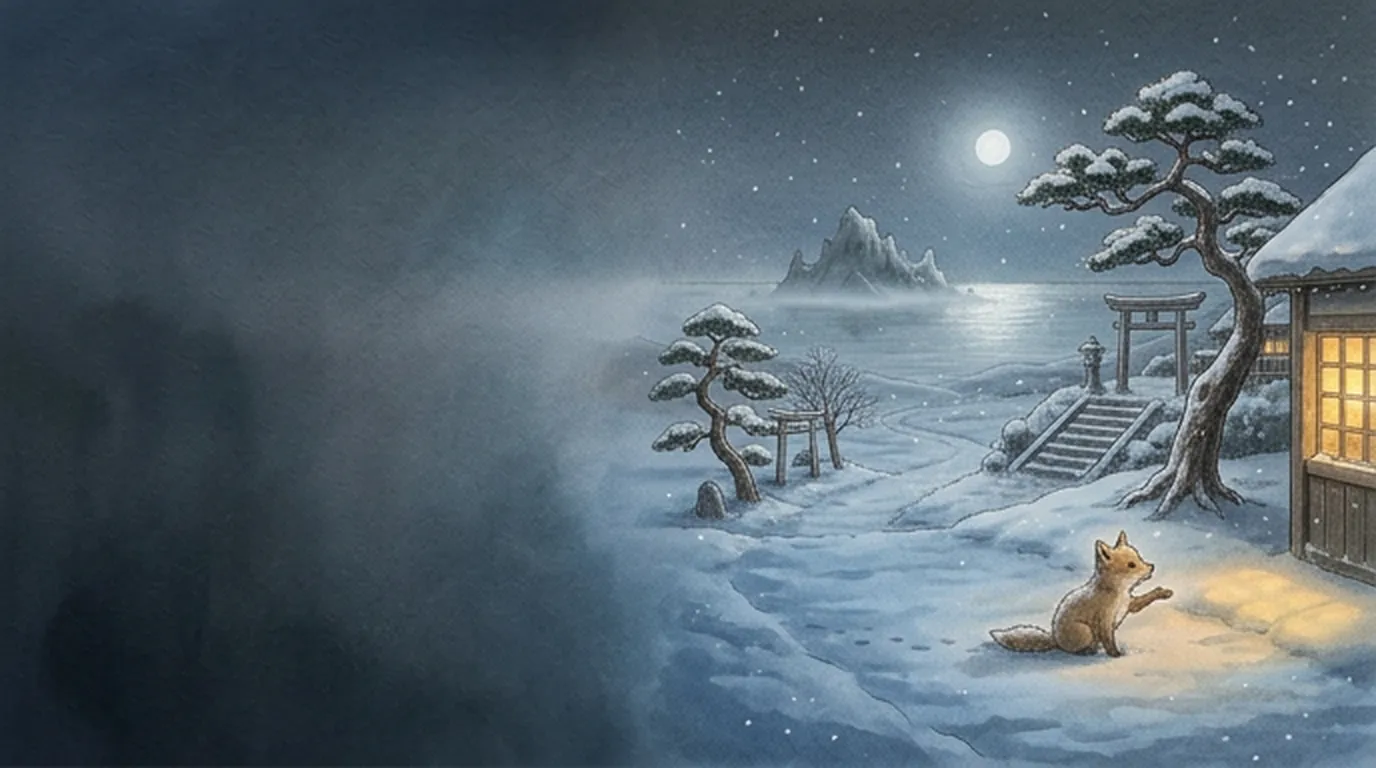
雪で遊んで帰ってきた子ぎつねの両手は、冷たく、赤くなっていました。お母さんぎつねは思いました。しもやけができてはかわいそうだから、夜になったら町へ行って、この子の手に合う毛糸の手袋を買ってやろう。
When the fox cub came home from playing in the snow, both his hands were cold and red. His mother thought: it would be a pity if he got chilblains, so when night comes, I'll go to town and buy him woolen mittens that fit his hands.
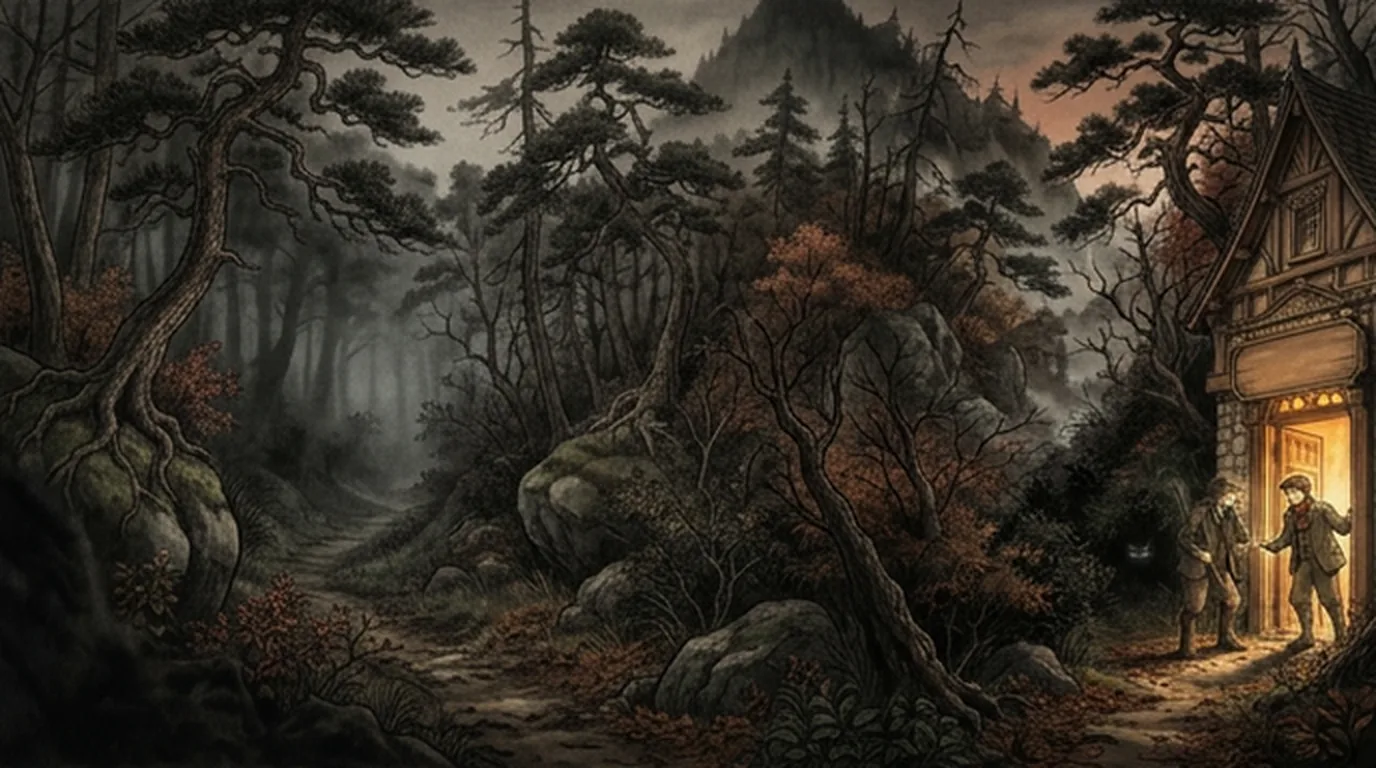
夜、二匹は森を出ました。やがて、遠くに明かりが一つ見えてきます。それは町の明かりでした。お母さんぎつねの足は、そこで止まってしまいます。前に町へ行ったとき、友だちのきつねがあひるを盗もうとして、命からがら逃げたことを思い出したのです。
At night, the two of them left the forest. Soon, a single light came into view in the distance. It was the light of the town. There, the mother fox's legs stopped. She had remembered that the last time she went to town, a fox friend of hers had tried to steal a duck and barely escaped with his life.
そこで、子ぎつねを一人で町へ行かせることにしました。お母さんぎつねは、子ぎつねの片方の手をにぎって、人間の子どもの手に変えてやります。そして言いました。ぼうしの看板のある店を見つけたら、戸のすきまから、こっちの人間の手を出して、手袋をちょうだいと言うんだよ。決して、こっちの手を出してはいけないよ。人間は、相手がきつねだとわかると、つかまえて、おりに入れてしまうからね。
So she decided to send the cub into town alone. The mother fox took one of the cub's hands and turned it into a human child's hand. And she said: when you find a shop with a hat sign, put out this human hand through the gap in the door and say, "Mittens, please." Never put out this other hand. Because if humans find out you're a fox, they'll catch you and put you in a cage.
Commentary 3
The wrong hand and a lullaby
子ぎつねはぼうし屋を見つけて、戸をたたきました。戸が少しあいて、光の帯が、雪の上に長くのびます。子ぎつねは、その光がまぶしくてあわててしまい、出してはいけないほうの手を、すきまからさし入れてしまいました。
The cub found the hat shop and knocked on the door. The door opened a little, and a band of light stretched long across the snow. The light dazzled the cub and flustered him, and he pushed the hand he must not put out through the gap.
ぼうし屋さんは、きつねの手だと気づきます。きっと木の葉で買いに来たんだろうと思って、先にお金をください、と言いました。二枚のお金をカチ合わせてみると、チンチンといい音がします。これは木の葉じゃない、本物のお金だ。ぼうし屋さんは、子ども用の毛糸の手袋を、持たせてやりました。
The hatter sees that it is a fox's hand. Thinking it must have come to buy with leaves, he says, "Money first, please." When he clinks the two coins together, they ring with a nice "chin, chin." These aren't leaves; it's real money. The hatter let the cub take a pair of children's woolen mittens.
帰り道、子ぎつねは、ある窓の下で、人間のお母さんの子守唄を聞きます。人間の子どもが、こんな寒い夜は、森の子ぎつねは寒い寒いと鳴いているでしょうね、と言いました。お母さんは、森の子ぎつねもお母さんの唄を聞いて眠ろうとしているでしょう、とこたえます。子ぎつねは、急にお母さんが恋しくなりました。
On the way home, under a certain window, the cub hears a human mother's lullaby. The human child said that on a cold night like this, the little fox in the forest must be crying, "I'm cold, I'm cold." The mother answers that the little fox in the forest must be listening to its mother's song and trying to go to sleep, too. Suddenly, the cub missed his mother.
森へ帰る道で、子ぎつねは言います。人間って、ちっともこわくないや。まちがえて本当の手を出したけど、ぼうし屋さんはつかまえなかった。お母さんぎつねは、あきれて、それからつぶやきました。「ほんとうに人間はいいものかしら。ほんとうに人間はいいものかしら。」
On the way back to the forest, the cub says: humans aren't scary at all. I put out my real hand by mistake, but the hatter didn't catch me. The mother fox was dumbfounded, and then she murmured, "I wonder if humans really are good. I wonder if humans really are good."
Commentary 4
Three things to notice
読みどころを三つ挙げます。
Here are three things to notice.
一つ目は、まちがえた手です。あれほど言われていたのに、子ぎつねは、きつねの手を出してしまいます。けれども、その失敗があったからこそ、子ぎつねは、人間はこわくないと思うことができました。
The first is the wrong hand. Even though he had been told so firmly, the cub puts out his fox hand. But it was because of that mistake that the cub could come to think humans are not scary.
二つ目は、ぼうし屋さんです。ぼうし屋さんは、相手がきつねだと気づいていました。それでも手袋を売ったのは、お金が本物だったからです。やさしい人なのか、商売をしただけなのか。物語は、ぼうし屋さんの気持ちを、それ以上は書いていません。
The second is the hatter. The hatter had noticed that his customer was a fox. Even so, he sold the mittens because the money was real. Is he a kind person, or did he just do business? The story says nothing more about how the hatter felt.
三つ目は、人間のお母さんの子守唄です。人間の親子も、きつねの親子と同じように、寒い夜に寄りそっています。そして人間の子どもは、森の子ぎつねのことを気にかけていました。
The third is the human mother's lullaby. The human parent and child, just like the fox parent and child, are close together on a cold night. And the human child was thinking about the little fox in the forest.
「ごん狐」では、人間はきつねを銃でうってしまいました。この作品では、人間はきつねに手袋を売ります。けれども物語は、お母さんぎつねの問いのまま終わります。
In "Gon, the Little Fox," a human shoots the fox with a gun. In this story, a human sells the fox mittens. But the story ends with the mother fox's question.
同じ言葉を二回くりかえしたとき、お母さんぎつねは、人間を信じはじめていたのでしょうか。後半は、この問いを二人で話してみます。
When she repeated the same words twice, had the mother fox begun to trust humans? In the second half, the two of us will talk about this question.
Part 2 · Conversation: Mio and Ken
Conversation 1
Why say it twice?
ここからは二人で話します。ミオです。
From here on, it's the two of us. I'm Mio.
ケンです。さっきの問い、ミオはどう思う?
And I'm Ken. That question just now, what do you think, Mio?
わたしは、信じはじめてたと思う。
I think she was beginning to trust them.
僕は、まだ信じてないと思うんだ。
Me, I think she doesn't trust them yet.
えっ、どうして?
Huh? Why?
だって、二回も言ってるんだよ。ほんとうに人間はいいものかしら、って。
Well, she says it twice, doesn't she? "I wonder if humans really are good."
うん。
Yes.
本当に信じてたら、一回言えばいいでしょ。
If she really trusted them, saying it once would be enough, right?
わたしは逆だと思う。信じたい気持ちがあるから、二回言うの。
I think it's the opposite. She says it twice because part of her wants to trust them.
信じたいけど、信じられない、ってこと?
You mean she wants to trust them, but she can't?
そう。でも、心のどこかでは、もう半分くらい信じてる。
Right. But somewhere in her heart, she already half trusts them.
半分か。ずるい答えだなあ。
Half, huh. That's a sneaky answer.
だって、最初は「まあ!」ってあきれてるだけなんだよ。
Well, at first she's just dumbfounded: "Oh my!"
あきれるよね。あれだけ、こっちの手を出しちゃだめって言ったのに。
Of course she is. She told him so many times not to put out that hand.
でも、子ぎつねを全然しからないの。
But she doesn't scold the cub at all.
あ、たしかに、ひとこともしかってはいない。
Oh, that's true, she doesn't scold him with a single word.
Conversation 2
Was the hatter kind?
それに、ぼうし屋さんは子ぎつねをつかまえなかったでしょ。
And the hatter didn't catch the cub, did he?
でもその前に、先にお金をくださいって言ったよね。
But before that, he said, "Money first, please," right?
言ったね。
He did.
きつねだから、木の葉で買いに来たと思ったんだよ。
Because it was a fox, he thought it had come to buy with leaves.
うん、疑ってた。
Yes, he was suspicious.
で、お金が本物だとわかったから、手袋を売った。
And then, because he found out the money was real, he sold the mittens.
それって、どこにでもある普通のお店だよね。
That's just an ordinary shop you'd find anywhere, isn't it?
そう。やさしいんじゃなくて、普通に商売をしただけ。
Right. He wasn't being kind; he was just doing ordinary business.
でも、相手がきつねだとわかっても、ちゃんと売ったんだよ。
But even after he knew his customer was a fox, he still sold to him properly.
うーん、それはそうか。
Hmm, I guess that's true.
お母さんぎつねの話だと、つかまえて、おりに入れるはずだったのに。
From what the mother fox said, he was supposed to catch him and put him in a cage.
お母さんの友だちは、あひるを盗もうとしたんだよね。
The mother's friend tried to steal a duck, didn't he?
うん。それで、お百姓さんに追いかけられた。
Yes. And so he was chased by a farmer.
じゃあ、人間が悪いっていうより、きつねが盗んだからだ。
Then it's not so much that humans are bad, but that the fox was stealing.
そう。ちゃんとお金を払えば、きつねでも手袋が買える。
Right. If you pay properly, even a fox can buy mittens.
人間はいいものかどうかより、どうつきあうか、なのかな。
Maybe it's less about whether humans are good, and more about how you deal with them.
Conversation 3
The lullaby under the window
わたしが好きなのは、子守唄のところ。
The part I like is the lullaby.
帰り道に、窓の下で聞くところだね。
The part where he hears it under a window on the way home.
人間の子どもが、森の子ぎつねは寒いって鳴いてるかな、って言うの。
The human child says, "I wonder if the little fox in the forest is crying that it's cold."
一度も会ったことがないのに、心配してるんだよね。
He's worried about it, even though he's never met it once.
すぐ外に、本物の子ぎつねがいるのにね。
And a real fox cub is right outside.
本人が聞いてるとは思わないよ。
He'd never think the fox himself was listening.
子ぎつねは、どんな気持ちで聞いてたのかな。
I wonder how the cub felt, listening to that.
それで、急にお母さんが恋しくなるんだよね。
That's why he suddenly misses his mother.
あそこで、人間のお母さんも、きつねのお母さんも、同じなんだってわかるの。
That's where you see that the human mother and the fox mother are the same.
でも、それを知ってるのは、窓の下にいた子ぎつねだけなんだよ。
But the only one who knows that is the cub who was under the window.
あ、そうか。
Oh, I see.
お母さんぎつねは、町に行ってないから、子守唄を聞いてない。
The mother fox didn't go into town, so she didn't hear the lullaby.
聞いたのは、ぼうし屋さんの話だけだね。
All she heard was the story about the hatter.
しかも、子どもから聞いた話だけ。
And only a story she heard from a child, at that.
それなら、すぐには信じられないか。
Then I guess she can't trust them right away.
自分の目で見たのは、追いかけてきた人間だけだからね。
The only humans she's seen with her own eyes are the ones who chased them.
Conversation 4
Mittens and half an answer
でもね、帰ってきた子ぎつねの手には、手袋があるの。
But you know, in the hands of the cub who came home, there are mittens.
そうか、手袋があるか。
True, there are mittens.
手袋をはめた両手を、パンパンってやって見せるでしょ。
He claps his mittened hands together, pat-pat, to show her, right?
あれは、うれしそうだったね。
He looked happy then.
それが、人間がくれたものなの。だから、半分は信じる。
And it was a human who gave them to him. So she half trusts them.
僕は、そこが心配なんだ。
That's the part that worries me.
心配って、何が?
Worries you? What does?
子ぎつねは、人間はちっともこわくないって思っちゃったでしょ。
The cub has come to think humans aren't scary at all, hasn't he?
うん。
Yes.
次に町へ行ったら、ちがう人間に会うかもしれない。
The next time he goes to town, he might meet a different human.
ごん狐みたいに?
Like in "Gon, the Little Fox"?
そう。だから、お母さんはすぐにうなずけないんだと思う。
Right. That's why I think the mother can't just nod right away.
そうか。お母さんだから、信じきれないのかもね。
I see. Maybe because she's a mother, she can't trust them completely.
結局、二人とも半分ずつだ。
In the end, we each have half of it.
聞いているあなたは、人間はいいものだと思うでしょうか。
What do you think, listening to this? Are humans good?
それでは、また次の作品で。
Well then, see you with the next story.
さようなら。
Goodbye.
Commentary 1
About Buying Mittens
冬の朝、森のほら穴から、子ぎつねが外へ出ようとしました。ところが、「あっ」とさけんで、お母さんぎつねのところへころげて戻ってきます。目に何かささった、と言うのです。でも、何もささってはいませんでした。夜のうちに、まっ白な雪がたくさん降っていたのです。はじめて見る雪が、朝の光でまぶしく光っていたのでした。
On a winter morning, a fox cub tries to go outside from a hole in the forest. But he cries "Ah!" and comes tumbling back to his mother. Something has stuck in his eyes, he says. But nothing had stuck in them at all. During the night, a lot of pure white snow had fallen. The snow, which he was seeing for the first time, was shining so brightly in the morning light that it dazzled him.
今回の作品は、新美南吉の「手袋を買いに」です。前に取り上げた「ごん狐」と同じ作者で、こちらもきつねと人間のお話です。南吉は、1943年の三月に、二十九歳で亡くなりました。この作品は、その年の九月に出た童話集、「牛をつないだ椿の木」に収められています。小学三年生の教科書に、五十年以上載っていました。
This time, the story is Nankichi Niimi's "Buying Mittens." The author is the same as for "Gon, the Little Fox," which we covered before, and this too is a story about foxes and humans. Nankichi died in March 1943, at the age of twenty-nine. This story is in a collection of children's stories that came out in September of that year, "The Camellia Tree Where the Ox Was Tied." It was in third-grade elementary school textbooks for more than fifty years.