

Grammar Patterns
Grammar patterns found in 竹取物語 (The Tale of the Bamboo Cutter, Part 3), with examples from the story. JLPT levels are estimates.
-
JLPT N3 estimated
〜ようとする
Meaning: "Try to ...; be about to ...".
Form: Verb volitional form + とする(と致す)
In this story
-
けれども、かぐや姫は使いに会おうとしません。
But Kaguya-hime would not meet the messenger.
-
帝は、かぐや姫の袖をつかんで、そのまま連れて帰ろうとしました。
The Emperor took hold of Kaguya-hime's sleeve and tried to take her away with him then and there.
-
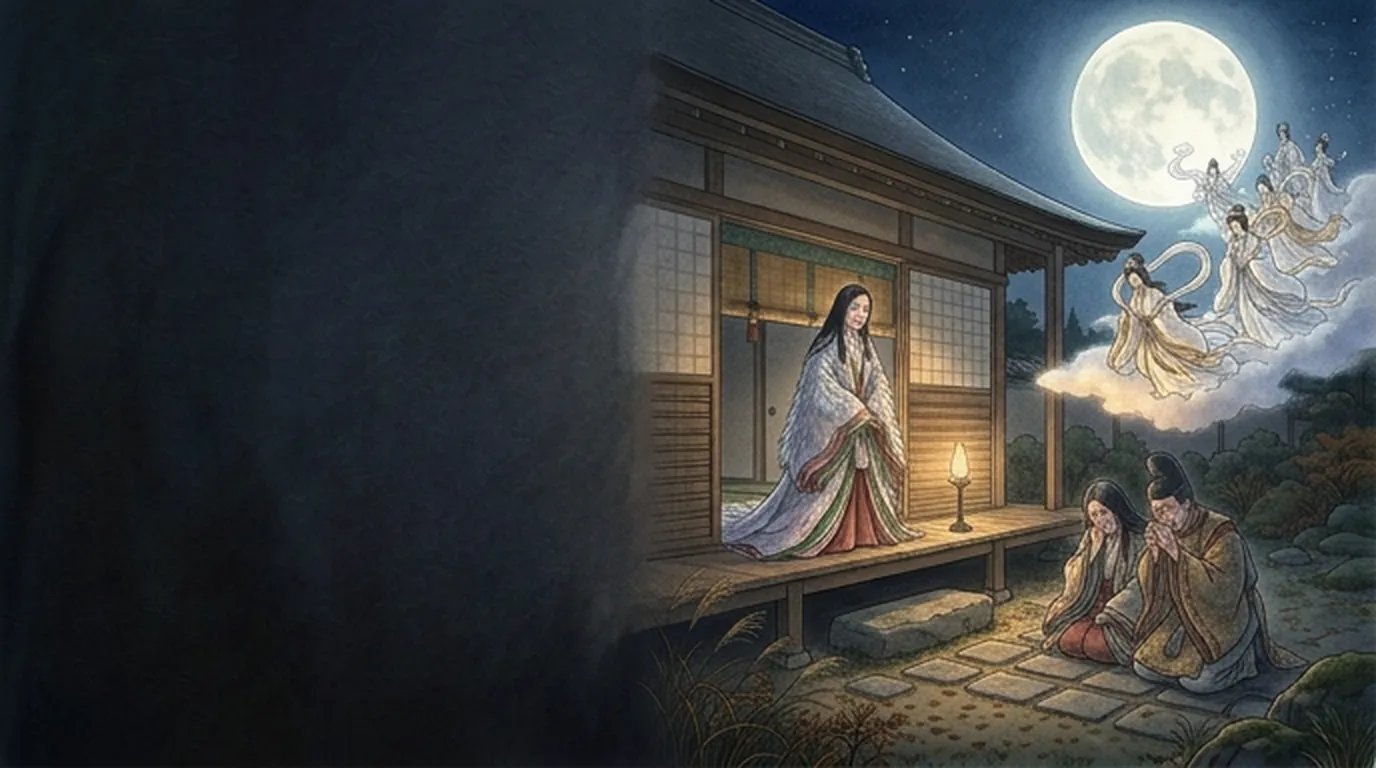
月の人が羽衣を着せようとすると、かぐや姫は言いました。
When one of the moon people tried to put the robe on her, Kaguya-hime said,
-
-
JLPT N4 estimated
使役(〜せる/させる)
Meaning: Causative: to make or let someone do something.
Form: Verb causative form(坐らせる / やめさせる)
In this story
-
「かぐや姫をわたしのところで働かせなさい。
"Have Kaguya-hime come and serve me.
-
帝は、使いにたくさんの兵士をつけて、その山に登らせました。
The Emperor sent his messenger up that mountain with a great many soldiers.
-
そして、山のいちばん上で、手紙と不死の薬を燃やさせました。
And at the very top of the mountain, he had the letter and the drug of immortality burned.
-
-
JLPT N2 estimated
〜くらいなら
Meaning: "If I have to ..., I would rather ...": the first choice is so unwelcome that the second one is better.
Form: Verb (dictionary) + くらいなら(位なら)
In this story
-
「帝のところへ行かされるくらいなら、わたしは消えてしまいます。」
"If I am to be sent to the Emperor, I would rather disappear."
-
-
JLPT N4 estimated
〜てしまう
Meaning: Shows that an action is completely finished, often with regret or an unwanted result.
Form: Verb て-form + しまう
In this story
-
「帝のところへ行かされるくらいなら、わたしは消えてしまいます。」
"If I am to be sent to the Emperor, I would rather disappear."
-
「どんなに戸を閉めても、月の人が来れば、みんな開いてしまうでしょう。
"However firmly you shut the doors, they will all open when the people of the moon come.
-
-
JLPT N3 estimated
〜ふりをする
Meaning: "Pretend to ...".
Form: Verb (plain) / Noun + の + ふりをする
In this story
-
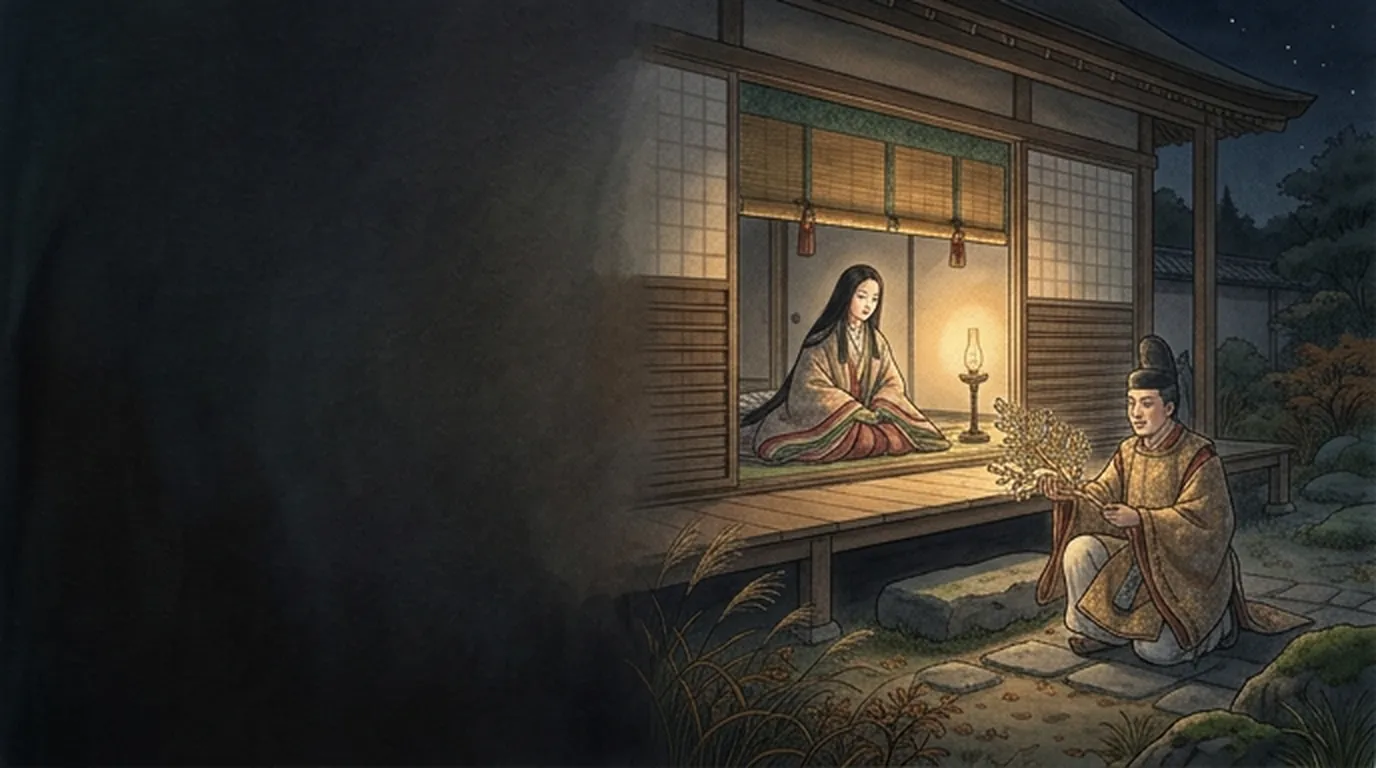
そこで帝は、狩りに出かけるふりをして、とつぜんかぐや姫の家に入りました。
So the Emperor pretended to go out hunting, and suddenly walked into Kaguya-hime's house.
-
-
JLPT N4 estimated
〜のだ/〜のです
Meaning: Explains a situation or gives the reason behind it ("the thing is ...").
Form: Plain form + のだ / のです(Noun / な-adj + なのだ)
In this story
-
「この人は、ふつうの人ではないのだ」と、帝は思いました。
"This is no ordinary person," thought the Emperor.
-
お二人と別れるのが、悲しくてたまらないのです。」
Parting from the two of you is more than I can bear."
-
-
JLPT N4 estimated
〜ことができる
Meaning: "Can ...; be able to ...".
Form: Verb (dictionary) + ことができる(ことはできない)
In this story
-
けれども、かぐや姫のことを忘れることはできません。
But he could not forget Kaguya-hime.
-
弓を持っていても、戦うことはできないでしょう」と、かぐや姫は言いました。
Even with bows in their hands, the soldiers will not be able to fight," said Kaguya-hime.
-
-
JLPT N2 estimated
〜ては(くり返し)
Meaning: "Each time (he) does ..., (he) does ...": an action that is repeated again and again.
Form: Verb て-form + は + Verb
In this story
-
三年がたった春のころから、かぐや姫は、月を見ては考えこむようになりました。
From the spring when three years had passed, Kaguya-hime began to sink into thought every time she looked at the moon.
-
-
JLPT N4 estimated
〜ようになる
Meaning: "Come to ...; reach the point where ...": a change that happens over time.
Form: Verb (dictionary / ない-form) + ようになる
In this story
-
三年がたった春のころから、かぐや姫は、月を見ては考えこむようになりました。
From the spring when three years had passed, Kaguya-hime began to sink into thought every time she looked at the moon.
-
八月の満月が近づくと、人の前でも泣くようになりました。
As the full moon of the eighth month drew near, she began to cry even in front of people.
-
-
JLPT N4 estimated
〜と(条件)
Meaning: "When ...; whenever ...; if ...": the second thing always or naturally follows the first.
Form: Verb (dictionary / ない-form) + と
In this story
-
八月の満月が近づくと、人の前でも泣くようになりました。
As the full moon of the eighth month drew near, she began to cry even in front of people.
-
-
JLPT N4 estimated
〜なければならない
Meaning: "Must ...; have to ...".
Form: Verb ない-stem + なければならない(なりません)
In this story
-
わたしは、帰らなければなりません。」
I must go home."
-
-
JLPT N3 estimated
〜という(伝聞)
Meaning: "Said to ...; they say ...": passes on what people say without claiming it is true. Common in storytelling.
Form: Plain form + という(+ Noun)
In this story
-
月の都の人は、とても美しく、年をとらず、悩むこともないといいます。
They say the people of the Capital of the Moon are very beautiful, never grow old, and have no worries.
-
この羽衣を着た人は、心が変わってしまい、人を思う気持ちもなくなるといいます。
They say that whoever puts on this robe has a change of heart and loses all feeling for others.
-
-
JLPT N2 estimated
〜てたまらない
Meaning: "Unbearably ...; so ... that one can't stand it".
Form: Verb / い-adj て-form + たまらない
In this story
-
お二人と別れるのが、悲しくてたまらないのです。」
Parting from the two of you is more than I can bear."
-
-
JLPT N4 estimated
〜ば
Meaning: "If ...": a condition; the result follows when the condition is met.
Form: Verb ば-form (行けば / すれば)
In this story
-
「これだけ守っていれば、月の人にも負けません」と、おじいさんは言いました。
"With this many guards, we will not lose even to the people of the moon," said the old man.
-
「どんなに戸を閉めても、月の人が来れば、みんな開いてしまうでしょう。
"However firmly you shut the doors, they will all open when the people of the moon come.
-
もう一つには、飲めば死ななくなる薬、不死の薬が入っています。
In the other was a drug that keeps you from dying, the drug of immortality.
-
-
JLPT N4 estimated
〜ても
Meaning: "Even if ...; no matter ...": the result does not change.
Form: Verb て-form + も
In this story
-
「どんなに戸を閉めても、月の人が来れば、みんな開いてしまうでしょう。
"However firmly you shut the doors, they will all open when the people of the moon come.
-
弓を持っていても、戦うことはできないでしょう」と、かぐや姫は言いました。
Even with bows in their hands, the soldiers will not be able to fight," said Kaguya-hime.
-
-
JLPT N5 estimated
〜より(比較)
Meaning: "Than ...": the thing something is compared with.
Form: Noun + より
In this story
-
とつぜん、家のまわりが昼よりも明るくなりました。
Suddenly, all around the house it grew brighter than day.
-
-
JLPT N4 estimated
〜ように(比喩)
Meaning: "Like ...; as if ...": compares something to something else.
Form: Noun + の / Verb (plain) + ように
In this story
-
満月を十も合わせたような光です。
It was a light like ten full moons put together.
-
-
JLPT N4 estimated
〜てくる
Meaning: Something comes toward the speaker, or a change starts and goes on ("it's getting ...").
Form: Verb て-form + くる
In this story
-
その光の中を、雲に乗った人たちが空から下りてきて、地面より少し高いところに並びました。
Through that light, people riding on clouds came down from the sky and stood in a row a little above the ground.
-
-
JLPT N4 estimated
〜らしい(推量)
Meaning: "It seems ...; apparently ...": a guess based on what one sees or hears.
Form: Plain form + らしい
In this story
-
月の王らしい人が、おじいさんに言いました。
One who seemed to be the king of the moon said to the old man,
-
-
JLPT N4 estimated
〜ので
Meaning: "Because ...; so ...": gives a reason (softer than から).
Form: Plain form + ので(Noun / な-adj + なので)
In this story
-
「かぐや姫は、罪をおかしたので、しばらくの間、おまえのところにいたのだ。
"Kaguya-hime did something wrong, and so for a while she has been with you.
-
たくさんの兵士が登ったので、この山は「士に富む山」、つまり「ふじの山」と名づけられたといいます。
Because so many soldiers climbed it, they say, this mountain was named "the mountain rich in soldiers," that is, Fuji-no-yama.
-
-
JLPT N5 estimated
〜てはいけない
Meaning: "Must not ...; may not ...": tells someone not to do something.
Form: Verb て-form + はいけない(いけません)
In this story
-
こんなきたない所に、いつまでもいてはいけません。」
You must not stay in such an unclean place forever."
-
-
JLPT N4 estimated
〜てある
Meaning: The result of someone's action is still there: "has been ...".
Form: Verb (transitive) て-form + ある
In this story
-
すると、閉めてあった戸が、ひとりでに開きました。
Then the door that had been shut opened by itself.
-
-
JLPT N3 estimated
〜ずに
Meaning: "Without ...ing" (written style of 〜ないで).
Form: Verb ない-stem + ずに(する → せずに)
In this story
-
そして、あわてずに、帝に手紙を書きました。
Then, without hurrying, she wrote a letter to the Emperor.
-
-
JLPT N4 estimated
〜のに
Meaning: "Although ...; even though ...": the result is not what one would expect, often with disappointment or complaint.
Form: Plain form + のに(Noun / な-adj + なのに)
In this story
-
「かぐや姫がいないのに、長く生きて何になるだろう」と言って、薬も飲まず、そのまま病気になって、寝こんでしまいました。
"With Kaguya-hime gone, what is the use of living long?" they said; they would not even take medicine, and soon fell ill and took to their beds.
-
-
JLPT N4 estimated
〜そうだ(伝聞)
Meaning: "I hear that ...; they say ...": passing on what someone else said.
Form: Plain form + そうだ(そうな)
In this story
-
「駿河の国(今の静岡県)にある山が、都にも近く、天にも近いそうです」と、ある人が答えました。
"They say a mountain in the province of Suruga (today's Shizuoka Prefecture) is close to the capital and close to heaven too," someone answered.
-
-
JLPT N4 estimated
可能形(〜られる)
Meaning: Potential form: "can ...; be able to ...".
Form: Verb potential form(生きられる / 読める)
In this story
-
「もうかぐや姫に会えないのなら、死なない薬に何の意味があるだろう。」
"If I can never see Kaguya-hime again, what use to me is a drug that keeps me from dying?"
-
-
JLPT N4 estimated
〜(の)なら
Meaning: "If (that is the case) ...": takes up what the other person said or what the situation is.
Form: Plain form + (の)なら / Noun + なら
In this story
-
「もうかぐや姫に会えないのなら、死なない薬に何の意味があるだろう。」
"If I can never see Kaguya-hime again, what use to me is a drug that keeps me from dying?"
-
-
JLPT N4 estimated
受身(〜られる)
Meaning: Passive voice: the subject receives the action.
Form: Verb passive form(追い上げられる / 沈められる)
In this story
-
たくさんの兵士が登ったので、この山は「士に富む山」、つまり「ふじの山」と名づけられたといいます。
Because so many soldiers climbed it, they say, this mountain was named "the mountain rich in soldiers," that is, Fuji-no-yama.
-
その煙は、今も雲の中へのぼっていると、言い伝えられています。
It is said that the smoke still rises into the clouds to this day.
-