
Idioms & Expressions
Idioms, sound words, old-style expressions and similes in 竹取物語 (The Tale of the Bamboo Cutter, Part 3).
-
Old-style
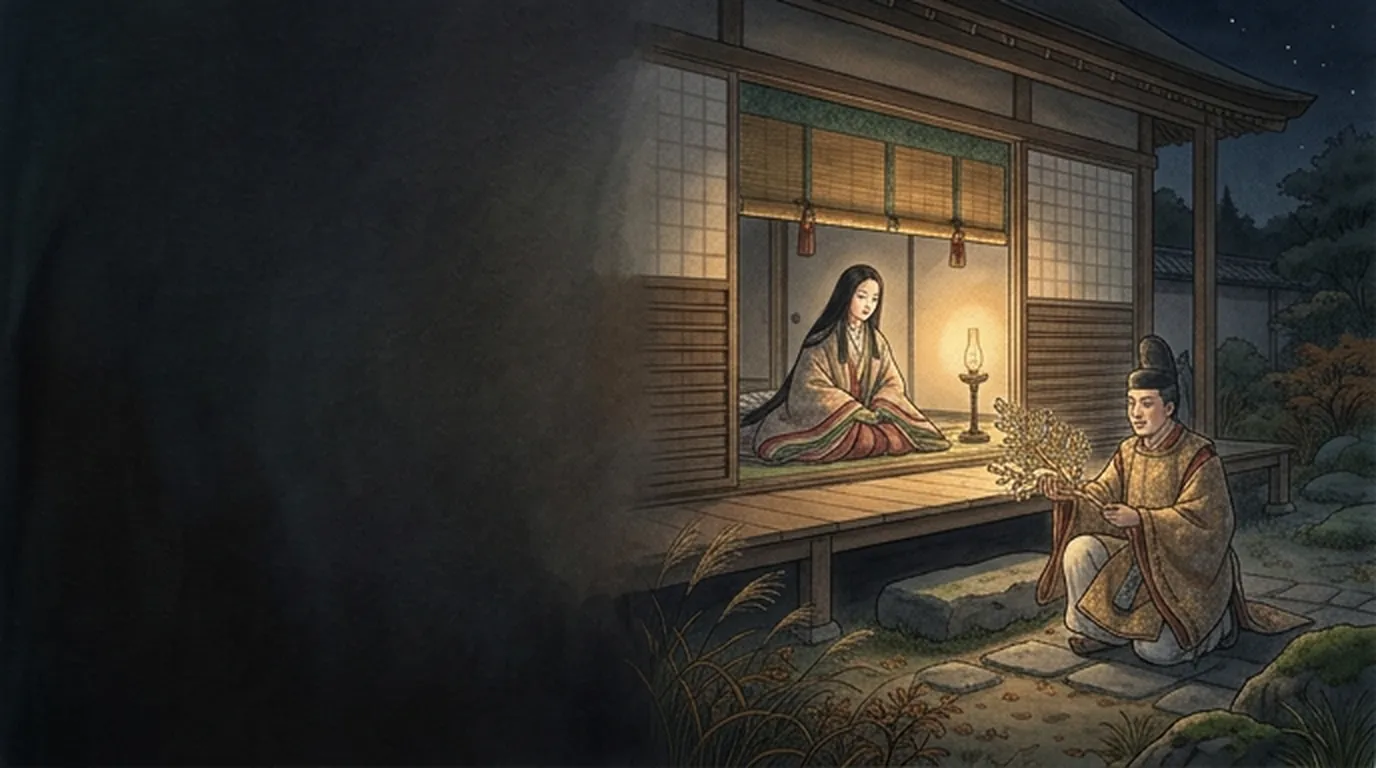
帝みかど
Meaning: the Emperor (an old word; today people say 天皇)
かぐや姫のうわさを聞いた帝は、「どんなに美しい人なのか、見てきなさい」と言って、使いを送りました。
The Emperor, who had heard the rumors about Kaguya-hime, sent a messenger, saying, "Go and see just how beautiful she is."
-
Idiom
使いを送るつかいをおくる
Meaning: to send a messenger
かぐや姫のうわさを聞いた帝は、「どんなに美しい人なのか、見てきなさい」と言って、使いを送りました。
The Emperor, who had heard the rumors about Kaguya-hime, sent a messenger, saying, "Go and see just how beautiful she is."
-
Old-style
位くらい
Meaning: rank at court (in old Japan, a title given by the Emperor)
そうすれば、おまえに高い位をあげよう。」
If you do, I will give you a high rank."
-
Sound & mimetic word
さっとさっと
Meaning: quickly; in an instant
すると、かぐや姫は、さっと影になって消えてしまいました。
At that, Kaguya-hime turned into a shadow in an instant and vanished.
-
Idiom
影になるかげになる
Meaning: to turn into a shadow (and so slip out of someone's hands)
すると、かぐや姫は、さっと影になって消えてしまいました。
At that, Kaguya-hime turned into a shadow in an instant and vanished.
-
Old-style
〜ておくれ〜ておくれ
Meaning: please do ... (a gentle, old-style request to someone below you)
だから、もとの姿にもどっておくれ。」
So please, go back to the way you were."
-
Idiom
もとの姿もとのすがた
Meaning: one's former self; the way one looked before
Literal: the original form
かぐや姫は、もとの姿にもどりました。
Kaguya-hime returned to her former self.
-
Idiom
手紙のやりとりてがみのやりとり
Meaning: an exchange of letters; writing back and forth
Literal: giving and taking letters
それから三年の間、二人は手紙のやりとりを続けました。
For three years after that, the two of them kept exchanging letters.
-
Idiom
考えこむかんがえこむ
Meaning: to sink deep into thought; to brood
三年がたった春のころから、かぐや姫は、月を見ては考えこむようになりました。
From the spring when three years had passed, Kaguya-hime began to sink into thought every time she looked at the moon.
-
Idiom
わけをたずねるわけをたずねる
Meaning: to ask the reason; to ask what is wrong
おじいさんとおばあさんが心配してわけをたずねると、かぐや姫は、とうとう打ち明けました。
When the old man and the old woman, worried, asked her the reason, Kaguya-hime at last told them everything.
-
Idiom
打ち明けるうちあける
Meaning: to tell openly something one has kept inside; to confide
おじいさんとおばあさんが心配してわけをたずねると、かぐや姫は、とうとう打ち明けました。
When the old man and the old woman, worried, asked her the reason, Kaguya-hime at last told them everything.
-
Idiom
月の都つきのみやこ
Meaning: the Capital of the Moon (the world Kaguya-hime comes from)
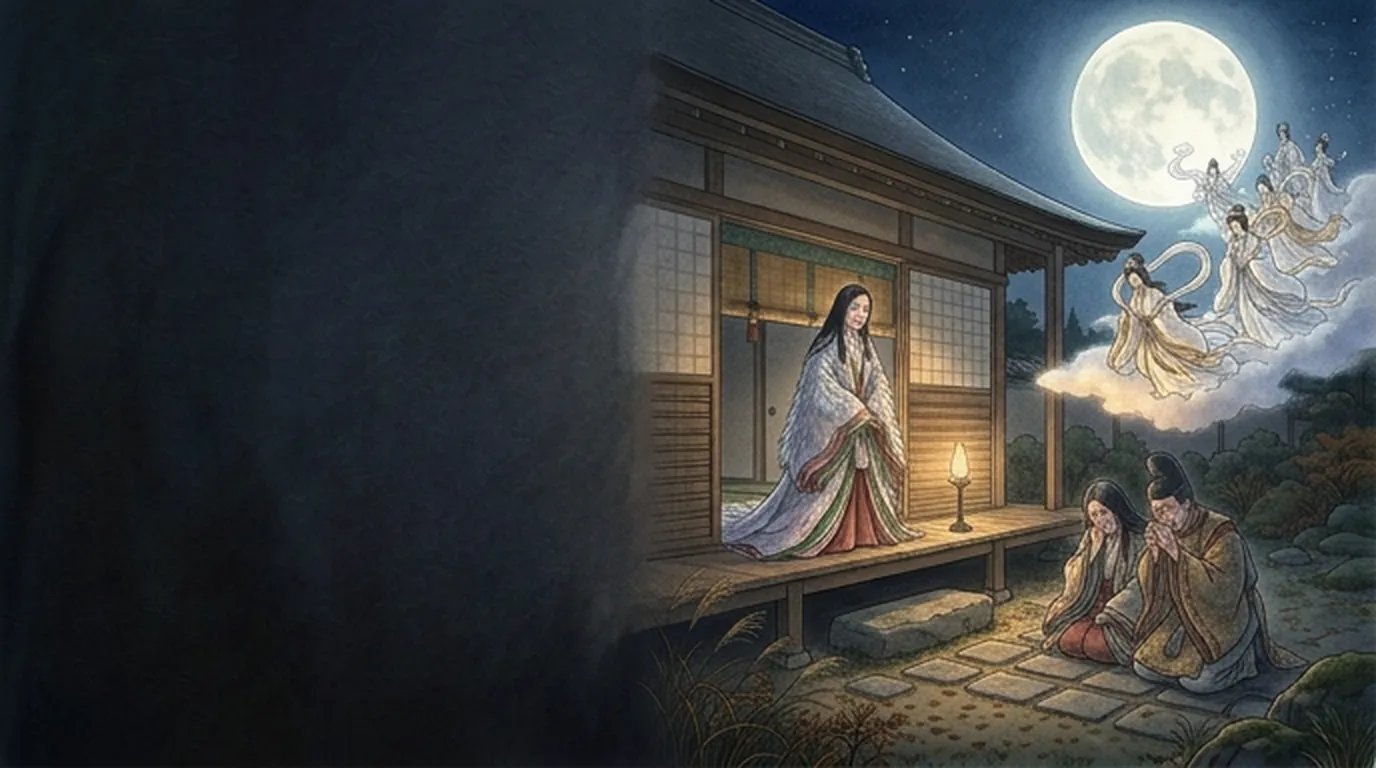
月の都の人です。
I am from the Capital of the Moon.
-
Idiom
迎えが来るむかえがくる
Meaning: someone comes to take you back; they come for you
今月の十五日に、月から迎えが来ます。
On the fifteenth of this month, people will come from the moon to take me back.
-
Idiom
年をとるとしをとる
Meaning: to grow old; to age
Literal: to take years
月の都の人は、とても美しく、年をとらず、悩むこともないといいます。
They say the people of the Capital of the Moon are very beautiful, never grow old, and have no worries.
-
満月を十も合わせたようなまんげつをとおもあわせたような
Meaning: like ten full moons put together
満月を十も合わせたような光です。
It was a light like ten full moons put together.
-
Idiom
弓を引くゆみをひく
Meaning: to draw a bow
弓を引く力も出ず、ただぼんやりと見ているだけです。
They did not even have the strength to draw their bows, and only stared blankly.
-
Sound & mimetic word
ぼんやりぼんやり
Meaning: blankly; with an empty mind
弓を引く力も出ず、ただぼんやりと見ているだけです。
They did not even have the strength to draw their bows, and only stared blankly.
-
Idiom
罪をおかすつみをおかす
Meaning: to commit a crime or a sin; to do something wrong
「かぐや姫は、罪をおかしたので、しばらくの間、おまえのところにいたのだ。
"Kaguya-hime did something wrong, and so for a while she has been with you.
-
Idiom
きたない所きたないところ
Meaning: an unclean place (this is how the people of the moon speak of the human world)
Literal: a dirty place
こんなきたない所に、いつまでもいてはいけません。」
You must not stay in such an unclean place forever."
-
Idiom
ひとりでにひとりでに
Meaning: by itself; with no one touching it
すると、閉めてあった戸が、ひとりでに開きました。
Then the door that had been shut opened by itself.
-
Idiom
手をはなれるてをはなれる
Meaning: to leave someone's hands; to slip out of someone's hold
かぐや姫は、おばあさんの手をはなれて、外へ出ていきました。
Kaguya-hime left the old woman's arms and went outside.
-
Old-style
天の羽衣あまのはごろも
Meaning: the robe of heaven (a robe of feathers worn by heavenly beings; whoever wears it forgets human feelings)
一つには、天の羽衣が入っています。
In one was the robe of heaven.
-
Old-style
不死の薬ふしのくすり
Meaning: the drug of immortality (不死 = never dying)
もう一つには、飲めば死ななくなる薬、不死の薬が入っています。
In the other was a drug that keeps you from dying, the drug of immortality.
-
Idiom
心が変わるこころがかわる
Meaning: to have a change of heart; one's feelings change
この羽衣を着た人は、心が変わってしまい、人を思う気持ちもなくなるといいます。
They say that whoever puts on this robe has a change of heart and loses all feeling for others.
-
Idiom
人を思うひとをおもう
Meaning: to care about other people; to feel for someone
Literal: to think of a person
この羽衣を着た人は、心が変わってしまい、人を思う気持ちもなくなるといいます。
They say that whoever puts on this robe has a change of heart and loses all feeling for others.
-
Sound & mimetic word
しみじみしみじみ
Meaning: deeply; with all one's heart (a quiet, strong feeling)
「羽衣を着る今になって、あなたのことをしみじみと思い出しています。」
"Now, at the moment I put on the robe of feathers, I find myself thinking of you with all my heart."
-
Old-style
いとしいいとしい
Meaning: dear; beloved (a literary word)
すると、おじいさんをかわいそうだ、いとしいと思う気持ちも、消えてしまいました。
At once, even her feelings of pity and love for the old man disappeared.
-
血の涙ちのなみだ
Meaning: tears of blood; tears of the deepest grief
おじいさんとおばあさんは、血の涙を流して泣きました。
The old man and the old woman wept tears of blood.
-
Idiom
何になるだろうなにになるだろう
Meaning: what good would it do? (a question that means "it is no use")
Literal: what would it become?
「かぐや姫がいないのに、長く生きて何になるだろう」と言って、薬も飲まず、そのまま病気になって、寝こんでしまいました。
"With Kaguya-hime gone, what is the use of living long?" they said; they would not even take medicine, and soon fell ill and took to their beds.
-
Idiom
寝こむねこむ
Meaning: to be sick in bed; to take to one's bed
「かぐや姫がいないのに、長く生きて何になるだろう」と言って、薬も飲まず、そのまま病気になって、寝こんでしまいました。
"With Kaguya-hime gone, what is the use of living long?" they said; they would not even take medicine, and soon fell ill and took to their beds.
-
Old-style
駿河するが
Meaning: Suruga (an old province; today the central part of Shizuoka Prefecture)
「駿河の国(今の静岡県)にある山が、都にも近く、天にも近いそうです」と、ある人が答えました。
"They say a mountain in the province of Suruga (today's Shizuoka Prefecture) is close to the capital and close to heaven too," someone answered.
-
Idiom
何の意味があるだろうなんのいみがあるだろう
Meaning: what is the point? (a question that means "there is none")
「もうかぐや姫に会えないのなら、死なない薬に何の意味があるだろう。」
"If I can never see Kaguya-hime again, what use to me is a drug that keeps me from dying?"
-
Idiom
士に富む山しにとむやま
Meaning: "the mountain rich in soldiers": the story's own explanation of the name 富士 (富 rich + 士 soldier)
たくさんの兵士が登ったので、この山は「士に富む山」、つまり「ふじの山」と名づけられたといいます。
Because so many soldiers climbed it, they say, this mountain was named "the mountain rich in soldiers," that is, Fuji-no-yama.
-
Idiom
不死とふじふしとふじ
Meaning: a play on words: 不死 (fushi, never dying) sounds almost the same as ふじ (Fuji)
「不死」の薬を燃やした山だから「ふじ」の山だ、と考える人もいます。
Some people think it is called Fuji because it is the mountain where the drug of fushi (immortality) was burned.
-
Idiom
言い伝えられているいいつたえられている
Meaning: it has been handed down; so the story has been told ever since
その煙は、今も雲の中へのぼっていると、言い伝えられています。
It is said that the smoke still rises into the clouds to this day.