
Part 1 · Commentary
Commentary 2
A peach, a boy, and millet dumplings
さて、桃の中から出てきたのは、元気な男の赤ちゃんでした。桃から生まれたので、二人は桃太郎と名前をつけます。桃太郎はどんどん大きくなり、力も強くなりました。相撲をとっても、勝てる人はだれもいません。それでいて、やさしい子でした。
Now, what came out of the peach was a healthy baby boy. Since he was born from a peach, the two of them name him Momotaro, "Peach Boy." Momotaro grows bigger and bigger, and stronger too. No one can beat him at sumo. And yet he was a kind boy.
十五歳になったころ、桃太郎は、旅から帰った人の話を聞きます。遠い海のむこうに、鬼が島という島がある。そこでは悪い鬼たちが、あちこちの国から取ってきた宝物を守っている、というのです。桃太郎は、行きたくてたまらなくなりました。おじいさんは、すぐに言います。「それはいさましいことだ。じゃあ行っておいで。」そしておばあさんと二人で、お弁当に、きびだんごを作ってくれました。二人は、けがをしないように、と言って、門の外で見送ります。
When he is about fifteen, Momotaro hears a story from someone back from a journey. Far across the sea, there is an island called Onigashima, Demon Island. There, bad demons guard treasure they have taken from countries all over. Momotaro wants to go so badly he can hardly stand it. The old man says at once, "How brave. Off you go, then." And together with the old woman, he makes millet dumplings for him to take along. The two of them see him off outside the gate, telling him not to get hurt.
山で犬が、森で猿が、野原できじが、桃太郎に声をかけます。三匹とも、聞くことは同じです。どちらへ行くのですか。腰に下げたものは何ですか。桃太郎は答えます。「日本一のきびだんごさ。」三匹は、だんごを一つずつもらって、おともになりました。
In the mountains a dog, in the forest a monkey, and in a field a pheasant call out to Momotaro. All three ask the same thing. Where are you going? What is that hanging at your waist? Momotaro answers, "The best millet dumplings in Japan." The three animals each get one dumpling and become his companions.
Commentary 3
The voyage, the battle, and the treasure
海は、船で渡ります。犬がこぎ、猿がかじを取り、きじは先に立って海を見張りました。やがて、岩の上に、黒い鉄の門のある城が見えてきます。きじは空から飛んで、鬼の目をつつきます。猿は高い岩をのぼって、中から門を開けました。犬は鬼の足にかみつき、猿は顔をひっかきます。桃太郎は、鬼の大将を押さえつけました。
They cross the sea by boat. The dog rows, the monkey steers, and the pheasant goes ahead and keeps watch over the sea. Soon, on top of the rocks, they see a castle with a black iron gate. The pheasant flies down from the sky and pecks at the demons' eyes. The monkey climbs the high rocks and opens the gate from the inside. The dog bites the demons' legs, and the monkey scratches their faces. Momotaro pins down the demon chief.
大将は涙をこぼして言います。「命だけはお助けください。」宝物は残らずさし上げます、と。桃太郎は鬼を許し、宝物を車に積んで帰ります。着ると姿が見えなくなるみの。ふると何でも出てくる小づち。おじいさんは「それこそ日本一だ」と喜び、おばあさんは、けががなくて何よりだ、と言いました。空は青く晴れて、庭には桜が咲いていました。
With tears falling, the chief says, "Please, just spare my life." He will hand over every last bit of the treasure, he says. Momotaro forgives the demons, loads the treasure onto a cart, and goes home. A straw cape that makes you invisible when you put it on. A little mallet that brings out anything when you shake it. The old man rejoices, "Now that is the best in Japan," and the old woman says the best thing is that he isn't hurt. The sky was clear and blue, and the cherry trees were in bloom in the garden.
Commentary 4
Three things to notice
読みどころを三つ挙げます。一つ目は、くり返しです。犬も猿もきじも、同じことを聞き、同じ答えをもらい、同じようにおともになります。昔話は、目で読むものではなく、耳で聞くものでした。だから、同じ形が何度も出てきます。日本語を学んでいる人にも、聞き取りやすい形です。
Here are three things to notice. The first is repetition. The dog, the monkey, and the pheasant ask the same thing, get the same answer, and become companions in the same way. Folktales were not things you read with your eyes, but things you heard with your ears. That is why the same pattern comes up again and again. It is a pattern that is easy to follow for people learning Japanese, too.
二つ目は、「日本一」という言葉です。旅のはじめに、桃太郎は、きびだんごを日本一だと言います。旅の終わりには、おじいさんが、桃太郎を日本一だと言います。同じ言葉が、物語の入口と出口に置かれているのです。
The second is the word "nippon-ichi," the best in Japan. At the start of the journey, Momotaro says his millet dumplings are the best in Japan. At the end of the journey, the old man says Momotaro is the best in Japan. The same word is placed at the entrance and the exit of the story.
三つ目は、鬼です。鬼が何をしたのかは、旅から帰った人の話として出てくるだけです。桃太郎の村に鬼が来た、とは書かれていません。鬼の気持ちも、どこにも書かれていません。鬼は、泣いて降参するだけです。
The third is the demons. What the demons did only comes up as a story told by someone back from a journey. It does not say the demons came to Momotaro's village. Nor does it say anywhere how the demons felt. The demons just cry and surrender.
明治のはじめ、福沢諭吉は、自分の子どもたちにこう書きました。宝物の持ち主は鬼だ。それを取りに行った桃太郎は、盗人のような悪者だ、と。1924年には、芥川龍之介も「桃太郎」を書いています。そこでは鬼たちは、平和に暮らしていました。桃太郎は、正しいことをしたのでしょうか。後半は、この問いを二人で話してみます。
In the early Meiji period, Yukichi Fukuzawa wrote this for his own children. The owners of the treasure are the demons. Momotaro, who went to take it, is a villain, like a thief. In 1924, Ryūnosuke Akutagawa also wrote a "Momotaro." In his story, the demons were living in peace. Did Momotaro do the right thing? In the second half, the two of us will talk about this question.
Part 2 · Conversation: Mio and Ken
Conversation 1
Did Momotaro do the right thing?
ここからは二人で話します。ミオです。
From here on, it's the two of us. I'm Mio.
ケンです。さっきの問い、ミオはどう?桃太郎は、正しいことをしたと思う?
And I'm Ken. That question just now, what do you think, Mio? Do you think Momotaro did the right thing?
したと思う。悪い鬼をやっつけて、宝物を持って帰ったんだから。
I think he did. He beat the bad demons and brought the treasure home.
僕は、そこが引っかかるんだ。
That's the part that bothers me.
えっ、どこが?
Huh? What part?
鬼は、桃太郎や村の人に、何かしたかな。
Did the demons ever do anything to Momotaro or the people of his village?
何かって、悪い鬼でしょ。
Do anything? They're bad demons, aren't they?
でも、村に来て暴れた、とは書いてないよ。
But it doesn't say they came to the village and ran wild.
あ、たしかに。旅から帰った人の話を、聞いただけだね。
Oh, that's true. He only heard the story from someone back from a journey.
そう。話を聞いただけで、もう行きたくてたまらなくなる。
Right. Just from hearing the story, he's already dying to go.
でも、あちこちの国から宝物を取ってきた鬼だよ。
But these are demons who took treasure from countries all over.
それも、人から聞いた話なんだ。本当かどうか、桃太郎は確かめてない。
That's also just something he heard from someone. Momotaro never checked whether it was true.
ケン、今日は鬼の味方なの?
Ken, are you on the demons' side today?
味方じゃないよ。ただ、気になるんだ。
I'm not on their side. It just bothers me.
じゃあ、おじいさんはどう?すぐに「行っておいで」って言うよ。
Then what about the old man? He says "Off you go" right away.
止めないんだよね。十五歳の子が、遠い鬼の島へ行くのに。
He doesn't stop him, does he? Even though a fifteen-year-old is going off to a faraway demon island.
桃太郎が強いって、よくわかってるからだよ。
That's because he knows very well how strong Momotaro is.
村じゅうで、相撲でだれも勝てないんだったね。
Nobody in the whole village could beat him at sumo, right?
それに、やさしい子だって書いてある。
And it says he was a kind boy, too.
やさしい子が、鬼の大将を泣かせるかな。
Would a kind boy make the demon chief cry?
それは、戦いだから。
Well, that's because it's a fight.
Conversation 2
One dumpling each
ところで、きびだんごの話をしてもいい?
By the way, can I talk about the millet dumplings?
どうぞ。
Go ahead.
犬も猿もきじも、もらうのは一つだけなんだ。
The dog, the monkey, and the pheasant each get only one.
一つだね。
Just one, yes.
だんご一つで、鬼と戦うんだよ。ちょっと安すぎない?
They fight demons for one dumpling. Isn't that a bit cheap?
日本一のきびだんごだから。
Because they're the best millet dumplings in Japan.
日本一って、桃太郎が自分で言ってるだけだよ。
"The best in Japan" is only what Momotaro says himself.
おばあさんが作ったんだから、日本一なの。
The old woman made them, so they're the best in Japan.
うーん。それは、言い返せないな。
Hmm. I can't argue with that.
それにね、三匹は、だんごがほしかっただけじゃないと思う。
And besides, I don't think the three animals only wanted the dumplings.
というと?
Meaning?
最初に、どちらへ行くのですか、って聞くでしょ。
The first thing they ask is "Where are you going?", right?
ああ。行き先が鬼の島だとわかって、おともになるのか。
Ah. So they become his companions after learning he's going to the demon island.
そう。だから、だんごは、いっしょに行くという約束のしるしみたいなもの。
Yes. So the dumpling is something like a sign of a promise to go together.
なるほど。それは、いい読み方だね。
I see. That's a good way to read it.
船の上でも、みんなに仕事があるでしょ。
Even on the boat, everyone has a job, right?
犬がこいで、猿がかじを取って、きじが見張る。
The dog rows, the monkey steers, and the pheasant keeps watch.
戦いでも同じ。きじは空から目をつついて、猿は高い岩をのぼって。
Same in the battle. The pheasant pecks at their eyes from the sky, and the monkey climbs the high rocks.
門を中から開けるのは、猿だったね。
It was the monkey who opened the gate from the inside.
桃太郎ひとりじゃ、あの鉄の門も開かないんだよ。
Momotaro on his own couldn't even open that iron gate.
たしかに。桃太郎がひとりで勝つ話じゃないんだ。
True. It's not a story where Momotaro wins all by himself.
でしょ。わたしは、そこが好き。
Right? That's the part I like.
Conversation 3
The demon chief's tears and the treasure
でも、鬼の大将が泣くところは、どう思った?
But what did you think of the part where the demon chief cries?
「命だけはお助けください」ね。
"Please, just spare my life."
涙をこぼして言うんだ。ちょっと、かわいそうになる。
He says it with tears falling. I feel a little sorry for him.
でも桃太郎は、ちゃんと許してるよ。
But Momotaro does forgive him.
そうなんだ。殺してはいない。
That's right. He doesn't kill him.
宝物も、大将のほうから、さし上げますって言ったの。
And the treasure, too. It was the chief himself who said, "I'll hand it over."
押さえつけられてるときにね。
While he was being pinned down.
それは、そうだけど。
Well, that's true, but...
それに、取ってきた宝物なら、元の持ち主がいるはずだよ。
Besides, if it was treasure they took, it must have had owners.
あ。あちこちの国の、だれかのものだったんだ。
Oh. It belonged to someone in all those countries.
でも桃太郎は、車に積んで、自分の家に持って帰る。
But Momotaro loads it on a cart and takes it to his own home.
持ち主に返しに行った、とは書いてないね。
It doesn't say he went to give it back to the owners.
福沢諭吉が怒ったのも、そこだと思う。
I think that's what made Yukichi Fukuzawa angry, too.
Conversation 4
"Don't get hurt"
うーん。でも、最後のおばあさんの言葉、覚えてる?
Hmm. But do you remember the old woman's words at the end?
けががなくて何よりだ、だね。
"The best thing is that you're not hurt."
出かけるときも、けがをしないように、って見送ってたでしょ。
When he set out, too, they saw him off saying, "Don't get hurt," right?
ああ。旅のはじめと終わりで、同じことを言ってるんだ。
Ah. They say the same thing at the start and the end of the journey.
二人にとっては、宝物より、元気に帰ってきたことがいちばんなんだよ。
For the two of them, coming home safe and well matters more than treasure.
それは、僕もそう思う。でも、鬼の島は、そのあと、どうなったのかな。
I think so too. But I wonder what happened to the demon island after that.
聞いているあなたは、どう思うでしょうか。
What do you think, listening to this?
それでは、また次の作品で。
Well then, see you with the next story.
さようなら。
Goodbye.
Commentary 1
About Momotaro
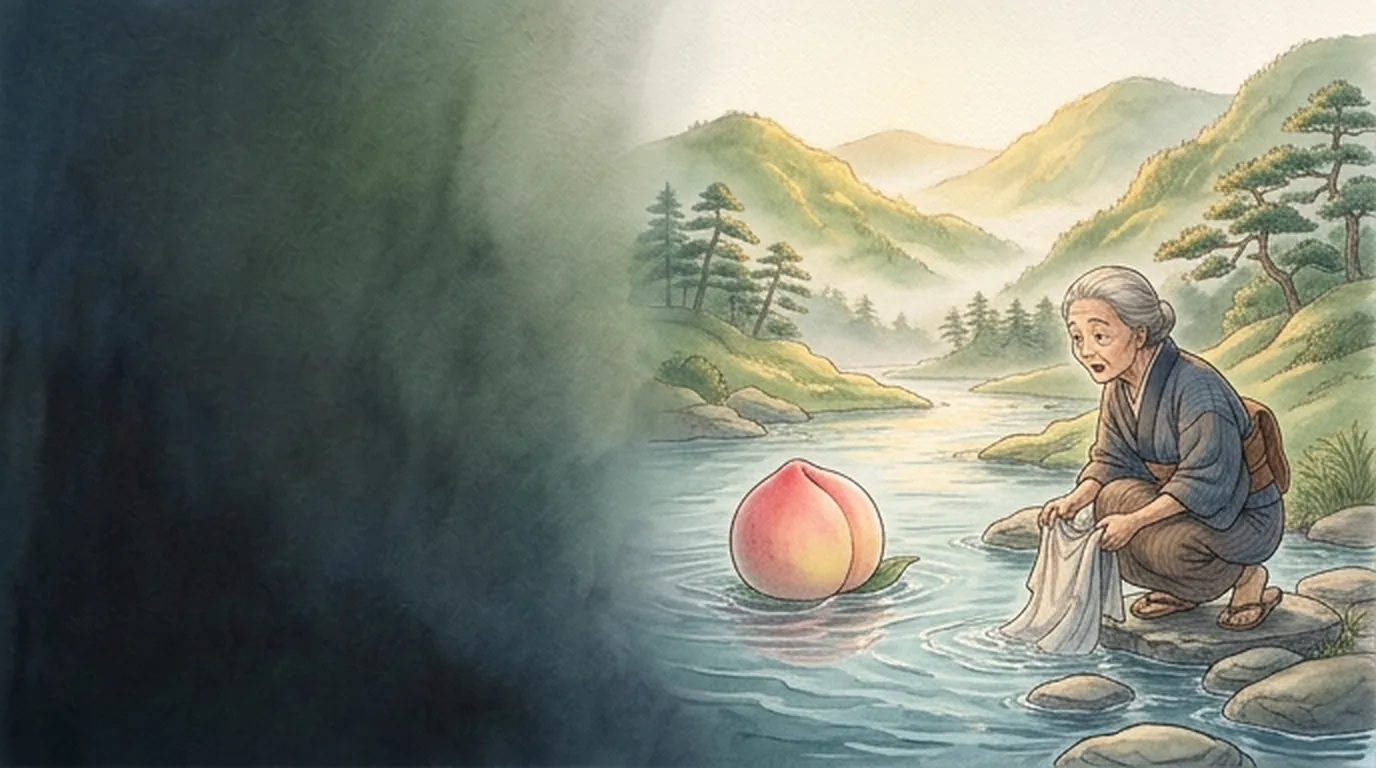
川で、おばあさんが洗濯をしています。そこへ、上のほうから、大きな桃が流れてきました。おばあさんは桃を拾って、家へ持って帰ります。おじいさんと二人で、分けて食べるつもりでした。ところが、おじいさんが桃を両手にのせてながめていると、桃は、中からぽんと二つに割れました。
An old woman is washing clothes in the river. Then, from upstream, a big peach comes floating down. She picks it up and carries it home. She means to share it with the old man. But as the old man holds the peach in both hands and looks at it, it pops open from the inside and splits in two.
今回の作品は「桃太郎」です。日本でいちばんよく知られている昔話で、作者はいません。四百年ほど前から、人から人へ、口で伝えられてきたと言われています。サイトでは、やさしい今の日本語に書き直したものを読むことができます。
This time, the story is "Momotaro." It is the best-known folktale in Japan, and it has no author. It is said to have been passed from person to person by word of mouth for about four hundred years. On the site, you can read it rewritten in easy, modern Japanese.
じつは、古い形の桃太郎は、桃から生まれません。江戸時代の絵本では、桃を食べたおじいさんとおばあさんが若くなって、二人のあいだに子どもが生まれます。桃から生まれる話が広まったのは、明治時代に、小学校の教科書に載ってからです。
In fact, in the old versions, Momotaro is not born from a peach. In picture books of the Edo period, the old man and old woman eat the peach and become young again, and a child is born to them. The story of a boy born from a peach spread after it was printed in elementary school textbooks in the Meiji period.