


Grammar Patterns
Grammar patterns found in 桃太郎 (Momotaro), with examples from the story. JLPT levels are estimates.
-
JLPT N3 estimated
〜というのは
Meaning: "What ... means is ...; (the thing called) ...": introduces a word or phrase to explain it.
Form: Noun / Plain form + というのは
In this story
-
しばというのは、火をたくときに使う、細い木の枝のことです。
Shiba means the thin branches of trees that people use to make a fire.
-
きびだんごというのは、きびという植物の実から作る、小さくて丸いだんごです。
Kibi-dango are small, round dumplings made from the grain of a plant called kibi (millet).
-
-
JLPT N4 estimated
〜と(発見)
Meaning: "When I did ..., (I found that) ...": what one noticed right after an action.
Form: Verb (plain / polite) + と
In this story
-
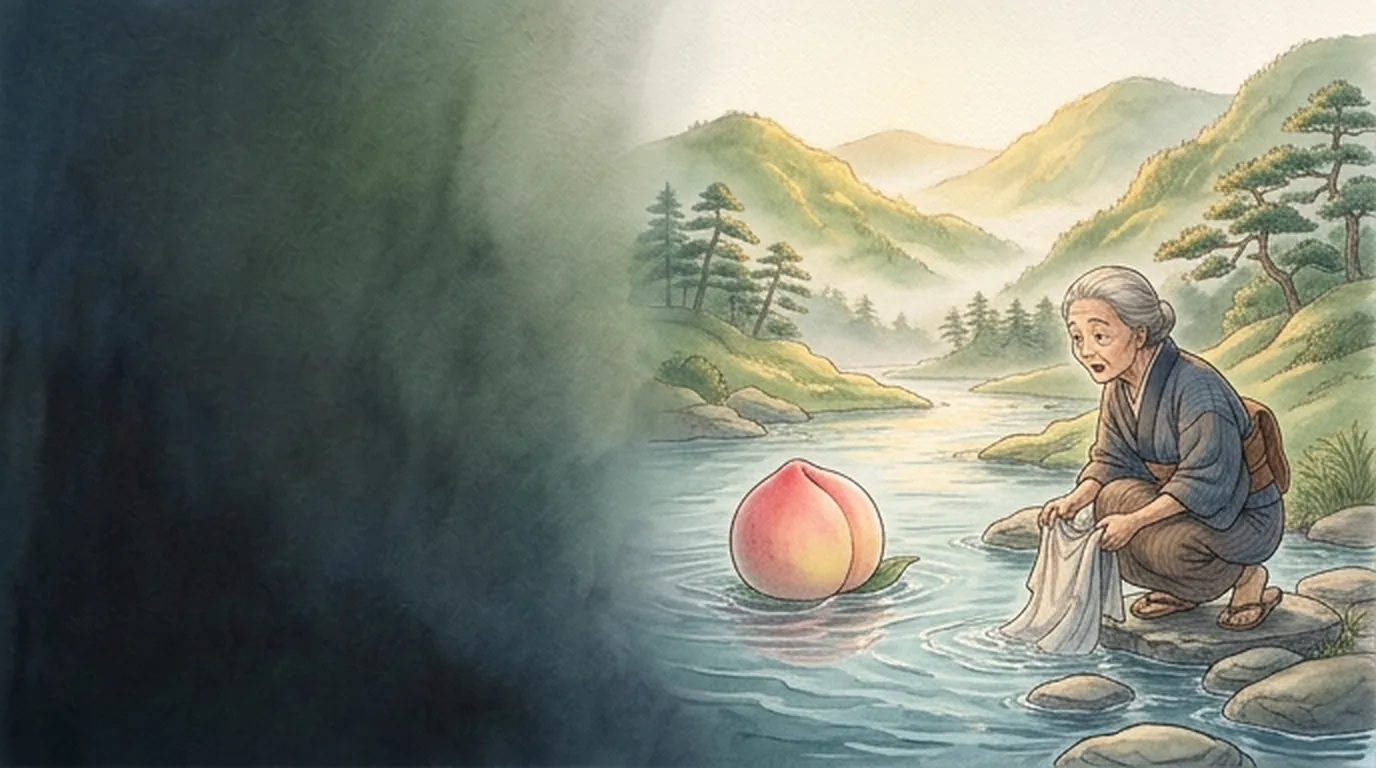
ある日、おばあさんが川で洗濯をしていると、川の上のほうから、大きな桃が一つ流れてきました。
One day, as the old woman was washing clothes in the river, a big peach came floating down from upstream.
-
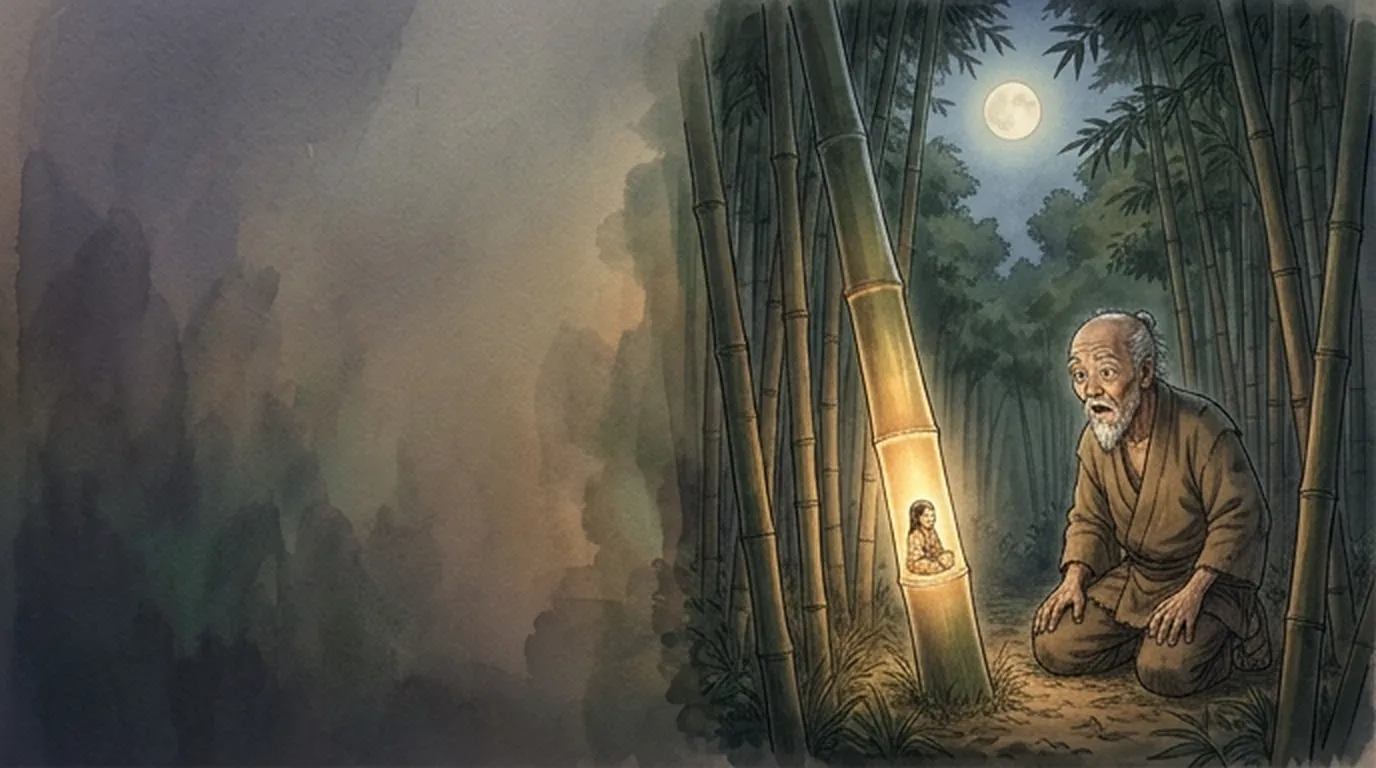
おじいさんが桃を両手にのせてながめていると、とつぜん、桃が中からぽんと二つに割れました。
As the old man held the peach in both hands and looked at it, the peach suddenly split in two from the inside with a pop.
-
桃太郎がどんどん歩いていくと、高い山の上に来ました。
Momotarō walked on and on until he came to the top of a high mountain.
-
-
JLPT N4 estimated
〜てくる
Meaning: Something comes toward the speaker, or a change starts and goes on ("it's getting ...").
Form: Verb て-form + くる
In this story
-
ある日、おばあさんが川で洗濯をしていると、川の上のほうから、大きな桃が一つ流れてきました。
One day, as the old woman was washing clothes in the river, a big peach came floating down from upstream.
-
夕方、おじいさんが山から帰ってきました。
In the evening, the old man came back from the hills.
-
-
JLPT N5 estimated
〜ましょう
Meaning: "Let's ...": a suggestion to do something together. Said about one's own action, it is an offer: "I'll ... (for you)".
Form: Verb ます-stem + ましょう
In this story
-
おじいさんと二人で、分けて食べましょう。」
I'll share it with Grandfather, and we'll eat it together."
-
お弁当を作ってあげましょう。」
I'll make you something to take along."
-
「わたしが船をこぎましょう」と、犬が言いました。
"I will row the boat," said the dog.
-
-
JLPT N4 estimated
〜のだ/〜のです
Meaning: Explains a situation or gives the reason behind it ("the thing is ...").
Form: Plain form + のだ / のです(Noun / な-adj + なのだ)
In this story
-
川で拾ったんですよ。」
I picked it up in the river."
-
二人には子どもがいなかったのです。
You see, they had no children.
-
「鬼が島へ、鬼を退治しに行くのだ。」
"I am going to Onigashima to beat the demons."
-
-
JLPT N4 estimated
〜ながら
Meaning: "While ...ing": two actions by the same person at the same time.
Form: Verb ます-stem + ながら
In this story
-
そして、「おぎゃあ、おぎゃあ」と泣きながら、元気な男の赤ちゃんが飛び出しました。
And out jumped a healthy baby boy, crying "Waah, waah!"
-
すると、草の中から犬が一匹、「ワン、ワン」とほえながら走ってきました。
Then a dog came running out of the grass, barking "Woof, woof!"
-
大きな涙をぽろぽろこぼしながら言いました。
With big tears rolling down his face, he said,
-
-
JLPT N3 estimated
特別な尊敬語(いらっしゃる・おっしゃる・くださる)
Meaning: Special honorific verbs that show respect for the person who acts: いらっしゃる (to be, come, go), おっしゃる (to say), くださる (to give).
Form: いる / 来る / 行く → いらっしゃる、言う → おっしゃる、くれる → くださる
In this story
-
「きっと神さまが、この子をくださったのだ。」
"Surely the gods have given us this child."
-
-
JLPT N4 estimated
〜ので
Meaning: "Because ...; so ...": gives a reason (softer than から).
Form: Plain form + ので(Noun / な-adj + なので)
In this story
-
桃から生まれたので、二人はこの子に「桃太郎」という名前をつけました。
Because he was born from a peach, the two of them named the child Momotarō.
-
おともが三匹もできたので、桃太郎はますます元気になりました。
Now that he had three followers, Momotarō felt livelier than ever.
-
-
JLPT N4 estimated
〜という(名前)
Meaning: "Called ...; named ...": gives the name of a person or thing.
Form: Name + という + Noun
In this story
-
桃から生まれたので、二人はこの子に「桃太郎」という名前をつけました。
Because he was born from a peach, the two of them named the child Momotarō.
-
「遠い海のむこうに、鬼が島という島がある。
"Beyond the faraway sea, there is an island called Onigashima.
-
-
JLPT N4 estimated
〜ても
Meaning: "Even if ...; no matter ...": the result does not change.
Form: Verb て-form + も
In this story
-
相撲をとっても、村じゅうで桃太郎に勝てる人はだれもいません。
Even at sumo, no one in the whole village could beat Momotarō.
-
-
JLPT N4 estimated
可能形(〜られる)
Meaning: Potential form: "can ...; be able to ...".
Form: Verb potential form(生きられる / 読める)
In this story
-
相撲をとっても、村じゅうで桃太郎に勝てる人はだれもいません。
Even at sumo, no one in the whole village could beat Momotarō.
-
-
JLPT N4 estimated
〜そうだ(伝聞)
Meaning: "I hear that ...; they say ...": passing on what someone else said.
Form: Plain form + そうだ(そうな)
In this story
-
そこには悪い鬼たちが住んでいて、あちこちの国から取ってきた宝物を守っているそうだ。」
They say wicked demons live there, guarding treasure they have taken from lands all over."
-
-
JLPT N2 estimated
〜てたまらない
Meaning: "Unbearably ...; so ... that one can't stand it".
Form: Verb / い-adj て-form + たまらない
In this story
-
この話を聞くと、桃太郎は、鬼が島へ行きたくてたまらなくなりました。
When he heard this, Momotarō could hardly bear how much he wanted to go to Onigashima.
-
大将は、苦しくてたまりません。
The chief was in such pain he could not bear it.
-
-
JLPT N5 estimated
〜に行く(目的)
Meaning: "Go to do ...": the purpose of going.
Form: Verb ます-stem + に行く
In this story
-
わたしは鬼が島へ、鬼を退治しに行こうと思います。」
I am thinking of going to Onigashima to beat the demons."
-
「鬼が島へ、鬼を退治しに行くのだ。」
"I am going to Onigashima to beat the demons."
-
-
JLPT N4 estimated
〜ようと思う
Meaning: "I think I'll ...; I'm going to ...": the speaker's intention.
Form: Verb volitional form + と思う(とおもう)
In this story
-
わたしは鬼が島へ、鬼を退治しに行こうと思います。」
I am thinking of going to Onigashima to beat the demons."
-
-
JLPT N4 estimated
〜(の)なら
Meaning: "If (that is the case) ...": takes up what the other person said or what the situation is.
Form: Plain form + (の)なら / Noun + なら
In this story
-
「そんなに遠いところへ行くのなら、おなかがすくでしょう。
"If you are going so far, you will get hungry.
-
-
JLPT N4 estimated
〜てくれる
Meaning: Someone does something for the speaker (or for the person the story follows).
Form: Verb て-form + くれる
In this story
-
二人は、お弁当にきびだんごを作ってくれました。
The two of them made him millet dumplings for his journey.
-
-
JLPT N4 estimated
〜ように(目的)
Meaning: "So that ...; in order that ...": the result one hopes for. With a negative it means "so as not to ...".
Form: Verb (dictionary / ない-form) + ように
In this story
-
けがをしないようにね。」
Mind you don't get hurt."
-
-
JLPT N4 estimated
〜ように(比喩)
Meaning: "Like ...; as if ...": compares something to something else.
Form: Noun + の / Verb (plain) + ように
In this story
-
船は、矢のように速く進みました。
The boat sped along as fast as an arrow.
-
遠くの海の上に、雲のような黒いものが見えます。
Far off on the sea, they could see something black, like a cloud.
-
そのほかにも、金や銀やさんごなど、めずらしい宝物が山のようにありました。
Besides these, there were heaps of rare treasures: gold, silver, coral and more.
-
-
JLPT N4 estimated
〜てしまう
Meaning: Shows that an action is completely finished, often with regret or an unwanted result.
Form: Verb て-form + しまう
In this story
-
見張りの鬼はびっくりして、城の中へ逃げこみ、鉄の門をしめてしまいました。
The demon on guard was startled, ran into the castle, and shut the iron gate.
-
そして、鉄の棒を投げすてて、降参してしまいました。
Then they threw down their iron clubs and gave up.
-
-
JLPT N4 estimated
命令形(〜ろ/〜え)
Meaning: Command form: a strong, rough order. In stories it is used to enemies and to people below the speaker.
Form: Group 2: る → ろ(開ける → 開けろ)/ Group 1: う-row → え-row(行く → 行け)/ する → しろ、来る → こい
In this story
-
門を開けろ。」
Open the gate!"
-
-
JLPT N3 estimated
〜だけで
Meaning: "Only ...; just ... (and nothing more)": that is all there is, often less than one would expect.
Form: Plain form + だけで(Noun + だけで)
In this story
-
けれども鬼たちは、体が大きいだけで、あまり強くありませんでした。
But the demons were only big; they were not very strong.
-
-
JLPT N4 estimated
受身(〜られる)
Meaning: Passive voice: the subject receives the action.
Form: Verb passive form(追い上げられる / 沈められる)
In this story
-
きじに目をつつかれ、犬に足をかみつかれ、猿に顔をひっかかれて、泣きながら逃げ回りました。
With the pheasant pecking their eyes, the dog biting their legs, and the monkey scratching their faces, they ran about in tears.
-
きじに目をつつかれ、犬に足をかみつかれ、猿に顔をひっかかれて、泣きながら逃げ回りました。
With the pheasant pecking their eyes, the dog biting their legs, and the monkey scratching their faces, they ran about in tears.
-
-
JLPT N4 estimated
お〜ください
Meaning: Polite request: "Please ...".
Form: お/ご + Verb ます-stem + ください(下さい)
In this story
-
命だけはお助けください。
Please, just spare my life.
-
-
JLPT N4 estimated
〜てやる
Meaning: Doing something for someone of equal or lower status (or an animal).
Form: Verb て-form + やる
In this story
-
桃太郎は、鬼の大将を許してやりました。
Momotarō forgave the demon chief.
-
-
JLPT N3 estimated
〜とおり(に)
Meaning: "Just as ...; exactly as ...".
Form: Verb た-form / Noun + の + とおり(通り)
In this story
-
大将は約束のとおり、城の中から宝物を出してきました。
Just as he had promised, the chief brought the treasure out of the castle.
-
-
JLPT N4 estimated
〜と(条件)
Meaning: "When ...; whenever ...; if ...": the second thing always or naturally follows the first.
Form: Verb (dictionary / ない-form) + と
In this story
-
着ると姿が見えなくなるみの。
A straw coat that makes you invisible when you put it on.
-
ふると何でも出てくる小づち。
A little mallet that brings out anything you want when you shake it.
-
-
JLPT N4 estimated
〜なくなる
Meaning: "Stop ...ing; no longer ...": something that used to happen does not happen any more.
Form: Verb ない-stem + なくなる
In this story
-
着ると姿が見えなくなるみの。
A straw coat that makes you invisible when you put it on.
-