
Idioms & Expressions
Idioms, sound words, old-style expressions, similes and casual speech in 桃太郎 (Momotaro).
-
Idiom
むかしむかしむかしむかし
Meaning: once upon a time (the set opening of a Japanese folk tale)
Literal: long ago, long ago
むかしむかし、あるところに、おじいさんとおばあさんが住んでいました。
Once upon a time, in a certain place, there lived an old man and an old woman.
-
Old-style
しばかりしばかり
Meaning: gathering firewood in the hills (an old word; today it is known mostly from this story)
おじいさんは毎日、山へしばかりに行きました。
Every day, the old man went to the hills to gather firewood.
-
Sound & mimetic word
どんぶらこどんぶらこ
Meaning: the sound of something big floating down a river, bobbing up and down (famous from this story)
どんぶらこ、どんぶらこ。
Donburako, donburako: bobbing up and down.
-
Idiom
なんて〜でしょうなんて〜でしょう
Meaning: what a ...!; how ...! (shows surprise or delight)
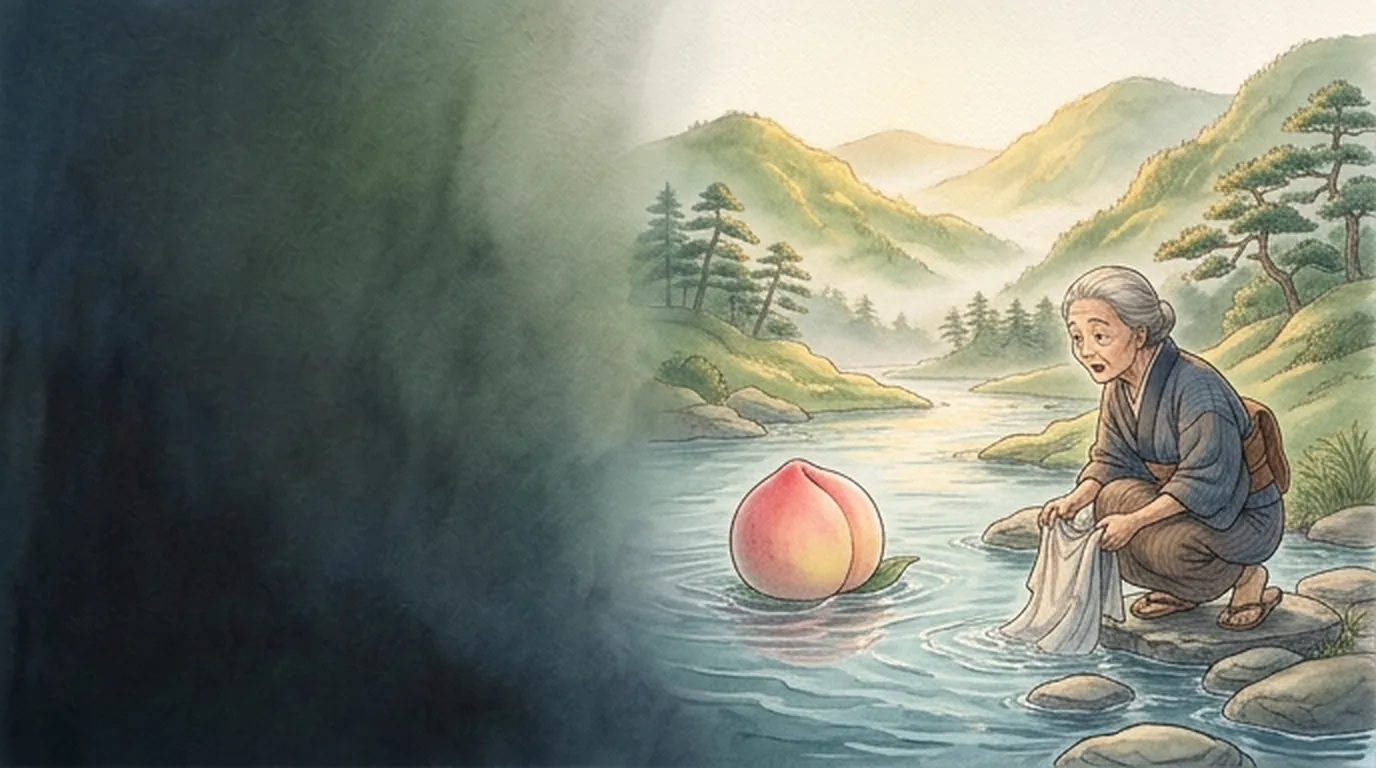
「まあ、なんて大きな桃でしょう。
"My, what a big peach!
-
Sound & mimetic word
ぽんとぽんと
Meaning: with a pop (the sound of something bursting open)
おじいさんが桃を両手にのせてながめていると、とつぜん、桃が中からぽんと二つに割れました。
As the old man held the peach in both hands and looked at it, the peach suddenly split in two from the inside with a pop.
-
Sound & mimetic word
おぎゃあおぎゃあ
Meaning: waah (the cry of a newborn baby)
そして、「おぎゃあ、おぎゃあ」と泣きながら、元気な男の赤ちゃんが飛び出しました。
And out jumped a healthy baby boy, crying "Waah, waah!"
-
Sound & mimetic word
どんどんどんどん
Meaning: steadily; quickly; on and on
桃太郎はどんどん大きくなり、力も強くなりました。
Momotarō grew bigger and bigger, and he grew strong too.
-
Idiom
相撲をとるすもうをとる
Meaning: to do sumo; to have a sumo match (the verb for sumo is とる)
Literal: to take sumo
相撲をとっても、村じゅうで桃太郎に勝てる人はだれもいません。
Even at sumo, no one in the whole village could beat Momotarō.
-
Idiom
村じゅうむらじゅう
Meaning: the whole village (〜じゅう after a place means "all through")
相撲をとっても、村じゅうで桃太郎に勝てる人はだれもいません。
Even at sumo, no one in the whole village could beat Momotarō.
-
Idiom
それでいてそれでいて
Meaning: and yet; even so (adds something you would not expect)
それでいて、心のやさしい子でした。
And yet he was a kind-hearted boy.
-
Casual speech
行っておいでいっておいで
Meaning: off you go; go on, then (〜ておいで is a gentle order to a child or to someone below you)
じゃあ行っておいで。」
Well then, off you go."
-
Idiom
おなかがすくおなかがすく
Meaning: to get hungry
Literal: the stomach becomes empty
「そんなに遠いところへ行くのなら、おなかがすくでしょう。
"If you are going so far, you will get hungry.
-
Idiom
行ってまいりますいってまいります
Meaning: I'm off; I'll be back (a very polite 行ってきます, said when leaving home)
Literal: I will go and come back
「では、行ってまいります。」
"Well, I'm off."
-
Idiom
気をつけてきをつけて
Meaning: take care; be careful (said to someone who is leaving)
「気をつけて。
"Take care.
-
Idiom
日本一にっぽんいち
Meaning: the best in Japan; number one in Japan
Literal: Japan-one
日本一のきびだんごを持っていますから。」
After all, I have the best millet dumplings in Japan."
-
Idiom
いつまでもいつまでも
Meaning: for a long, long time; forever
Literal: until whenever
おじいさんとおばあさんは、門の外に立って、いつまでも見送っていました。
The old man and the old woman stood outside the gate and watched him go for a long, long time.
-
Sound & mimetic word
ワン、ワンワン、ワン
Meaning: woof, woof (the bark of a dog)
すると、草の中から犬が一匹、「ワン、ワン」とほえながら走ってきました。
Then a dog came running out of the grass, barking "Woof, woof!"
-
Casual speech
〜さ〜さ
Meaning: a light, confident sentence ending, used mostly by men (きびだんごさ = "millet dumplings, of course")
「日本一のきびだんごさ。」
"The best millet dumplings in Japan."
-
Idiom
おともしますおともします
Meaning: I will go with you (お供 is a follower who goes along with someone more important)
おともします。」
I will go with you."
-
Casual speech
ついておいでついておいで
Meaning: come along; follow me (a gentle order to someone below you)
ついておいで。」
Come along."
-
Sound & mimetic word
キャッ、キャッキャッ、キャッ
Meaning: eek, eek (the cry of a monkey)
すると、木の上から猿が一匹、「キャッ、キャッ」とさけびながら下りてきました。
Then a monkey came down from a tree, shrieking "Eek, eek!"
-
Sound & mimetic word
ケン、ケンケン、ケン
Meaning: ken, ken (the cry of a pheasant)
すると、空の上からきじが一羽、「ケン、ケン」と鳴きながら飛んできました。
Then a pheasant came flying down from the sky, crying "Ken, ken!"
-
Idiom
かじを取るかじをとる
Meaning: to steer (a boat)
Literal: to take the rudder
「わたしがかじを取りましょう」と、猿が言いました。
"I will steer," said the monkey.
-
Idiom
先に立つさきにたつ
Meaning: to stand at the front; to go ahead of the others
「わたしは先に立って、海を見張りましょう」と、きじが言いました。
"I will stand at the front and keep watch over the sea," said the pheasant.
-
Idiom
波一つないなみひとつない
Meaning: not a single wave (noun + 一つ + negative means "not even one")
その日はとてもいい天気で、青い海には波一つありません。
The weather was very fine that day, and there was not a single wave on the blue sea.
-
矢のようにやのように
Meaning: as fast as an arrow
Literal: like an arrow
船は、矢のように速く進みました。
The boat sped along as fast as an arrow.
-
雲のようなくものような
Meaning: like a cloud
遠くの海の上に、雲のような黒いものが見えます。
Far off on the sea, they could see something black, like a cloud.
-
Casual speech
〜ぞ〜ぞ
Meaning: a strong sentence ending that pushes a point (来たぞ = "he's here, I tell you!")
「桃太郎さんが、鬼を退治しに来たぞ。
"Momotarō has come to beat the demons!
-
Casual speech
開けろあけろ
Meaning: open up! (the command form of 開ける; a rough order)
門を開けろ。」
Open the gate!"
-
Idiom
一生懸命いっしょうけんめい
Meaning: as hard as one can; with all one's might
鬼たちは、中から一生懸命に門を押さえています。
The demons were holding the gate shut from inside with all their might.
-
Sound & mimetic word
するするするする
Meaning: smoothly; quickly and easily (climbing or sliding)
その間に、猿が高い岩をするするとのぼって、中から門を開けました。
Meanwhile, the monkey climbed nimbly up the high rocks and opened the gate from the inside.
-
Sound & mimetic word
ぎゅうぎゅうぎゅうぎゅう
Meaning: tightly; hard (pressing or squeezing)
桃太郎は大将の背中に乗って、ぎゅうぎゅうと押さえつけました。
Momotarō climbed onto the chief's back and held him down hard.
-
Casual speech
どうだどうだ
Meaning: Well?; How about that? (said by someone who has the upper hand)
「どうだ。
"Well?
-
Sound & mimetic word
ぽろぽろぽろぽろ
Meaning: (of tears) falling in large drops, one after another
大きな涙をぽろぽろこぼしながら言いました。
With big tears rolling down his face, he said,
-
Idiom
命だけはお助けくださいいのちだけはおたすけください
Meaning: please, just spare my life (the set words of someone who gives up)
Literal: please save my life, at least
命だけはお助けください。
Please, just spare my life.
-
Idiom
そのかわりそのかわり
Meaning: in return; in exchange for that
そのかわり、宝物は残らずさし上げます。」
In return, I will give you every bit of the treasure."
-
Idiom
残らずのこらず
Meaning: all; every one; with nothing left
Literal: without leaving any
そのかわり、宝物は残らずさし上げます。」
In return, I will give you every bit of the treasure."
-
Idiom
さし上げますさしあげます
Meaning: I will give it to you (a humble, polite word for あげます)
そのかわり、宝物は残らずさし上げます。」
In return, I will give you every bit of the treasure."
-
Old-style
みのみの
Meaning: straw raincoat (worn in old Japan; the one in this story makes its wearer invisible)
着ると姿が見えなくなるみの。
A straw coat that makes you invisible when you put it on.
-
Old-style
小づちこづち
Meaning: small mallet (in folk tales, a magic one that gives you whatever you wish for)
ふると何でも出てくる小づち。
A little mallet that brings out anything you want when you shake it.
-
山のようにやまのように
Meaning: in heaps; a huge amount of
Literal: like a mountain
そのほかにも、金や銀やさんごなど、めずらしい宝物が山のようにありました。
Besides these, there were heaps of rare treasures: gold, silver, coral and more.
-
Sound & mimetic word
えんやらさえんやらさ
Meaning: heave-ho (a shout to keep time when people pull or carry something heavy)
「えんやらさ、えんやらさ。」
"Heave-ho, heave-ho!"
-
Idiom
声を合わせるこえをあわせる
Meaning: to call out or sing together, as one voice
Literal: to put voices together
三匹は声を合わせて、重い車を運んでいきました。
Calling out together, the three of them moved the heavy cart along.
-
Casual speech
〜かなあ〜かなあ
Meaning: I wonder if ...; I do hope ... (said to oneself; 帰らないかなあ = "I wish he would come back")
家では、おじいさんとおばあさんが、「桃太郎はまだ帰らないかなあ」と言いながら、首を長くして待っていました。
At home, the old man and the old woman were waiting eagerly, saying, "Isn't Momotarō back yet?"
-
Idiom
首を長くして待つくびをながくしてまつ
Meaning: to wait eagerly; to look forward to
Literal: to wait with one's neck stretched out
家では、おじいさんとおばあさんが、「桃太郎はまだ帰らないかなあ」と言いながら、首を長くして待っていました。
At home, the old man and the old woman were waiting eagerly, saying, "Isn't Momotarō back yet?"
-
Idiom
それこそそれこそ
Meaning: that is truly ...; now that is ...
それこそ日本一だ」と、おじいさんは言いました。
Now that is truly the best in Japan," said the old man.
-
Idiom
何よりだなによりだ
Meaning: that is the best thing of all; nothing could be better
Literal: it is more than anything
「まあまあ、けががなくて何よりだよ」と、おばあさんは言いました。
"My, my, you are not hurt, and that is the best thing of all," said the old woman.