
Blog · Toshishun
Toshishun (3): 4 Expressions from the Ending
This is the final part of our series on Toshishun. In Part 2, the hermit Tekkanshi left Toshishun alone on Mount Emei with one rule: do not say a single word.
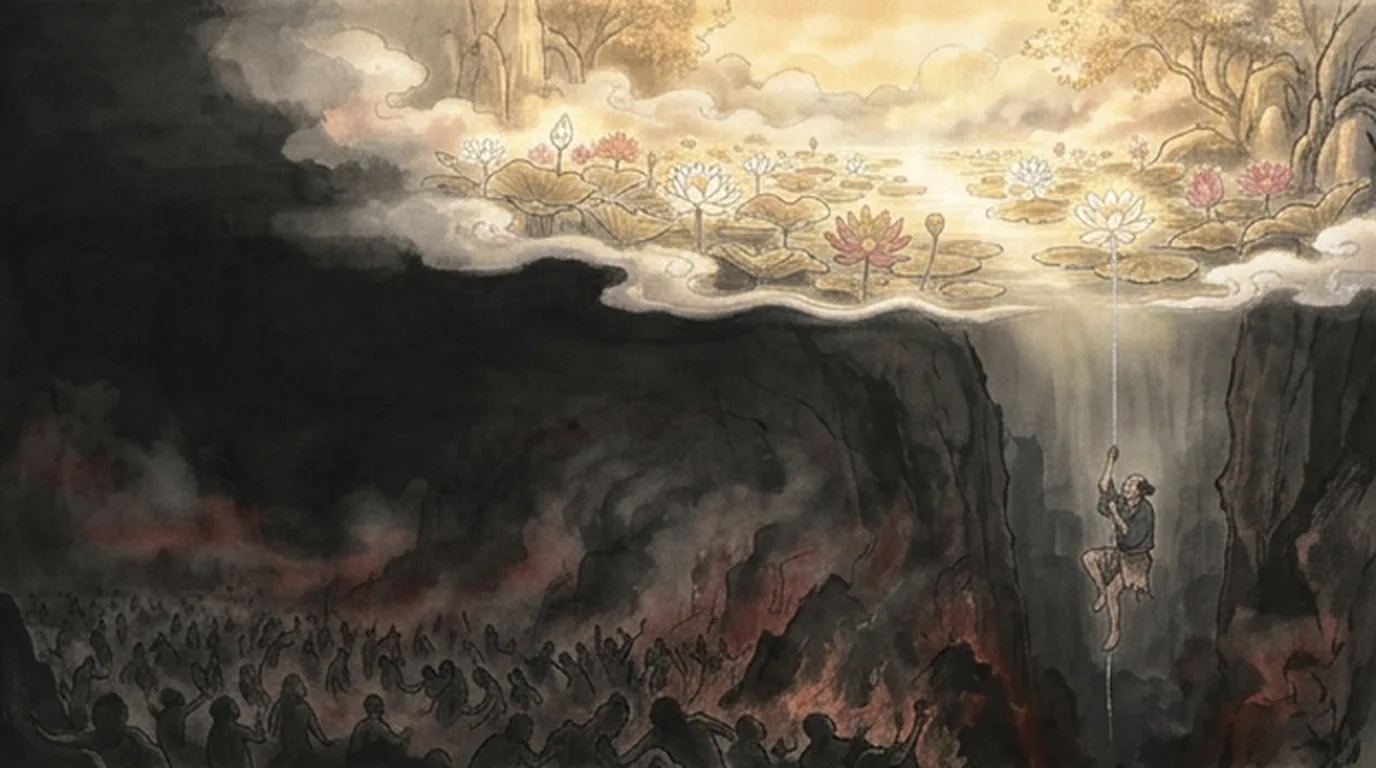
A tiger, a giant snake and a god with a spear come to scare him, but Toshishun stays silent. He is killed and sent to Hell, and still he says nothing. Then Enma, the King of Hell, brings in two horses. They have the faces of Toshishun's dead mother and father. This part contains the most famous lines in the story.
1. 心配をおしでない — don't worry (old, gentle speech)
This is an old, soft way of saying 心配しないで ("don't worry"). The pattern お〜でない was once used by parents, especially mothers, to children. Today you will mostly see it in older stories and films.
心配をおしでない。私たちはどうなっても、お前さえ仕合せになれるのなら、それより結構なことはないのだからね。
Don't worry about us. Whatever happens to us, if only you can be happy, there's nothing better than that.
The demons beat the two horses, but the mother's voice is weak and calm. お前さえ...なら means "as long as you..." She asks for nothing. 仕合せ is an older spelling of 幸せ(しあわせ).
Today (modern ways to say it):
- 心配しないで。大丈夫だから。
Don't worry. I'll be fine. - 心配しなくていいよ。すぐ帰るから。
You don't need to worry. I'll be home soon.
Tip: Other old forms like this include お泣きでない(don't cry) and お行きでない(don't go). They sound warm and a little old-fashioned.
2. 思わず(おもわず)— without meaning to; before one knew it
思わず means you did something without thinking, because your feelings moved faster than your mind.
杜子春は思わず、眼をあきました。
Without thinking, Toshishun opened his eyes.
He had kept his eyes shut to see nothing, but his mother's voice made him open them. A moment later, he forgets the hermit's rule, runs to the horse, holds its neck, and cries out one word: お母さん.
Today:
- 面白すぎて、思わず声を出して笑ってしまった。
It was so funny that I laughed out loud before I could stop myself. - 彼の話を聞いて、思わず涙が出た。
I couldn't help crying when I heard his story.
Tip: 思わず often goes with 〜てしまう, because the action was not planned: 思わず買ってしまった — "I ended up buying it on impulse."
3. 人間らしい(にんげんらしい)— truly human; like a real person
〜らしい after a noun means "having the true qualities of." 人間らしい describes a life, a feeling or an action that is warm and human.
何になっても、人間らしい、正直な暮しをするつもりです。
Whatever I become, I intend to live an honest life, a truly human one.
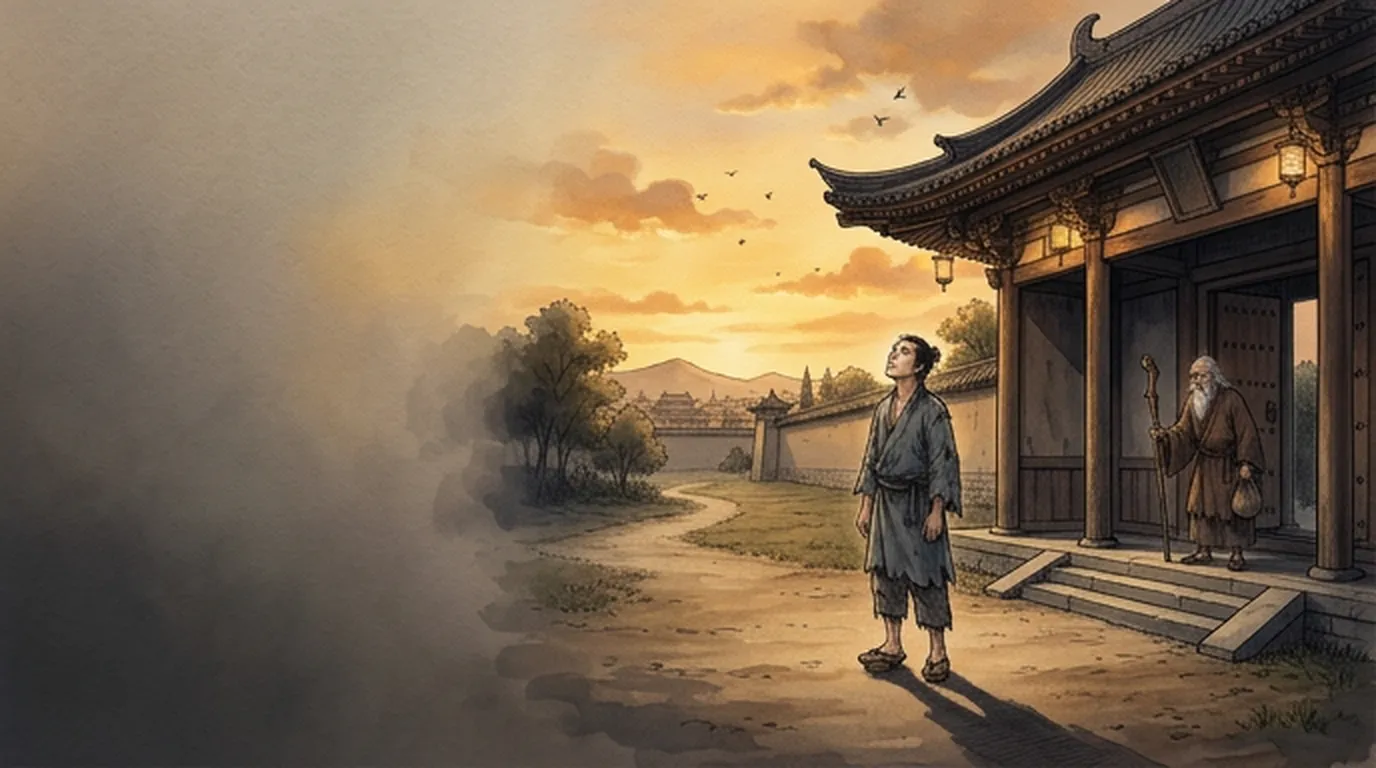
Toshishun wakes up. He is back at the gate of Luoyang, in the evening sun, as if it were all a dream. He has failed to become a hermit, but he is glad. This is his answer when the old man asks what he will do now.
Today:
- 忙しすぎて、人間らしい生活ができていない。
I'm so busy that I'm not living like a human being. - 春らしい、暖かい日ですね。
It's a warm day, just like spring should be.
Tip: 〜らしい has another meaning, "it seems," as in 雨が降るらしい(it seems it will rain). After a noun like 人間 or 春, it usually means "just what a ... should be."
4. 一面に(いちめんに)— all over; covering everything
一面 is "one whole surface." 一面に means something covers an area completely.
今頃は丁度家のまわりに、桃の花が一面に咲いているだろう。
Right about now, the peach blossoms must be blooming all around the house.
These are the old man's last words. He gives Toshishun a house at the foot of Mount Tai, and tells him the peach trees there are in full bloom. After so much darkness, the story ends with a spring full of flowers.
Today:
- 朝起きたら、外は一面の雪だった。
When I woke up, everything outside was covered in snow. - 丘の上には、一面にひまわりが咲いていた。
Sunflowers were blooming all over the hill.
Tip: 一面の+noun is also common: 一面の雪 (a blanket of snow), 一面の花 (flowers everywhere).
Read it in the story
Toshishun began with a young man who had nothing and ends with a man who knows what matters. Read the whole story and see how Akutagawa gets there.
On Thursday, October 8, our first Easy Japanese digest begins: The Tale of the Bamboo Cutter, Part 1.