
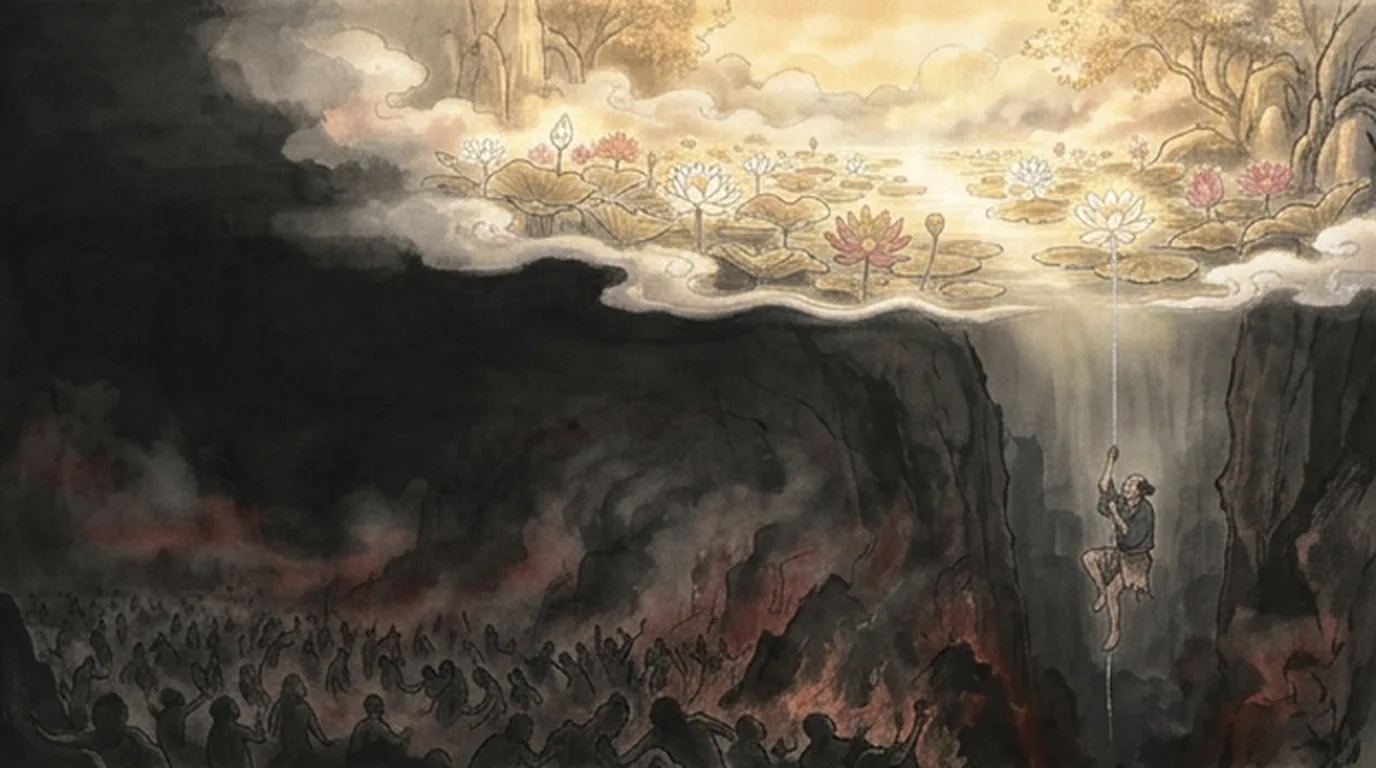
Part 1 · Commentary
Commentary 2
Gold Under the Shadow
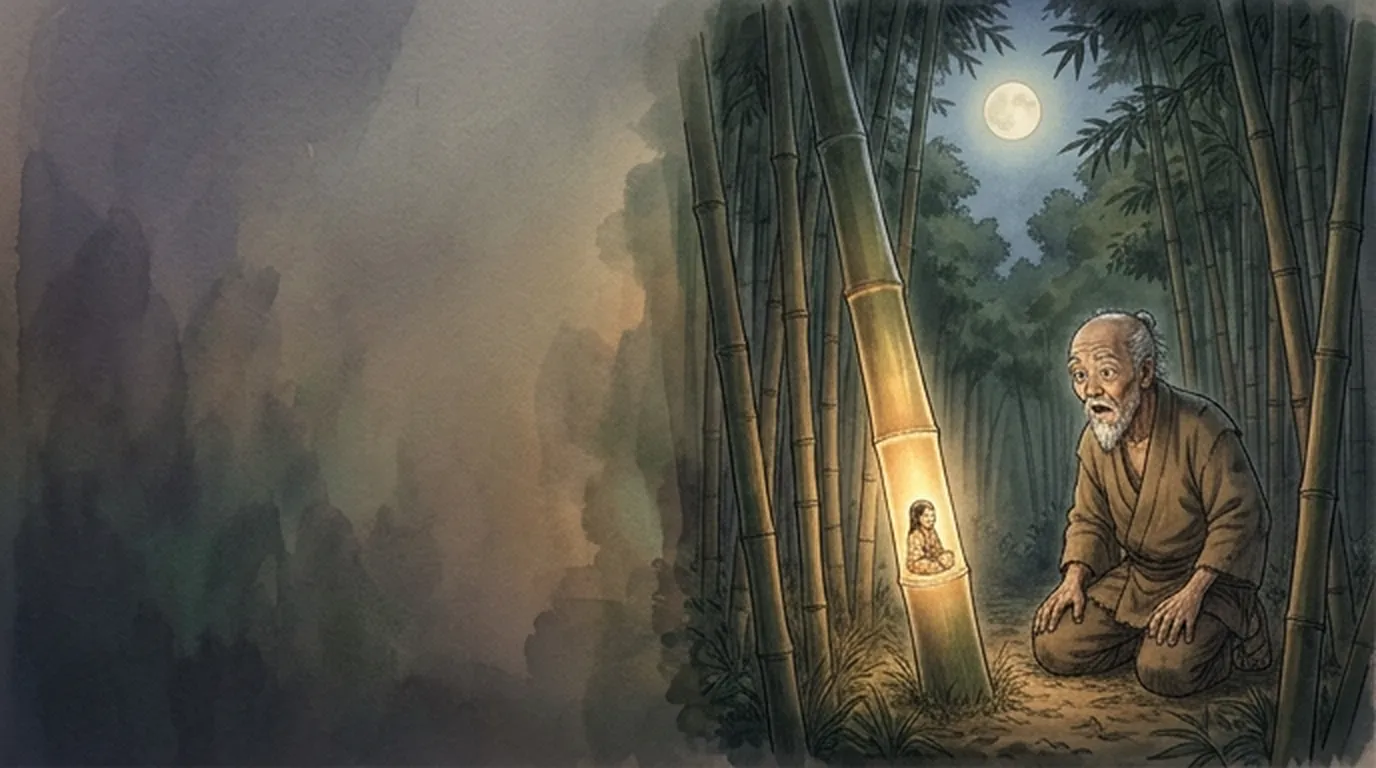
老人は杜子春に言います。夕日の中に立って、自分の影の頭にあたるところを、夜中に掘ってみなさい。車いっぱいの黄金が埋まっているはずだ、と。言われたとおりにすると、杜子春は一日のうちに、洛陽でいちばんの大金持ちになりました。
The old man says to Toshishun: Stand in the evening sun, and in the middle of the night dig at the spot where the head of your shadow falls. You should find a cartload of gold buried there. When he did as he was told, Toshishun became, within a single day, the richest man in Luoyang.
立派な家を買い、毎日のように宴会を開きます。それまで道で会っても挨拶さえしなかった人たちが、朝も夜も遊びにやってきます。けれども三年ほどで金がなくなると、誰も訪ねてこなくなりました。一杯の水を恵んでくれる人さえいません。
He buys a fine house and holds a feast almost every day. People who until then did not even greet him when they met him in the street now come to visit morning and night. But when the money ran out after about three years, no one came to see him anymore. There is not even one person who will give him a cup of water.
杜子春はまた門の下に立ち、また老人に会い、また大金持ちになります。そしてまた三年ほどで、すべてを失います。三度目に老人が現れたとき、杜子春は、もう金はいらないと断りました。人間というものに愛想がつきた、と言うのです。そして、老人が仙人だと見抜いて、弟子にしてほしいと頼みます。
Toshishun stands under the gate again, meets the old man again, and becomes very rich again. And again, in about three years, he loses everything. When the old man appeared for the third time, Toshishun refused, saying he did not want money anymore. He is sick and tired of human beings, he says. Then, seeing that the old man is really a hermit, he asks to be made his pupil.
Commentary 3
The Mountain, the Rule, the Cry
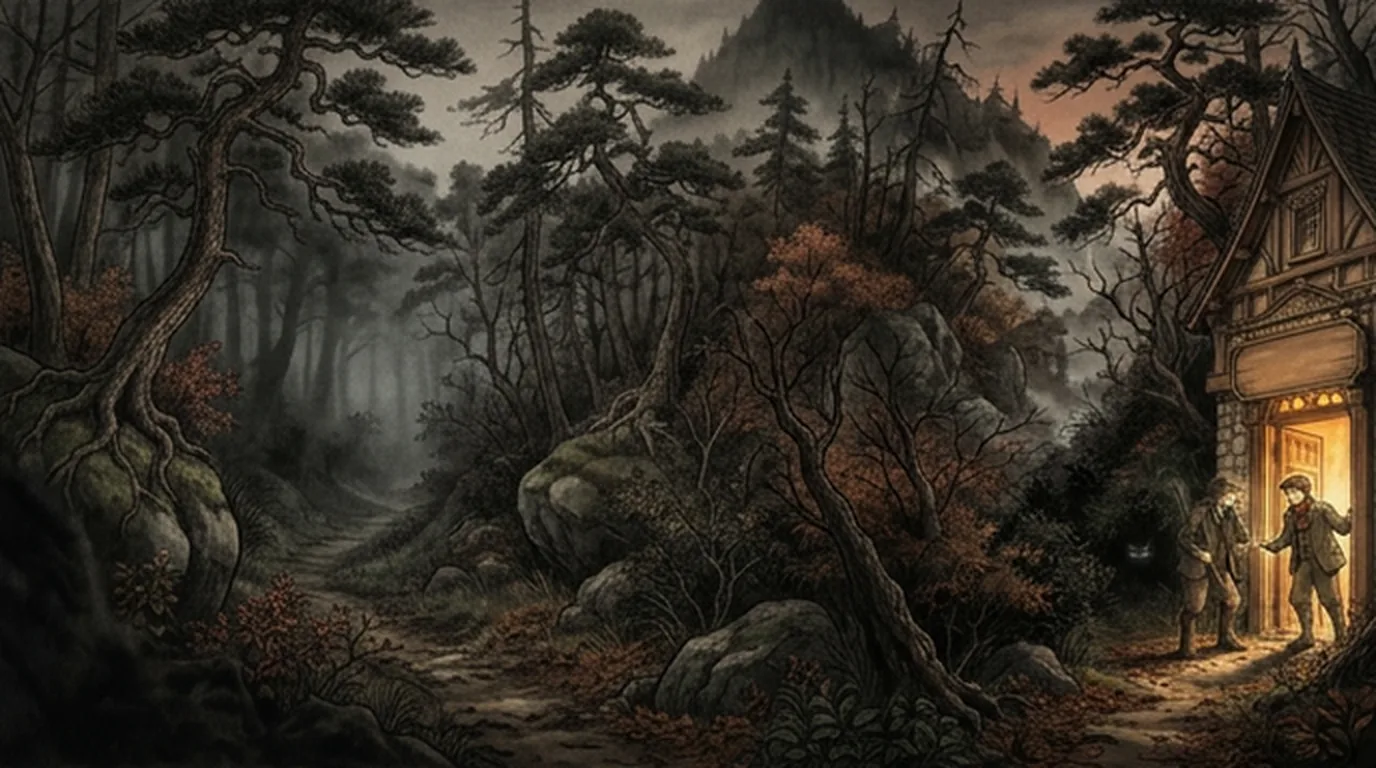
老人の名は鉄冠子。峨眉山という山に住む仙人でした。鉄冠子は杜子春を山の上に連れていき、ひとつだけ言いつけます。わたしが戻るまで、ここに座っていなさい。何が起きても、決して声を出してはいけない。ひとことでも口をきいたら、仙人にはなれない。
The old man's name is Tekkanshi. He was a hermit who lived on a mountain called Mount Emei. Tekkanshi takes Toshishun to the top of the mountain and gives him just one order. Sit here until I come back. Whatever happens, you must never make a sound. If you speak even one word, you cannot become a hermit.
ひとりになった杜子春に、虎と白い蛇が襲いかかります。嵐が来て、雷が落ちます。神の兵に突き殺され、魂は地獄へ落とされます。閻魔大王の前で、あらゆる責めを受けます。それでも杜子春は、ひとことも声を出しません。
Now alone, Toshishun is attacked by a tiger and a white snake. A storm comes, and lightning strikes. He is stabbed to death by a soldier of the gods, and his soul is sent down to hell. Before Enma, the King of Hell, he suffers every kind of torture. Even so, Toshishun does not say a single word.
すると閻魔大王は、二頭のやせた馬を連れてこさせました。体は馬ですが、顔は、死んだ父と母です。鬼たちが鉄のむちで、二頭を打ちのめします。杜子春は固く目をつぶります。そのとき、かすかな声が聞こえてきました。心配しなくていい。わたしたちはどうなっても、お前さえ幸せになれるなら、それでいいのだから。言いたくないことは、黙っておいで。母の声でした。
Then King Enma had two thin horses brought in. Their bodies are horses' bodies, but their faces are the faces of his dead father and mother. The demons beat the two horses down with iron whips. Toshishun shuts his eyes tight. Just then, he heard a faint voice. Don't worry. Whatever happens to us, if only you can be happy, that is enough. If there is something you do not want to say, stay silent. It was his mother's voice.
杜子春は言いつけを忘れて、馬に駆け寄ります。首を抱き、涙を落としながら、ひとこと叫びました。「お母さん」。
Toshishun forgets his order and runs to the horse. He put his arms around its neck and, with tears falling, cried out one word. "Mother."
気がつくと、杜子春はもとの門の下に立っていました。仙人にはなれませんでした。けれども杜子春は、なれなかったことがかえってうれしい、と言います。そしてこれからは、人間らしい、正直な暮らしをするつもりだ、と。
When he came to himself, Toshishun was standing under the same gate as before. He had not become a hermit. But Toshishun says that he is glad, rather, that he could not. And from now on, he says, he means to live a human, honest life.
Commentary 4
Three Things to Notice
読みどころを三つ挙げます。
Here are three things to notice.
一つ目は、くり返しです。金持ちになって失う、ということが二度あり、三度目に杜子春は別の道を選びます。山の上でも同じです。自分の体への苦しみには何度でも耐えたのに、最後のひとつだけは耐えられませんでした。
The first is repetition. Twice he becomes rich and loses it all, and the third time Toshishun chooses a different path. It is the same on the mountain. He endured pain to his own body again and again, but the very last one he could not endure.
二つ目は、鉄冠子のひとことです。もしお前が黙っていたら、その場でお前の命を絶つつもりだった。つまりこの試練は、声を出すほうが正解でした。黙り通せば仙人になれる、という約束そのものが、杜子春を試すためのものだったのです。
The second is one thing Tekkanshi says. If you had stayed silent, I meant to take your life on the spot. In other words, in this trial, speaking was the right answer. The promise itself, that he could become a hermit if he stayed silent to the end, was there to test Toshishun.
三つ目は、もとの話との違いです。中国の「杜子春伝」では、主人公が声を出したために仙人になれず、それは惜しい失敗として語られます。芥川はそれをひっくり返しました。声を出したことを、失敗ではなく、人間であることのしるしとして書いたのです。
The third is the difference from the original tale. In the Chinese "Tale of Du Zichun," the hero cannot become a hermit because he made a sound, and this is told as a regrettable failure. Akutagawa turned that upside down. He wrote the cry not as a failure, but as a sign of being human.
あなたが杜子春だったら、あの場面で声を出したでしょうか。後半は、この問いを二人で話してみます。
If you were Toshishun, would you have spoken in that scene? In the second half, two people talk this question over.
Part 2 · Conversation: Mio and Ken
Conversation 1
Would You Have Spoken?
ここからは二人で話します。ミオです。
From here on, it's the two of us. I'm Mio.
ケンです。さっきの問い、ミオはどう?声、出す?
And I'm Ken. About that question just now, how about you, Mio? Would you speak?
出す。迷わない。目の前で親が打たれてるんだよ。
I would. No hesitation. My parents are being beaten right in front of me.
僕は、正直わからない。
Honestly, I don't know.
えっ、黙ってるの?
What? You'd stay silent?
だって、お母さん本人が、黙っておいで、って言ってるんだよ。
Well, his mother herself is telling him, "Stay silent."
言ってるね。
She is, yes.
仙人にも黙れと言われて、母親にも黙れと言われてる。二人に言われたら、黙るのが正しい気がしてくる。
The hermit told him to be silent, and now his mother is telling him to be silent too. When two people tell you that, staying silent starts to feel like the right thing.
でもわたしは、そこが逆だと思うの。
But I think it's the other way around there.
逆?
The other way around?
助けて、って言われたら、もしかすると耐えられたかもしれない。自分はいいから黙っていなさい、って言われたから、声が出た。
If she'd said "Help me," maybe he could have held out. It's because she said "Never mind me, stay silent" that his voice came out.
ああ。責める言葉より、かばう言葉のほうがこたえる。
Ah. Words that protect you hit harder than words that blame you.
そう。虎にも雷にも勝ったのに、やさしい声に負けたんだよ。
Right. He beat the tiger and the lightning, but he lost to a gentle voice.
Conversation 2
A Test You Pass by Failing
負けた、でいいのかな。
Is "lost" the right word, I wonder.
どういうこと?
What do you mean?
鉄冠子があとで言うでしょ。黙っていたら、命を絶つつもりだった、って。
Tekkanshi says it afterwards, right? "If you had stayed silent, I meant to take your life."
あれ、ひどくない?
Isn't that awful?
ひどい。声を出すな、と言っておいて、出すのが正解。そんな試験、ある?
It is awful. He says "Don't make a sound," and then making a sound is the right answer. What kind of test is that?
学校でやったら大問題だね。
If a school did that, it'd be a big problem.
でも考えてみると、言いつけを破れるかどうかを見ていたんだと思う。
But when I think about it, I think he was watching to see whether he could break the order.
言われたことを最後まで守る人は、仙人に向いていない。
A person who keeps doing what he's told right to the end isn't suited to being a hermit.
向いていない、というより、そんな人を仙人にしたくなかった。
Not so much "isn't suited." He didn't want to make a person like that a hermit.
Conversation 3
Rich Twice, Ruined Twice
なるほどね。ところで杜子春、同じ失敗を二回してるよね。
I see. By the way, Toshishun makes the same mistake twice, doesn't he?
してる。大金持ちになって、三年でなくして、もう一回もらって、また三年。
He does. He gets very rich, loses it in three years, gets it one more time, and again it's three years.
二回目で気づこうよ。
Come on, notice by the second time!
しかも、掘る場所が毎回ちがうんだよ。影の頭、次は胸、三度目はおなか。
And on top of that, the place to dig is different every time. The head of the shadow, next the chest, and the third time the belly.
だんだん下がっていく。
It keeps going lower and lower.
四度目があったら、足だったのかな。
If there had been a fourth time, I wonder if it would've been the feet.
それで杜子春は、人間に愛想がつきた、って言うでしょ。
And then Toshishun says he's sick and tired of human beings, right?
金があるときだけ寄ってきて、なくなると知らん顔だ、と。
They come around only when he has money, and when it's gone they act like they don't know him, he says.
でも、お金でしか人を集めなかったのは、杜子春のほうなんだよね。
But Toshishun was the one who only ever gathered people with money, wasn't he?
きびしい。
Harsh.
だから地獄の場面が効くの。人間はみんな薄情だ、と言った人の前に、薄情じゃない人がひとり出てくる。
That's why the scene in hell works so well. In front of the person who said all human beings are heartless, one person who isn't heartless appears.
しかも、馬の姿で。
And in the form of a horse, too.
人間に愛想をつかした人が、人間の姿をしていないお母さんに教えられる。
A person who has given up on human beings is taught by his mother, who doesn't have a human form.
Conversation 4
A Field, Peach Blossoms and Rashomon
うまくできてるなあ。ひとつ、引っかかるところがあるんだけど。
It's so well made. There's one thing that bothers me, though.
なに?
What?
最後に杜子春は、人間らしい、正直な暮らしをする、って言うでしょ。具体的に何をするのか、言わないんだよ。
At the end, Toshishun says he'll live a human, honest life, right? He doesn't say what exactly he's going to do.
言わないね。
No, he doesn't.
そこへ鉄冠子が、家と畑をあげよう、と言う。
And then Tekkanshi says, "I'll give you a house and a field."
あ、またもらってる。
Oh, he's getting something again.
三度目のプレゼント。
His third present.
でも今度は黄金じゃなくて、畑だよ。
But this time it's not gold. It's a field.
自分で働かないと、何も出てこないもの。
Something that gives you nothing unless you work yourself.
掘っても黄金は出てこない。
Even if you dig, no gold comes out.
そう。同じ、土を掘る、でも意味が変わってる。
Right. It's the same "digging the earth," but the meaning has changed.
それ、いいね。それから、家のまわりに桃の花が咲いているだろう、で終わるでしょ。
I like that. And then it ends with "the peach blossoms will be in bloom around the house," right?
春の夕暮れで始まって、春の花で終わる。
It begins with a spring evening and ends with spring flowers.
名前にも春が入ってるしね。
And his name has "spring" in it too.
本当だ。あと、羅生門を思い出さない?
So it does. Also, doesn't it remind you of Rashōmon?
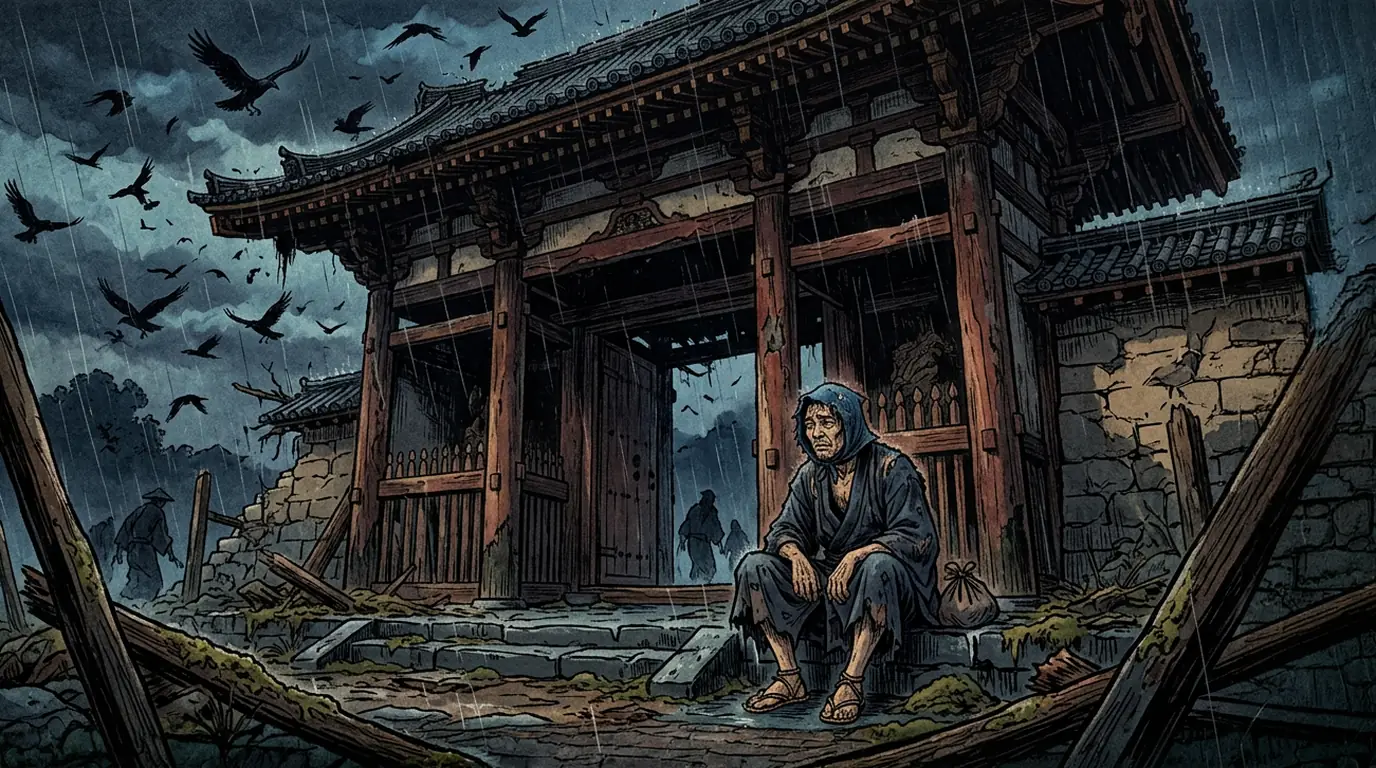
思い出した。若い男が、夕暮れに、門の下で、行くところがなくて立っている。
It did. A young man, in the evening, standing under a gate with nowhere to go.
始まりがそっくり。同じ作者が、五年あとに書いてる。
The beginnings are just alike. The same author wrote this one five years later.
あっちは真っ暗な夜に消えて、こっちは桃の花の家へ行く。
That one disappears into a pitch-dark night, and this one goes to a house with peach blossoms.
何がちがったんだろう。
What made the difference, I wonder.
声をかけてくれた人がいたかどうか、かな。
Maybe whether there was someone who spoke to him.
鉄冠子と、お母さん。
Tekkanshi, and his mother.
で、ケン、結局どうするの。声、出す?
So, Ken, what would you do in the end? Would you speak?
出すと思う。ただ、たぶん僕は、虎のところでもう叫んでる。
I think I would. Only, I'd probably already be screaming at the part with the tiger.
地獄まで行けないね。
You wouldn't even get to hell.
行けない。
No, I wouldn't.
聞いているあなたは、どうでしょうか。
And you, listening: what about you?
それでは、また次の作品で。
Well then, see you at the next story.
さようなら。
Goodbye.
Commentary 1
About Toshishun
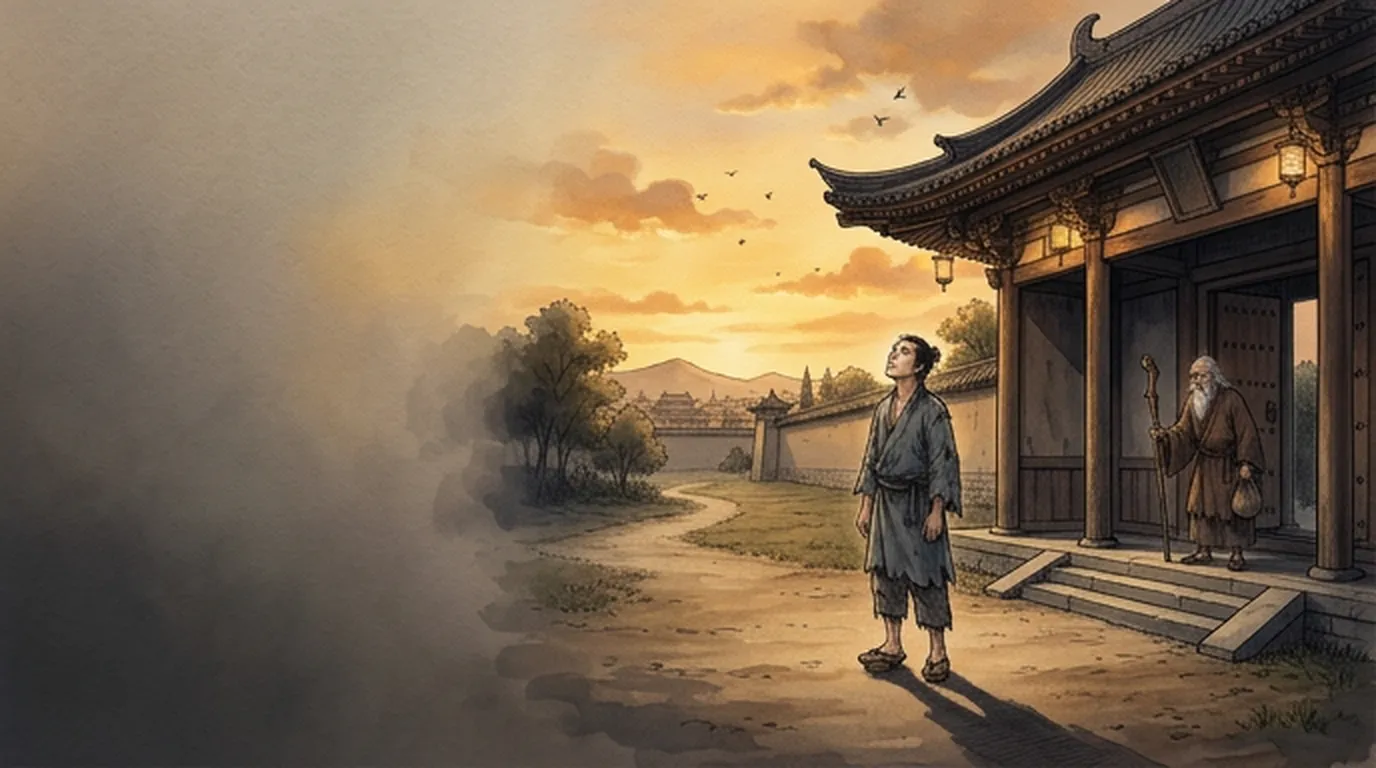
春の夕暮れ、唐の都、洛陽の西の門の下で、ひとりの若者がぼんやり空を見上げています。名前は杜子春。もとは金持ちの息子でしたが、財産を使い果たして、今夜寝る場所もありません。そこへ不思議な老人が現れて、こう尋ねます。「お前は何を考えているのだ」。芥川龍之介の「杜子春」は、この出会いから始まる物語です。
One spring evening, under the west gate of Luoyang, the capital of Tang China, a young man is gazing blankly up at the sky. His name is Toshishun. He was once a rich man's son, but he has used up his whole fortune and has nowhere to sleep tonight. Then a strange old man appears and asks him: "What are you thinking about?" Ryūnosuke Akutagawa's "Toshishun" is a story that begins with this meeting.
発表されたのは一九二〇年、大正九年。子どものための雑誌「赤い鳥」に載りました。芥川は二十八歳。「蜘蛛の糸」と並んで、芥川が子どもに向けて書いた代表作として、いまも読みつがれています。
It came out in 1920, the ninth year of the Taishō era. It was printed in Akai Tori, a magazine for children. Akutagawa was twenty-eight. Along with "The Spider's Thread," it is still read today, by one generation after another, as one of the best-known works Akutagawa wrote for children.
もとになったのは、中国の唐の時代に書かれた「杜子春伝」という話です。ただし芥川は、結末を大きく変えました。どこを変えたのかは、あとでお話しします。
It is based on a tale called "The Tale of Du Zichun," written in China in the Tang dynasty. But Akutagawa made a big change to the ending. What he changed, I will tell you later.