
Grammar Patterns
Grammar patterns found in 杜子春 (Toshishun), with examples from the story. JLPT levels are estimates.
-
JLPT N3 estimated
〜くらい(程度)
Meaning: "So ... that ...; to the extent that ...": shows degree with an example.
Form: Plain form + くらい(ぐらい)
In this story
-
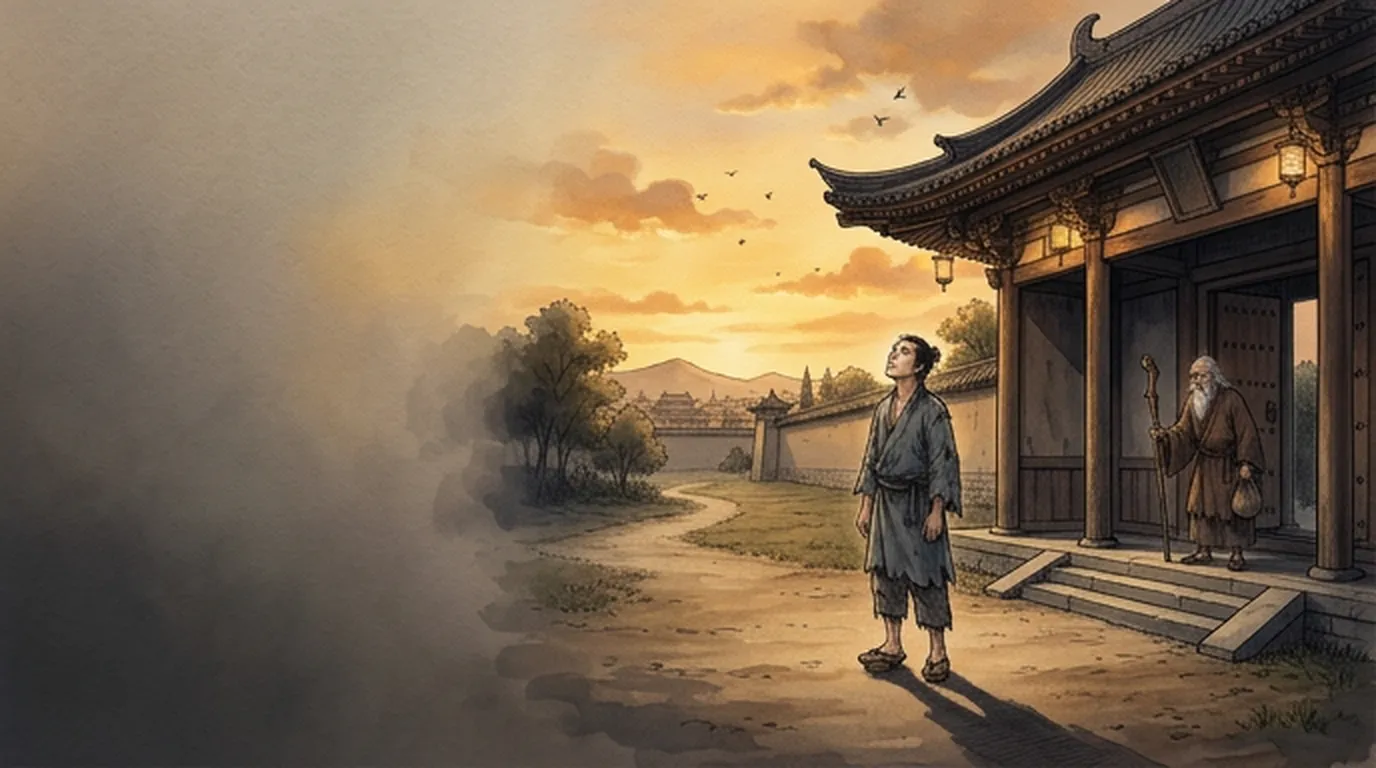
若者は名を杜子春といって、元は金持の息子でしたが、今は財産を費い尽して、その日の暮しにも困る位、憐な身分になっているのです。
The young man was called Toshishun; he had once been a rich man's son, but now he had used up his fortune and had fallen so low that he could hardly get through each day.
-
-
JLPT N3 estimated
〜ほど(程度)
Meaning: "So ... that ...; to the point of ...": shows how far something goes.
Form: Plain form / Noun + ほど
In this story
-
空には、もう細い月が、うらうらと靡いた霞の中に、まるで爪の痕かと思う程、かすかに白く浮んでいるのです。
In the sky a thin moon was already floating faintly white in the soft, trailing haze, so thin it might have been the mark of a fingernail.
-
閻魔大王は森羅殿も崩れる程、凄じい声で喚きました。
King Enma roared in a voice so terrible that Shinra Palace itself seemed about to fall down.
-
-
JLPT N4 estimated
〜し
Meaning: "... and (what's more) ...": lists reasons.
Form: Plain form + し
In this story
-
「日は暮れるし、腹は減るし、その上もうどこへ行っても、泊めてくれる所はなさそうだし――こんな思いをして生きている位なら、一そ川へでも身を投げて、死んでしまった方がましかも知れない」
"The sun is going down, I'm hungry, and on top of that there seems to be nowhere that will take me in, wherever I go — if I have to go on living like this, I might be better off throwing myself into the river and dying."
-
-
JLPT N2 estimated
〜くらいなら
Meaning: "If I have to ..., I would rather ...": the first choice is so unwelcome that the second one is better.
Form: Verb (dictionary) + くらいなら(位なら)
In this story
-
「日は暮れるし、腹は減るし、その上もうどこへ行っても、泊めてくれる所はなさそうだし――こんな思いをして生きている位なら、一そ川へでも身を投げて、死んでしまった方がましかも知れない」
"The sun is going down, I'm hungry, and on top of that there seems to be nowhere that will take me in, wherever I go — if I have to go on living like this, I might be better off throwing myself into the river and dying."
-
-
JLPT N4 estimated
〜かもしれない
Meaning: "Might ...; may ...": possibility.
Form: Plain form + かもしれない(かも知れません)
In this story
-
「日は暮れるし、腹は減るし、その上もうどこへ行っても、泊めてくれる所はなさそうだし――こんな思いをして生きている位なら、一そ川へでも身を投げて、死んでしまった方がましかも知れない」
"The sun is going down, I'm hungry, and on top of that there seems to be nowhere that will take me in, wherever I go — if I have to go on living like this, I might be better off throwing myself into the river and dying."
-
-
JLPT N4 estimated
〜ながら
Meaning: "While ...ing": two actions by the same person at the same time.
Form: Verb ます-stem + ながら
In this story
-
それが夕日の光を浴びて、大きな影を門へ落すと、じっと杜子春の顔を見ながら、
With the evening sun on him, he cast a great shadow on the gate, and looking fixedly at Toshishun's face,
-
-
JLPT N4 estimated
〜ようだ(推量)
Meaning: "It seems ...; looks like ...": a guess based on what one observes.
Form: Plain form + ようだ
In this story
-
老人は暫く何事か考えているようでしたが、やがて、往来にさしている夕日の光を指さしながら、
The old man seemed to be thinking something over for a while, but then, pointing at the evening sunlight falling on the street,
-
-
JLPT N4 estimated
〜てやる
Meaning: Doing something for someone of equal or lower status (or an animal).
Form: Verb て-form + やる
In this story
-
「ではおれが好いことを一つ教えてやろう。
"Then I will tell you one good thing."
-
-
JLPT N4 estimated
〜たら
Meaning: "If / when ...": a condition, often about one particular case.
Form: Verb た-form + ら
In this story
-
今この夕日の中に立って、お前の影が地に映ったら、その頭に当る所を夜中に掘って見るが好い。
"Stand in this evening sun now, and when your shadow falls on the ground, dig at night in the spot where its head lies."
-
「もしお前が黙っていたら、おれは即座にお前の命を絶ってしまおうと思っていたのだ。
"If you had stayed silent, I was going to take your life on the spot."
-
-
JLPT N4 estimated
〜はずだ
Meaning: "Should be ...; I expect ...": the speaker is sure because there is a good reason.
Form: Plain form + はずだ(筈だ)
In this story
-
きっと車に一ぱいの黄金が埋まっている筈だから」
"There is sure to be a cartload of gold buried there."
-
仙人でなければ、一夜の内に私を天下第一の大金持にすることは出来ない筈です。
"If you were not a hermit, you surely could not make me the richest man in the land in a single night."
-
-
JLPT N3 estimated
〜とおり(に)
Meaning: "Just as ...; exactly as ...".
Form: Verb た-form / Noun + の + とおり(通り)
In this story
-
あの老人の言葉通り、夕日に影を映して見て、その頭に当る所を、夜中にそっと掘って見たら、大きな車にも余る位、黄金が一山出て来たのです。
Just as the old man had said, he cast his shadow in the evening sun and quietly dug at night in the spot where its head lay, and out came a heap of gold, more than a large cart could hold.
-
-
JLPT N4 estimated
〜てみる
Meaning: "Try ...ing; ... and see".
Form: Verb て-form + みる(見る)
In this story
-
あの老人の言葉通り、夕日に影を映して見て、その頭に当る所を、夜中にそっと掘って見たら、大きな車にも余る位、黄金が一山出て来たのです。
Just as the old man had said, he cast his shadow in the evening sun and quietly dug at night in the spot where its head lay, and out came a heap of gold, more than a large cart could hold.
-
-
JLPT N4 estimated
〜てくる
Meaning: Something comes toward the speaker, or a change starts and goes on ("it's getting ...").
Form: Verb て-form + くる
In this story
-
あの老人の言葉通り、夕日に影を映して見て、その頭に当る所を、夜中にそっと掘って見たら、大きな車にも余る位、黄金が一山出て来たのです。
Just as the old man had said, he cast his shadow in the evening sun and quietly dug at night in the spot where its head lay, and out came a heap of gold, more than a large cart could hold.
-
するとその時彼の耳には、殆声とはいえない位、かすかな声が伝わって来ました。
Then a voice so faint it could hardly be called a voice reached his ears.
-
-
JLPT N2 estimated
〜やら〜やら
Meaning: "Things like ... and ...": gives a few examples from a longer, often overwhelming, list.
Form: Verb (dictionary) / Noun + やら
In this story
-
蘭陵の酒を買わせるやら、桂州の竜眼肉をとりよせるやら、日に四度色の変る牡丹を庭に植えさせるやら、白孔雀を何羽も放し飼いにするやら、玉を集めるやら、錦を縫わせるやら、香木の車を造らせるやら、象牙の椅子を誂えるやら、その贅沢を一々書いていては、いつになってもこの話がおしまいにならない位です。
He had wine from Lanling bought, ordered longan fruit from Guizhou, had peonies that change color four times a day planted in his garden, let any number of white peacocks roam free, collected jewels, had brocade sewn, had carriages built of fragrant wood, ordered chairs of ivory — if I wrote down every one of his luxuries, this story would never come to an end.
-
ですから杜子春は無残にも、剣に胸を貫かれるやら、焔に顔を焼かれるやら、舌を抜かれるやら、皮を剥がれるやら、鉄の杵に撞かれるやら、油の鍋に煮られるやら、毒蛇に脳味噌を吸われるやら、熊鷹に眼を食われるやら、――その苦しみを数え立てていては、到底際限がない位、あらゆる責苦に遇わされたのです。
And so, cruelly, Toshishun had his chest pierced by swords, his face burned by flames, his tongue pulled out, his skin stripped off, was pounded with an iron pestle, boiled in a pot of oil, had his brains sucked out by poisonous snakes and his eyes eaten by hawk-eagles — he was put through every kind of torment, so many that there would be no end to counting them.
-
-
JLPT N3 estimated
〜さえ
Meaning: "Even ...": the most extreme example, so the rest goes without saying.
Form: Noun (+ particle) + さえ
In this story
-
するとこういう噂を聞いて、今までは路で行き合っても、挨拶さえしなかった友だちなどが、朝夕遊びにやって来ました。
Then, hearing of this, friends who until now had not even greeted him when they met him on the road came to visit morning and evening.
-
柔しい顔さえもして見せはしません。
"They will not even show you a kind face."
-
-
JLPT N3 estimated
〜うちに
Meaning: "While ...; before ... changes": within a period of time.
Form: Verb (plain) / Noun + の + うちに(中に)
In this story
-
しかしいくら大金持でも、御金には際限がありますから、さすがに贅沢家の杜子春も、一年二年と経つ内には、だんだん貧乏になり出しました。
But however rich a man is, money has its limits, so even Toshishun, with all his love of luxury, gradually began to grow poor as one year, then two, went by.
-
老人の言葉がまだ終らない内に、彼は大地に額をつけて、何度も鉄冠子に御時宜をしました。
Before the old man had even finished speaking, he pressed his forehead to the ground and bowed to Tekkanshi again and again.
-
-
JLPT N2 estimated
〜どころか
Meaning: "Far from ...; let alone ...": the truth is much further away than the first idea.
Form: Plain form / Noun + どころか
In this story
-
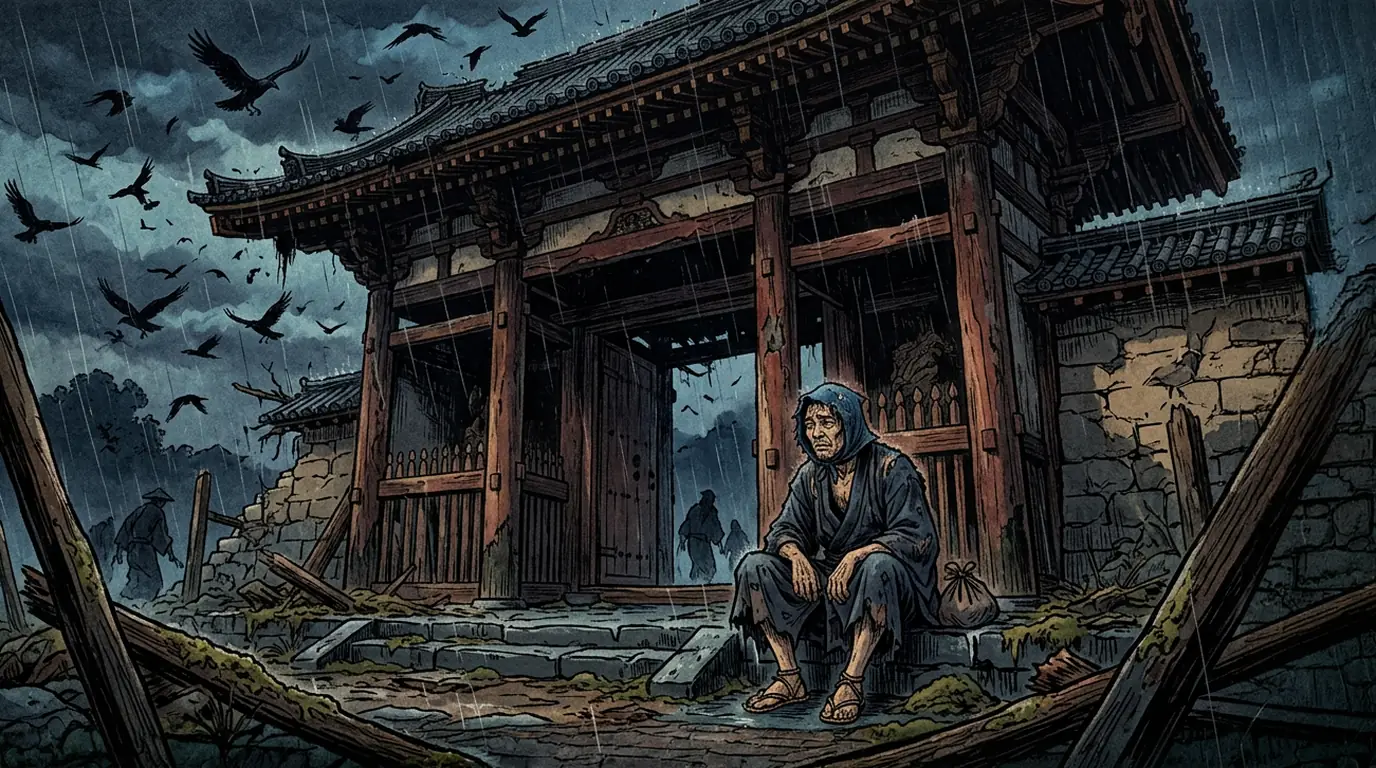
いや、宿を貸すどころか、今では椀に一杯の水も、恵んでくれるものはないのです。
No — far from giving him a place to stay, by now no one would spare him even a bowl of water.
-
-
JLPT N4 estimated
〜てくれる
Meaning: Someone does something for the speaker (or for the person the story follows).
Form: Verb て-form + くれる
In this story
-
いや、宿を貸すどころか、今では椀に一杯の水も、恵んでくれるものはないのです。
No — far from giving him a place to stay, by now no one would spare him even a bowl of water.
-
-
JLPT N2 estimated
〜ではないか
Meaning: "Why, it's ...!": expresses surprise at what one sees (narrative style).
Form: Plain form + のではないか(ではございませんか)
In this story
-
「お前は何を考えているのだ」と、声をかけるではありませんか。
and what should he do but call out, "What are you thinking about?"
-
-
JLPT N4 estimated
〜そうだ(様態)
Meaning: "Looks like ...; seems about to ...": based on how something looks or feels.
Form: Verb ます-stem / Adjective stem + そうだ
In this story
-
杜子春は老人の顔を見ると、恥しそうに下を向いたまま、暫くは返事もしませんでした。
When Toshishun saw the old man's face, he kept looking down in shame and for a while did not even answer.
-
-
JLPT N3 estimated
〜まま
Meaning: "As it is; still ...": a state continues without changing.
Form: Noun + の / Verb た-form + まま
In this story
-
杜子春は老人の顔を見ると、恥しそうに下を向いたまま、暫くは返事もしませんでした。
When Toshishun saw the old man's face, he kept looking down in shame and for a while did not even answer.
-
杜子春はたった一人、岩の上に坐ったまま、静に星を眺めていました。
All alone, Toshishun stayed sitting on the rock, quietly gazing at the stars.
-
-
JLPT N2 estimated
〜たと思うと
Meaning: "No sooner had ... than ...": the next thing happens right after, surprisingly fast.
Form: Verb た-form + と思うと(かと思うと)
In this story
-
老人はこう言ったと思うと、今度もまた人ごみの中へ、掻き消すように隠れてしまいました。
No sooner had the old man said this than he again vanished into the crowd, as if wiped away.
-
のみならずそれと同時に、頭の上の松の枝が、烈しくざわざわ揺れたと思うと、後の絶壁の頂からは、四斗樽程の白蛇が一匹、炎のような舌を吐いて、見る見る近くへ下りて来るのです。
Not only that: at the same moment the pine branches overhead rustled violently, and the next instant a white snake as thick as a large barrel, flicking out a tongue like a flame, came rapidly down from the top of the cliff behind.
-
-
JLPT N4 estimated
〜てしまう
Meaning: Shows that an action is completely finished, often with regret or an unwanted result.
Form: Verb て-form + しまう
In this story
-
ですから車に一ぱいにあった、あの夥しい黄金も、又三年ばかり経つ内には、すっかりなくなってしまいました。
And so all that vast amount of gold, a whole cartload of it, was completely gone again within about three years.
-
-
JLPT N1 estimated
〜と見える
Meaning: "It seems (that) ...": a judgment from what one sees (old-fashioned).
Form: Plain form + と見える
In this story
-
ははあ、では贅沢をするにはとうとう飽きてしまったと見えるな」
"Aha, so it seems you have finally grown tired of luxury."
-
-
JLPT N3 estimated
〜てごらん(なさい)
Meaning: "Try ...ing (and see)": a soft way to tell someone to try something.
Form: Verb て-form + ごらん(御覧)なさい
In this story
-
私が大金持になった時には、世辞も追従もしますけれど、一旦貧乏になって御覧なさい。
"When I became very rich they flattered me and fawned on me, but just try becoming poor."
-
-
JLPT N2 estimated
〜たところで
Meaning: "Even if ...": doing it would make no difference. (Older texts also write 〜たところが with this meaning.)
Form: Verb た-form + ところで(ところが)
In this story
-
そんなことを考えると、たといもう一度大金持になったところが、何にもならないような気がするのです」
"When I think of that, I feel that even if I became very rich once more, it would come to nothing."
-
「いくら仙人になれたところが、私はあの地獄の森羅殿の前に、鞭を受けている父母を見ては、黙っている訳には行きません」
"Even if I could become a hermit, I cannot stay silent when I see my father and mother being whipped before that Shinra Palace in hell."
-
-
JLPT N4 estimated
〜出す
Meaning: "Start ...ing": an action begins, often all of a sudden.
Form: Verb ます-stem + 出す
In this story
-
老人は杜子春の言葉を聞くと、急ににやにや笑い出しました。
When the old man heard Toshishun's words, he suddenly began to grin.
-
すると一陣の風が吹き起って、墨のような黒雲が一面にあたりをとざすや否や、うす紫の稲妻がやにわに闇を二つに裂いて、凄じく雷が鳴り出しました。
Then a gust of wind rose, and the moment ink-black clouds closed in all around, a pale purple flash of lightning suddenly split the darkness in two and thunder began to roar fiercely.
-
-
JLPT N4 estimated
〜つもりだ
Meaning: "Intend to ...; plan to ...".
Form: Verb (dictionary / ない-form) + つもりだ
In this story
-
ではこれからは貧乏をしても、安らかに暮して行くつもりか」
"Then do you intend to live in peace from now on, even in poverty?"
-
「何になっても、人間らしい、正直な暮しをするつもりです」
"Whatever I become, I intend to live an honest life, a truly human one."
-
-
JLPT N5 estimated
〜でしょう(推量)
Meaning: "Probably ...": the narrator's guess.
Form: Plain form + でしょう(でございましょう)
In this story
-
あなたは道徳の高い仙人でしょう。
"You are surely a hermit of great virtue."
-
-
JLPT N4 estimated
〜ば
Meaning: "If ...": a condition; the result follows when the condition is met.
Form: Verb ば-form (行けば / すれば)
In this story
-
始めお前の顔を見た時、どこか物わかりが好さそうだったから、二度まで大金持にしてやったのだが、それ程仙人になりたければ、おれの弟子にとり立ててやろう」と、快く願を容れてくれました。
"When I first saw your face, you looked somehow sensible, so I made you very rich twice; but if you want to become a hermit that much, I will take you on as my disciple," he said, gladly granting the request.
-
-
JLPT N2 estimated
〜まい
Meaning: Negative will or guess: "I won't ...; surely (you) won't ..." (written / old-fashioned).
Form: Verb (dictionary) + まい
In this story
-
「いや、そう御礼などは言って貰うまい。
"No, I will not have you thanking me like that."
-
それも憚らずたった一人、ここへ足を踏み入れるとは、よもや唯の人間ではあるまい。
"To set foot here all alone, without any fear of that — you can hardly be an ordinary human."
-
-
JLPT N2 estimated
〜次第だ
Meaning: "Depends on ...": the result is decided by this person or thing.
Form: Noun + 次第だ(次第で)
In this story
-
いくらおれの弟子にしたところが、立派な仙人になれるかなれないかは、お前次第で決まることだからな。
"Even if I make you my disciple, whether or not you can become a fine hermit depends on you."
-
-
JLPT N4 estimated
〜ように(比喩)
Meaning: "Like ...; as if ...": compares something to something else.
Form: Noun + の / Verb (plain) + ように
In this story
-
鉄冠子はそこにあった青竹を一本拾い上げると、口の中に咒文を唱えながら、杜子春と一しょにその竹へ、馬にでも乗るように跨りました。
Tekkanshi picked up a stalk of green bamboo that lay there and, chanting a spell under his breath, straddled the bamboo together with Toshishun as if getting on a horse.
-
-
JLPT N4 estimated
使役(〜せる/させる)
Meaning: Causative: to make or let someone do something.
Form: Verb causative form(坐らせる / やめさせる)
In this story
-
二人がこの岩の上に来ると、鉄冠子は杜子春を絶壁の下に坐らせて、
When the two came onto this rock, Tekkanshi had Toshishun sit at the foot of the cliff and
-
閻魔大王は鬼どもに、暫く鞭の手をやめさせて、もう一度杜子春の答を促しました。
King Enma had the demons stop their whips for a while and pressed Toshishun once more for an answer.
-
-
JLPT N3 estimated
〜ようとする
Meaning: "Try to ...; be about to ...".
Form: Verb volitional form + とする(と致す)
In this story
-
多分おれがいなくなると、いろいろな魔性が現れて、お前をたぶらかそうとするだろうが、たといどんなことが起ろうとも、決して声を出すのではないぞ。
"Once I am gone, all sorts of evil spirits will probably appear and try to trick you, but whatever may happen, you must never make a sound."
-
その途端に闇がさっと裂けると、驚いたことには無数の神兵が、雲の如く空に充満ちて、それが皆槍や刀をきらめかせながら、今にもここへ一なだれに攻め寄せようとしているのです。
At that moment the darkness suddenly split open, and to his astonishment countless soldiers of the gods filled the sky like clouds, all with spears and swords flashing, about to sweep down on him in one great rush.
-
-
JLPT N4 estimated
〜だろう(推量)
Meaning: "Probably ...; I bet ...": the speaker's guess (casual form of でしょう).
Form: Plain form + だろう
In this story
-
多分おれがいなくなると、いろいろな魔性が現れて、お前をたぶらかそうとするだろうが、たといどんなことが起ろうとも、決して声を出すのではないぞ。
"Once I am gone, all sorts of evil spirits will probably appear and try to trick you, but whatever may happen, you must never make a sound."
-
今頃は丁度家のまわりに、桃の花が一面に咲いているだろう」と、さも愉快そうにつけ加えました。
"Just about now, peach blossoms will be in full bloom all around the house," he added, looking truly delighted.
-
-
JLPT N4 estimated
〜ても
Meaning: "Even if ...; no matter ...": the result does not change.
Form: Verb て-form + も
In this story
-
命がなくなっても、黙っています」
"Even if I lose my life, I will stay silent."
-
「何になっても、人間らしい、正直な暮しをするつもりです」
"Whatever I become, I intend to live an honest life, a truly human one."
-
-
JLPT N3 estimated
〜ずに
Meaning: "Without ...ing" (written style of 〜ないで).
Form: Verb ない-stem + ずに(する → せずに)
In this story
-
杜子春はしかし平然と、眉毛も動かさずに坐っていました。
But Toshishun sat calmly, without moving even an eyebrow.
-
-
JLPT N1 estimated
〜の如く
Meaning: "Like ...; as ...": literary / old-fashioned form of 〜のように.
Form: Noun + の + 如く / 如き / 如し
In this story
-
が虎の牙に噛まれるか、蛇の舌に呑まれるか、杜子春の命は瞬く内に、なくなってしまうと思った時、虎と蛇とは霧の如く、夜風と共に消え失せて、後には唯、絶壁の松が、さっきの通りこうこうと枝を鳴らしているばかりなのです。
But just when he thought his life would be gone in the blink of an eye, bitten by the tiger's fangs or swallowed by the snake's tongue, the tiger and the snake vanished like mist together with the night wind, and afterward there was only the pine on the cliff, its branches moaning just as before.
-
-
JLPT N2 estimated
〜と共に
Meaning: "Together with ...; at the same time as ...".
Form: Noun / Verb (dictionary) + と共に(とともに)
In this story
-
が虎の牙に噛まれるか、蛇の舌に呑まれるか、杜子春の命は瞬く内に、なくなってしまうと思った時、虎と蛇とは霧の如く、夜風と共に消え失せて、後には唯、絶壁の松が、さっきの通りこうこうと枝を鳴らしているばかりなのです。
But just when he thought his life would be gone in the blink of an eye, bitten by the tiger's fangs or swallowed by the snake's tongue, the tiger and the snake vanished like mist together with the night wind, and afterward there was only the pine on the cliff, its branches moaning just as before.
-
-
JLPT N2 estimated
〜ばかりだ
Meaning: "Nothing but ...; only ...": this one thing is all that happens or remains.
Form: Verb (dictionary) + ばかりだ(ばかりである)
In this story
-
が虎の牙に噛まれるか、蛇の舌に呑まれるか、杜子春の命は瞬く内に、なくなってしまうと思った時、虎と蛇とは霧の如く、夜風と共に消え失せて、後には唯、絶壁の松が、さっきの通りこうこうと枝を鳴らしているばかりなのです。
But just when he thought his life would be gone in the blink of an eye, bitten by the tiger's fangs or swallowed by the snake's tongue, the tiger and the snake vanished like mist together with the night wind, and afterward there was only the pine on the cliff, its branches moaning just as before.
-
-
JLPT N1 estimated
〜や否や
Meaning: "As soon as ...; the moment ...".
Form: Verb (dictionary) + や否や
In this story
-
すると一陣の風が吹き起って、墨のような黒雲が一面にあたりをとざすや否や、うす紫の稲妻がやにわに闇を二つに裂いて、凄じく雷が鳴り出しました。
Then a gust of wind rose, and the moment ink-black clouds closed in all around, a pale purple flash of lightning suddenly split the darkness in two and thunder began to roar fiercely.
-
御殿の前にいた大勢の鬼は、杜子春の姿を見るや否や、すぐにそのまわりを取り捲いて、階の前へ引き据えました。
The moment the many demons in front of the palace saw Toshishun, they surrounded him and dragged him down before the steps.
-
-
JLPT N2 estimated
〜ばかりではない
Meaning: "Not only ...": there is more beyond this.
Form: Plain form / Noun + ばかりではない(ばかりでなく)
In this story
-
いや、雷ばかりではありません。
No, it was not only thunder.
-
-
JLPT N4 estimated
〜と(発見)
Meaning: "When I did ..., (I found that) ...": what one noticed right after an action.
Form: Verb (plain / polite) + と
In this story
-
が、すぐに眼を開いて見ると、空は以前の通り晴れ渡って、向うに聳えた山々の上にも、茶碗ほどの北斗の星が、やはりきらきら輝いています。
But when he quickly opened his eyes, the sky was as clear as before, and above the mountains towering in the distance the stars of the Big Dipper, large as rice bowls, were twinkling just as they had been.
-
その声に気がついて見ると、杜子春はやはり夕日を浴びて、洛陽の西の門の下に、ぼんやり佇んでいるのでした。
When he came to himself at that cry, Toshishun was standing vacantly under the west gate of Luoyang in the evening sun, just as before.
-
-
JLPT N3 estimated
〜に違いない
Meaning: "Must be ...; surely ...": the speaker is certain.
Form: Plain form / Noun + に違いない(違いありません)
In this story
-
して見れば今の大あらしも、あの虎や白蛇と同じように、鉄冠子の留守をつけこんだ、魔性の悪戯に違いありません。
So the great storm just now, like the tiger and the white snake, must have been a trick of evil spirits taking advantage of Tekkanshi's absence.
-
それは確に懐しい、母親の声に違いありません。
It was surely the dear voice of his mother.
-
-
JLPT N1 estimated
〜が早いか
Meaning: "As soon as ...; the moment ...": the second action follows almost at the same instant.
Form: Verb (dictionary) + が早いか
In this story
-
神将はこう喚くが早いか、三叉の戟を閃かせて、一突きに杜子春を突き殺しました。
No sooner had the warrior god shouted this than he flashed his three-pronged halberd and stabbed Toshishun to death with one thrust.
-
-
JLPT N4 estimated
受身(〜られる)
Meaning: Passive voice: the subject receives the action.
Form: Verb passive form(追い上げられる / 沈められる)
In this story
-
杜子春はその風に吹かれながら、暫くは唯木の葉のように、空を漂って行きましたが、やがて森羅殿という額の懸った立派な御殿の前へ出ました。
Blown by that wind, Toshishun drifted through the air for a while just like a leaf, but at last he came out in front of a splendid palace with a plaque that read Shinra Palace.
-
母親はこんな苦しみの中にも、息子の心を思いやって、鬼どもの鞭に打たれたことを、怨む気色さえも見せないのです。
Even in such suffering, his mother thought of her son's feelings and showed not even a sign of resenting being whipped by the demons.
-
-
JLPT N3 estimated
〜ては
Meaning: "If you (go on) ..., (something bad will happen)": a condition with an unwanted result.
Form: Verb て-form + は
In this story
-
ですから杜子春は無残にも、剣に胸を貫かれるやら、焔に顔を焼かれるやら、舌を抜かれるやら、皮を剥がれるやら、鉄の杵に撞かれるやら、油の鍋に煮られるやら、毒蛇に脳味噌を吸われるやら、熊鷹に眼を食われるやら、――その苦しみを数え立てていては、到底際限がない位、あらゆる責苦に遇わされたのです。
And so, cruelly, Toshishun had his chest pierced by swords, his face burned by flames, his tongue pulled out, his skin stripped off, was pounded with an iron pestle, boiled in a pot of oil, had his brains sucked out by poisonous snakes and his eyes eaten by hawk-eagles — he was put through every kind of torment, so many that there would be no end to counting them.
-
-
JLPT N3 estimated
〜さえ〜ば
Meaning: "If only ...; as long as ...": the one condition that is enough.
Form: Verb ます-stem + さえ + すれば / Noun + さえ + Verb ば-form
In this story
-
その方は父母が苦しんでも、その方さえ都合が好ければ、好いと思っているのだな」
"So you think it is fine for your parents to suffer, as long as things go well for you."
-
-
JLPT N3 estimated
〜に比べると
Meaning: "Compared with ...".
Form: Noun + に比べると(に比べて)
In this story
-
大金持になれば御世辞を言い、貧乏人になれば口も利かない世間の人たちに比べると、何という有難い志でしょう。
Compared with the people of the world, who flatter you when you are rich and will not even speak to you when you are poor, what a precious heart this was!
-
-
JLPT N3 estimated
〜わけにはいかない
Meaning: "Cannot (possibly) ...": one's feelings, duty or situation do not allow it.
Form: Verb (dictionary) + わけにはいかない(訳には行かない)
In this story
-
「いくら仙人になれたところが、私はあの地獄の森羅殿の前に、鞭を受けている父母を見ては、黙っている訳には行きません」
"Even if I could become a hermit, I cannot stay silent when I see my father and mother being whipped before that Shinra Palace in hell."
-
-
JLPT N4 estimated
〜ようと思う
Meaning: "I think I'll ...; I'm going to ...": the speaker's intention.
Form: Verb volitional form + と思う(とおもう)
In this story
-
「もしお前が黙っていたら、おれは即座にお前の命を絶ってしまおうと思っていたのだ。
"If you had stayed silent, I was going to take your life on the spot."
-