
Part 1 · Commentary
Commentary 2
The girl in the shining bamboo
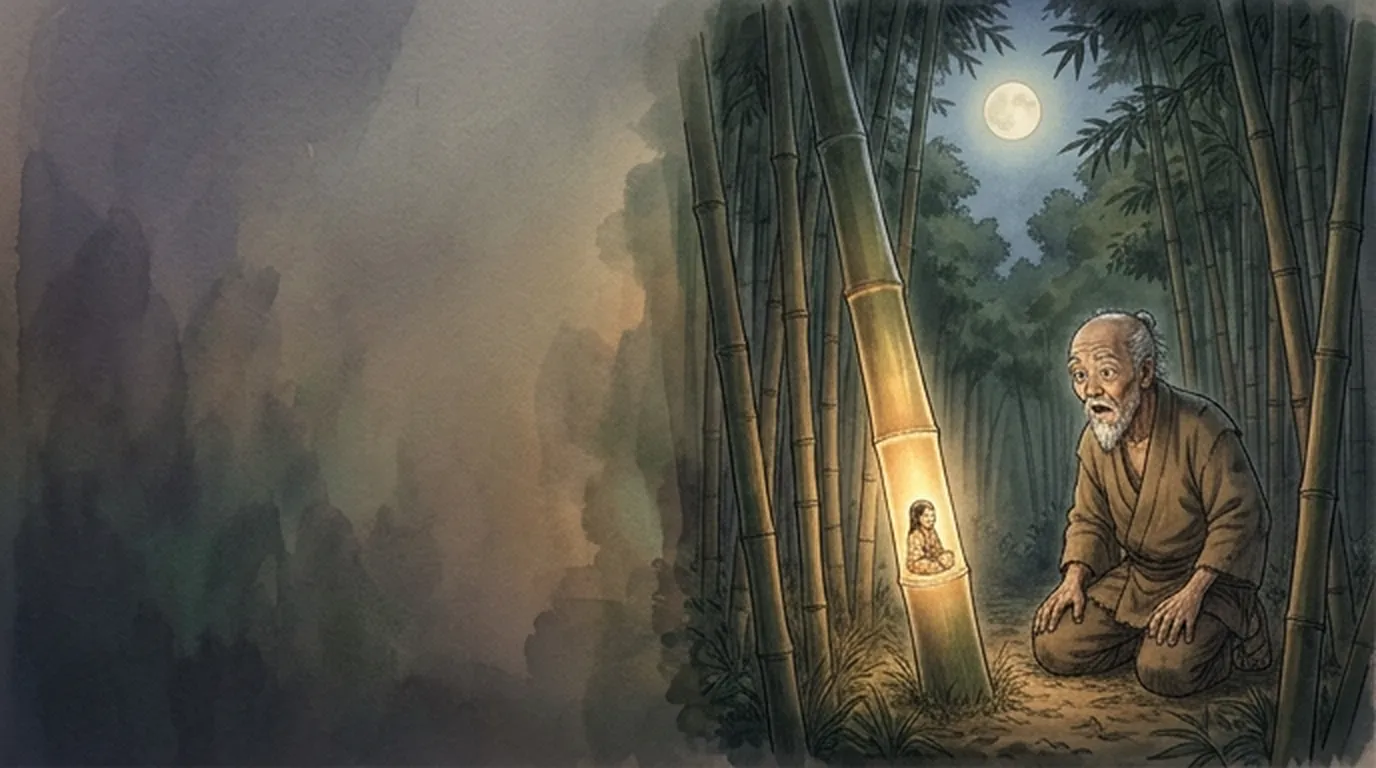
むかし、竹を取って、かごやざるを作って暮らしているおじいさんがいました。「竹取」は、竹を取る、という意味です。ある日おじいさんは、光る竹の中に、あの小さな女の子を見つけます。手のひらにのせて家に帰り、おばあさんと二人で育てることにしました。女の子はあまりに小さかったので、かごの中に入れて育てました。
Long ago, there was an old man who made his living by gathering bamboo and making baskets and strainers. "Taketori" means "to gather bamboo." One day, inside a shining bamboo, the old man finds that tiny girl. He carries her home on the palm of his hand and decides to raise her together with the old woman. The girl is so very small that they put her in a basket to raise her.
それから、ふしぎなことが続きます。おじいさんが竹を切ると、中から黄金が出てくるのです。次の日も、その次の日もです。おじいさんの家は、だんだんお金持ちになりました。
After that, strange things keep happening. When the old man cuts a bamboo, gold comes out from inside. The next day too, and the day after that too. Little by little, the old man's house grows rich.
女の子は、三か月ほどで、大人と同じ背の高さになりました。その美しさは、この世のものとは思えないほどでした。この子がいると、家の中には暗いところがひとつもありません。おじいさんは、つらい日も、腹が立った日も、この子の顔を見ると元気になりました。
In about three months, the girl becomes as tall as an adult. Her beauty hardly seems to belong to this world. When this child is there, there is not a single dark place in the house. Even on hard days, even on days when he is angry, the old man feels well again when he sees this child's face.
Commentary 3
Kaguya-hime and the five suitors
女の子は、「なよたけのかぐや姫」と名づけられます。うわさは国じゅうに広がり、男たちが夜も眠らずに、家のまわりを歩きまわりました。けれども、姿を見ることはできません。手紙を書いても、返事は一度もありませんでした。
The girl is given the name "Nayotake no Kaguya-hime." Word of her spreads all over the country, and men walk around and around the house, not even sleeping at night. But they cannot get a look at her. They write letters, but not once is there an answer.
やがて、ほとんどの男たちはあきらめます。残ったのは、五人だけでした。天皇の息子が二人と、国の政治を動かす役目の人が三人です。雪の日も、雷の日も、五人は毎日のようにやってきました。
In time, most of the men give up. Only five are left. Two are sons of the Emperor, and three are men whose job is to run the country's government. On snowy days and on days of thunder, the five come almost every day.
ある日、おじいさんはかぐや姫に頼みます。わたしはもう七十を過ぎた。あの五人のだれかと、結婚してくれないか。かぐや姫は、しばらくだまっていました。それから、こう答えます。結婚しないとは言いません。でも、相手の心の深さを知らないまま結婚したら、きっと後悔します。わたしが見たいと思うものを持ってきてくれた人と、結婚しましょう。
One day, the old man asks Kaguya-hime. I am already past seventy. Won't you marry one of those five? Kaguya-hime is silent for a while. Then she answers like this. I do not say that I will not marry. But if I marry without knowing how deep the other person's heart is, I will surely regret it. I will marry the one who brings me the thing I wish to see.
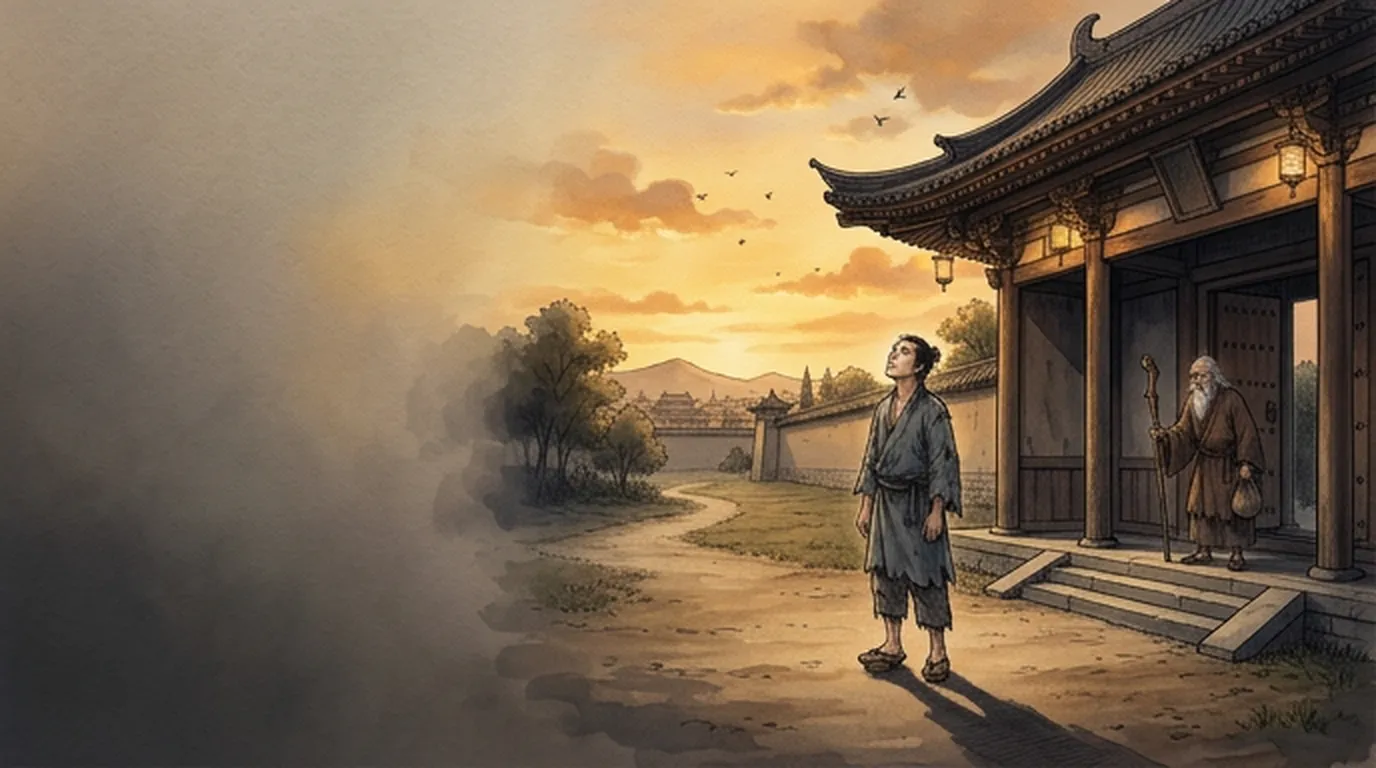
夕方、五人はうれしそうに集まってきます。かぐや姫は、何を持ってこいと言うのでしょうか。第一話は、ここで終わります。
In the evening, the five gather, looking happy. What will Kaguya-hime tell them to bring? Part 1 ends here.
Commentary 4
Three things to notice
読みどころを三つ挙げます。
Here are three things to notice.
一つ目は、光です。竹が光り、竹の中から黄金が出て、家の中から暗いところがなくなります。「かぐや」という名前も、光りかがやく、という意味の言葉から来ていると言われます。この子のまわりは、いつも明るいのです。
The first is light. The bamboo shines, gold comes out of the bamboo, and the dark places disappear from the house. The name "Kaguya," too, is said to come from a word that means "to shine brightly." Around this child, it is always bright.
二つ目は、言葉あそびです。おじいさんは女の子を見つけたとき、わたしの子になる人なのだろう、と言います。むかしの日本語では、かごのことを「こ」と言いました。子どもの「こ」と、同じ音です。毎日、竹で「こ」を作っている人が、竹の中に自分の「こ」を見つけた。千年前の読者は、ここで笑ったのかもしれません。
The second is wordplay. When the old man finds the girl, he says that she must be the one who is to become his child. In old Japanese, a basket was called "ko." It is the same sound as the "ko" in "kodomo," child. A man who makes "ko" out of bamboo every day found his own "ko" inside a bamboo. Readers a thousand years ago may have laughed here.
三つ目は、かぐや姫の声です。第一話のほとんどの場面で、かぐや姫はひとことも話しません。まわりの人が見て、うわさをして、手紙を書くだけです。はじめて口を開くのが、結婚の話のときでした。それもその答えは、はい、でも、いいえ、でもありません。
The third is Kaguya-hime's voice. In almost every scene of Part 1, Kaguya-hime does not say a single word. The people around her just look, spread rumors, and write letters. The first time she opens her mouth is when the talk turns to marriage. And what is more, that answer is neither a yes nor a no.
かぐや姫は、本当に結婚するつもりがあるのでしょうか。それとも、これは断るための条件なのでしょうか。後半は、この問いを二人で話してみます。
Does Kaguya-hime really mean to marry? Or is this a condition for refusing? In the second half, two people talk this question over.
Part 2 · Conversation: Mio and Ken
Conversation 1
Does she really mean to marry?
ここからは二人で話します。ミオです。
From here on, it's the two of us. I'm Mio.
ケンです。さっきの問い、ミオはどう思う?結婚する気、あるのかな。
I'm Ken. That question just now, what do you think, Mio? Does she mean to marry, I wonder?
ないと思う。あれは、断るための条件だよ。
I don't think so. That's a condition for refusing.
僕は、あると思うんだけど。
I think she does, though.
えっ、本気で?
What, seriously?
だって、理由がちゃんとしてるでしょ。相手の心の深さを知らないまま結婚して、あとで気持ちが変わったら、後悔する、って。
Well, her reason makes good sense, doesn't it? If she marries without knowing how deep the other person's heart is, and his feelings change later, she'll regret it, she says.
言ってるね。
She does say that.
あれは、うそに聞こえないんだよ。
That doesn't sound like a lie to me.
うそじゃないと思う。後悔したくないのは本当。でも、返事をよく聞いて。
I don't think it's a lie. It's true that she doesn't want to regret it. But listen carefully to her answer.
返事?
Her answer?
結婚します、とは言ってないの。結婚しないとは言いません、なんだよ。
She doesn't say "I will marry." It's "I do not say that I will not marry."
ああ、たしかに。
Ah, that's true.
はい、じゃないの。いいえ、じゃないだけ。
It's not a yes. It's just not a no.
細かいなあ。
You really look at the details.
しかもその前に、しばらくだまってるでしょ。
And before that, she's silent for a while, right?
だまってるね。
She is.
あの静かな間に、どうやって断るかを考えてたんだと思う。
I think that in that quiet moment, she was thinking about how to refuse.
でも、おじいさんのことは本当の親だと思ってる、って言うよ。自分がどこから来たのかも知らないのに。
But she says she thinks of the old man as her real parent. Even though she doesn't know where she herself came from.
うん。あそこは、本当の気持ちだと思う。
Yes. I think that part is her true feeling.
七十を過ぎた親に頼まれたら、いやとは言えないよ。
When a parent who is past seventy asks you, you can't say no.
だから、いやと言わないで断る方法を考えたの。
That's why she thought of a way to refuse without saying no.
いやと言わないで、断る。
To refuse without saying no.
条件を出すのは自分。何を持ってくるかを決めるのも自分。
She's the one who sets the condition. And she's the one who decides what they bring.
わたしが見たいと思うものを、だからね。
Because it's "the thing I wish to see," after all.
かんたんな物を言うと思う?
Do you think she'll name something easy?
うーん。言わないか。
Hmm. I guess she won't.
言わないよ。
She won't.
Conversation 2
Five men who have never seen her
でもさ、五人のほうも見てあげてよ。
But hey, look at the five men's side too.
五人?
The five men?
雪の日も、雷の日も、夏の暑い日も来てるんだよ。
They come on snowy days, on days of thunder, and on hot summer days.
毎日のようにね。
Almost every day.
ほかの男たちは、みんなあきらめたのに。
Even though all the other men gave up.
でもね、あの五人、かぐや姫の顔を一度も見てないんだよ。
But you know, those five have never once seen Kaguya-hime's face.
あ、そうか。
Oh, that's right.
手紙を何通書いても、返事は来ない。話したこともない。
However many letters they write, no answer comes. They've never even talked to her.
うわさだけを聞いて、毎日来てるのか。
So they come every day after hearing nothing but rumors?
それ、心が深い、って言えるのかな。
Can you call that a deep heart, I wonder?
言われてみると、ちょっとこわいね。
Now that you say it, it's a little scary.
家のまわりには、垣根にすき間を作って、のぞこうとした人までいたんだよ。
Around the house, there were even people who made a gap in the fence and tried to peek in.
今なら、すぐ警察を呼ばれるね。
Today, they'd have the police called on them right away.
だから、確かめたい気持ちは、わかるの。
That's why I understand the wish to make sure.
あれ、それなら僕と同じだよ。
Huh? Then you think the same as I do.
ちがうよ。かぐや姫は、確かめても、だれも合格しないと思ってるの。
No, I don't. Kaguya-hime thinks that even if she makes sure, no one will pass.
Conversation 3
The old man, a pun, and the number three
きびしいなあ。ところで、おじいさんはどう?
That's strict. By the way, what about the old man?
おじいさんは好き。光る竹の中の子を見て、きっとわたしの子になる人だ、ってすぐ決めるでしょ。
I like the old man. He sees the child inside the shining bamboo and decides right away, "Surely this is the one who is to become my child."
迷わないよね。ふつうは、まずびっくりして、逃げると思う。
He doesn't hesitate, does he? Normally, I think you'd be shocked first and run away.
しかも、その場で言葉あそびまでしてる。
And on top of that, he even makes a pun right there on the spot.
余裕があるなあ。それから、三、という数が多くなかった?
He's so relaxed about it. And then, didn't the number three come up a lot?
三?
Three?
三か月で大人になって、お祝いは三日間。最初の背の高さも、むかしの長さで三寸。
She becomes an adult in three months, and the celebration lasts three days. Her height at first is three sun, too, in the old measure of length.
本当だ。でも、残ったのは五人だよ。
You're right. But it's five men who are left.
そこは三人じゃないんだ。
So it's not three men there.
五人もいるから、話が大きくなるの。しかも、みんな身分の高い人ばかり。
Because there are as many as five, the story gets bigger. And on top of that, they're all people of high rank.
Conversation 4
The last scene, and what comes next
最後の場面、夕方に五人がうれしそうに来るでしょ。笛をふいたり、歌を歌ったり。
In the last scene, the five come in the evening looking happy, right? Playing flutes, singing songs.
ついに会ってくれるのかもしれない、って。
Thinking, "Maybe she will finally meet us."
あそこ、読んでいて、ちょっとかわいそうでさ。
Reading that part, I felt a little sorry for them.
まだ何も知らないからね。これから何を言われるのか。
Because they don't know anything yet. What they are about to be told.
何を持ってこいって言うんだろう。
I wonder what she'll tell them to bring.
それは、第二話のお楽しみ。
That's something to look forward to in Part 2.
僕は変わらないよ。本当に心の深い人が来たら、かぐや姫は結婚する。自分でそう言ったんだから。
I'm not changing my mind. If someone with a truly deep heart comes, Kaguya-hime will marry him. She said so herself.
わたしも変わらない。そんな人は一人も来ない、とかぐや姫は思ってる。
I'm not changing mine either. Kaguya-hime thinks that not one such person will come.
答えは、続きを読んでからだね。
We'll have the answer after we read on.
聞いているあなたは、どう思うでしょうか。
And you, listening: what do you think?
それでは、また次の作品で。
Well then, see you at the next story.
さようなら。
Goodbye.
Commentary 1
About The Tale of the Bamboo Cutter
竹やぶの中に、一本だけ、根もとが光っている竹があります。おじいさんが近づいて、そっと切ってみます。すると中に、小さな女の子が座っていました。背の高さは、九センチほどです。
In a bamboo grove, there is one bamboo, just one, that is shining at its base. An old man comes close and gently tries cutting it. And there inside, a tiny girl is sitting. She is about nine centimeters tall.
今回の作品は「竹取物語」です。書かれたのは千年以上も前で、だれが書いたのかは、わかっていません。今に残っている日本の物語の中で、いちばん古いものだと言われています。
This time, the story is "The Tale of the Bamboo Cutter." It was written more than a thousand years ago, and no one knows who wrote it. It is said to be the oldest of the Japanese stories that have come down to us today.
百年ほどあとに書かれた「源氏物語」は、この作品を、物語というものの、いちばんはじめの親、と呼びました。2013年には、スタジオジブリの映画にもなっています。日本では、ほとんどの人が子どものころに知る話です。
"The Tale of Genji," written about a hundred years later, called this work the very first parent of the thing we call a story. In 2013, it was also made into a Studio Ghibli film. In Japan, it is a story that almost everyone gets to know as a child.
もとの文は古い日本語で、今の日本人にもかんたんには読めません。そこでわたしたちは、やさしい今の日本語に書き直して、三回に分けました。今回は、その第一話です。
The original text is in old Japanese, and even Japanese people today cannot read it easily. So we rewrote it in easy modern Japanese and divided it into three parts. This time, it is Part 1.