
Idioms & Expressions
Idioms, sound words, old-style expressions and similes in 竹取物語 (The Tale of the Bamboo Cutter, Part 1).
-
Old-style
翁おきな
Meaning: old man (an old word; today people say おじいさん or 老人)
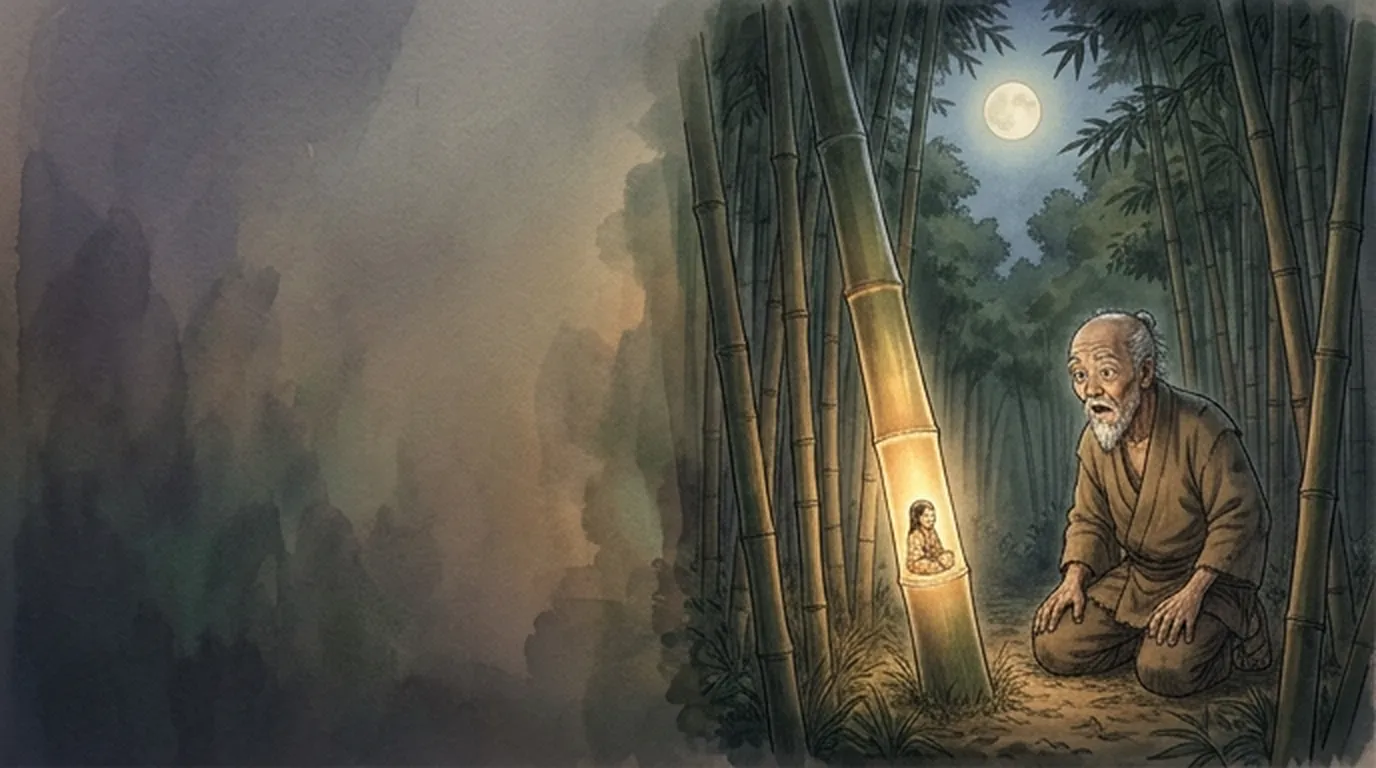
むかし、竹取の翁とよばれるおじいさんがいました。
Long ago, there was an old man who was called the Old Bamboo Cutter.
-
Sound & mimetic word
ぼんやりぼんやり
Meaning: dimly; faintly (glowing)
「ふしぎだなあ」と思って近くへ行ってみると、竹の中がぼんやりと光っています。
"How strange," he thought, and when he went closer to look, the inside of the bamboo was glowing faintly.
-
Sound & mimetic word
そっとそっと
Meaning: gently; softly
そっと切ってみると、中に小さな女の子が座っていました。
When he gently cut it open, a tiny girl was sitting inside.
-
Old-style
三寸さんずん
Meaning: three sun (寸 is an old unit of length; one sun is about three centimeters)
背の高さは三寸、今でいうと九センチくらいで、とてもかわいらしい子でした。
She was three sun tall, about nine centimeters in today's terms, and a very lovely child.
-
Idiom
それからというものそれからというもの
Meaning: ever since then; from that time on
それからというもの、おじいさんが竹を取りに行くと、ふしぎなことが何度も起こりました。
Ever since then, when the old man went to gather bamboo, strange things happened again and again.
-
Idiom
切る竹切る竹きるたけきるたけ
Meaning: every stalk of bamboo he cut (repeating verb + noun means "each and every one")
Literal: the bamboo he cuts, the bamboo he cuts
次の日も、その次の日も、切る竹切る竹の中から、光る黄金が出てきました。
The next day, and the day after that, shining gold came out of every stalk he cut.
-
Sound & mimetic word
だんだんだんだん
Meaning: gradually; little by little
こうして、おじいさんの家はだんだんお金持ちになっていきました。
In this way, the old man's household gradually became rich.
-
Sound & mimetic word
すくすくすくすく
Meaning: (growing) fast and well; used for children and plants
女の子は、すくすくと大きくなりました。
The girl grew up fast and well.
-
Idiom
目に見えてめにみえて
Meaning: visibly; noticeably
Literal: so that the eye can see it
ふつうの子どもよりずっと早く、一日ごとに目に見えて大きくなっていきます。
Much faster than an ordinary child, she grew visibly bigger day by day.
-
Idiom
髪を上げるかみをあげる
Meaning: to put up one's hair (in old Japan, a sign that a girl had become a woman)
おじいさんとおばあさんは、女の子の髪を上げて、大人の女性が着る長いスカートのような服を着せてあげました。
The old man and the old woman put up the girl's hair and dressed her in clothes like the long skirt that grown women wear.
-
スカートのようなスカートのような
Meaning: (clothes) like a skirt; this describes the long formal robe that adult women wore
Literal: like a skirt
おじいさんとおばあさんは、女の子の髪を上げて、大人の女性が着る長いスカートのような服を着せてあげました。
The old man and the old woman put up the girl's hair and dressed her in clothes like the long skirt that grown women wear.
-
Idiom
一歩も外に出さないいっぽもそとにださない
Meaning: to not let (someone) take even one step outside
そして、女の子を家の奥の部屋から一歩も外に出さず、それはそれは大切にしました。
And they did not let the girl take even one step outside the inner room of the house, and treasured her ever so dearly.
-
Idiom
それはそれはそれはそれは
Meaning: ever so; truly (a phrase used when telling old stories)
そして、女の子を家の奥の部屋から一歩も外に出さず、それはそれは大切にしました。
And they did not let the girl take even one step outside the inner room of the house, and treasured her ever so dearly.
-
Idiom
この世のものとは思えないこのよのものとはおもえない
Meaning: out of this world; too (beautiful) to be real
Literal: cannot think it is a thing of this world
その顔の美しさは、この世のものとは思えないほどでした。
The beauty of her face was such that it did not seem to belong to this world.
-
Idiom
腹が立つはらがたつ
Meaning: to get angry
Literal: the belly stands up
腹が立っていても、そんな気持ちはどこかへ消えてしまいました。
Even when he was angry, that feeling disappeared somewhere.
-
Old-style
なよ竹なよたけ
Meaning: slender, supple bamboo (an old word)
あきたは、「なよ竹のかぐや姫」と名づけました。
Akita named her "Nayotake no Kaguya-hime."
-
Idiom
うわさが広がるうわさがひろがる
Meaning: rumors spread; word gets around
かぐや姫の美しさのうわさは、国じゅうに広がりました。
Word of Kaguya-hime's beauty spread all over the country.
-
Idiom
身分が高いみぶんがたかい
Meaning: to be of high rank; to be high-born
Literal: one's social position is high
身分の高い人も低い人も、「なんとかしてかぐや姫をお嫁さんにしたい。
People of high rank and people of low rank alike — "Somehow I want to make Kaguya-hime my bride.
-
Idiom
なんとかしてなんとかして
Meaning: somehow; by any means
身分の高い人も低い人も、「なんとかしてかぐや姫をお嫁さんにしたい。
People of high rank and people of low rank alike — "Somehow I want to make Kaguya-hime my bride.
-
Idiom
一目でいいからひとめでいいから
Meaning: even just one look (would be enough)
Literal: because one glance is fine
せめて一目でいいから見てみたい」と思いました。
One glance would be enough, at least; I want to see her," they thought.
-
Idiom
相手にするあいてにする
Meaning: to pay attention to; to take (someone) seriously
Literal: to make (someone) one's partner
家の人に話しかけても、だれも相手にしてくれません。
Even when they spoke to the people of the house, nobody paid any attention to them.
-
Idiom
どうしてもどうしても
Meaning: no matter what; (with a negative) just will not
それでも、どうしてもあきらめない人が五人だけ残りました。
Even so, just five people remained who would not give up no matter what.
-
Old-style
皇子みこ
Meaning: prince; a son of the emperor (an old reading; today 皇子 is usually read おうじ)
皇子は帝の息子、右大臣や大納言、中納言は国の政治を動かす大切な役目の人です。
A prince is a son of the Emperor, and the Minister of the Right, the Chief Councillor and the Middle Councillor are people with the important duty of running the country's government.
-
Old-style
帝みかど
Meaning: the Emperor (an old word; today people say 天皇)
皇子は帝の息子、右大臣や大納言、中納言は国の政治を動かす大切な役目の人です。
A prince is a son of the Emperor, and the Minister of the Right, the Chief Councillor and the Middle Councillor are people with the important duty of running the country's government.
-
Idiom
毎日のようにまいにちのように
Meaning: almost every day
Literal: as if every day
雪の日も、雷の鳴る日も、夏の暑い日も、五人は毎日のようにやってきました。
On snowy days, on days when thunder rumbled, and on hot summer days, the five came almost every day.
-
Idiom
心が深いこころがふかい
Meaning: to have deep feelings; to be sincere in one's love
Literal: the heart is deep
でも、相手の心がどれくらい深いのか知らないまま結婚して、あとで相手の気持ちが変わってしまったら、きっと後悔します。」
But if I marry without knowing how deep the other person's heart is, and his feelings change later, I will surely regret it."
-
Idiom
手拍子をとるてびょうしをとる
Meaning: to beat time by clapping (here, by tapping a fan)
笛をふく人、歌を歌う人、扇で手拍子をとる人もいます。
Some played flutes, some sang songs, and some beat time with their fans.