
Idioms & Expressions
Idioms, sound words, old-style expressions and similes in 羅生門 (Rashōmon).
-
Old-style
雨やみあまやみ
Meaning: waiting for the rain to stop; a break in the rain (old word)
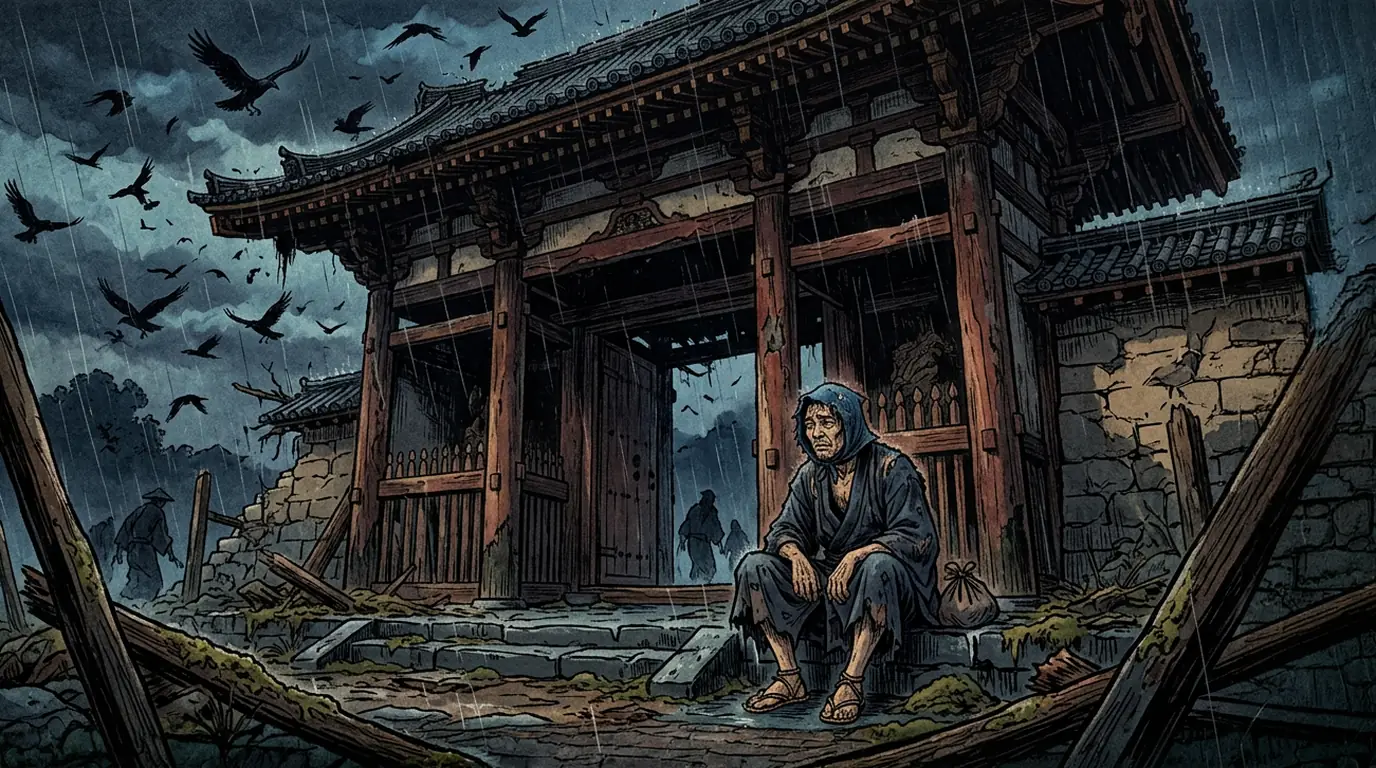
一人の下人が、羅生門の下で雨やみを待っていた。
A servant was waiting under the Rashōmon gate for the rain to stop.
-
市女笠や揉烏帽子いちめがさやもみえぼし
Meaning: (here) women and men — people pictured by the hats they wear
Literal: women's broad travel hats and soft court caps
羅生門が、朱雀大路にある以上は、この男のほかにも、雨やみをする市女笠や揉烏帽子が、もう二三人はありそうなものである。
Since the Rashōmon stands on Suzaku Avenue, you would expect two or three other people — women in broad hats, men in soft caps — to be sheltering there from the rain as well.
-
Old-style
云ういう
Meaning: old spelling of 言う ("to say; to be called")
何故かと云うと、この二三年、京都には、地震とか辻風とか火事とか饑饉とか云う災がつづいて起った。
The reason is that for the past two or three years, Kyoto had been struck by one disaster after another — earthquakes, whirlwinds, fires, and famines.
-
Idiom
一通りではないひととおりではない
Meaning: extraordinary; far beyond the usual (here: the city was in terrible ruin)
Literal: not of the ordinary kind
そこで洛中のさびれ方は一通りではない。
So the capital had fallen into a state of ruin far beyond the ordinary.
-
Idiom
〜をよい事にするをよいことにする
Meaning: to take advantage of (a situation)
Literal: to treat (it) as a good thing
するとその荒れ果てたのをよい事にして、狐狸が棲む。
Taking advantage of its ruined state, foxes and badgers came to live there.
-
胡麻をまいたようにごまをまいたように
Meaning: (clearly visible) like scattered sesame seeds — tiny black dots across the sky
Literal: as if sesame seeds had been scattered
ことに門の上の空が、夕焼けであかくなる時には、それが胡麻をまいたようにはっきり見えた。
Especially when the sky above the gate glowed red at sunset, the crows stood out clearly, like scattered sesame seeds.
-
Sound & mimetic word
ぼんやりぼんやり
Meaning: absent-mindedly; vacantly
下人は七段ある石段の一番上の段に、洗いざらした紺の襖の尻を据えて、右の頬に出来た、大きな面皰を気にしながら、ぼんやり、雨のふるのを眺めていた。
The servant sat on the top of the seven stone steps in his faded blue jacket, fussing over a large pimple on his right cheek as he gazed vacantly at the falling rain.
-
Idiom
当てがないあてがない
Meaning: to have no plan; to have nothing to count on
Literal: there is no aim
しかし、下人は雨がやんでも、格別どうしようと云う当てはない。
But even when the rain stopped, the servant had no particular plan for what to do.
-
Idiom
暇を出すひまをだす
Meaning: to dismiss (a servant); (passive 暇を出される) to be let go
Literal: to give (someone) free time
所がその主人からは、四五日前に暇を出された。
But four or five days earlier, his master had let him go.
-
Idiom
途方に暮れるとほうにくれる
Meaning: to be at a loss; to not know what to do
Literal: to be left in the dark on one's way
だから「下人が雨やみを待っていた」と云うよりも「雨にふりこめられた下人が、行き所がなくて、途方にくれていた」と云う方が、適当である。
So rather than saying "the servant was waiting for the rain to stop," it would be more accurate to say "the servant, shut in by the rain with nowhere to go, was at a loss."
-
Old-style
少からずすくなからず
Meaning: not a little; considerably
その上、今日の空模様も少からず、この平安朝の下人の Sentimentalisme に影響した。
On top of that, the weather that day had no small effect on the gloomy mood of this Heian-era servant.
-
Old-style
申の刻下りさるのこくさがり
Meaning: past the hour of the Monkey — a little after 4 p.m. (old way of telling the time)
申の刻下りからふり出した雨は、いまだに上るけしきがない。
The rain, which had begun a little after four in the afternoon, still showed no sign of letting up.
-
Idiom
〜けしきがないけしきがない
Meaning: to show no sign of ... (here: the rain shows no sign of letting up)
Literal: there is no look of ...
申の刻下りからふり出した雨は、いまだに上るけしきがない。
The rain, which had begun a little after four in the afternoon, still showed no sign of letting up.
-
Idiom
何をおいてもなにをおいても
Meaning: before anything else; above all
Literal: putting everything else aside
そこで、下人は、何をおいても差当り明日の暮しをどうにかしようとして――云わばどうにもならない事を、どうにかしようとして、とりとめもない考えをたどりながら、さっきから朱雀大路にふる雨の音を、聞くともなく聞いていたのである。
So, trying above all to do something about how he would live tomorrow — trying, so to speak, to do something about what could not be helped — the servant followed his rambling thoughts, and for some time he had been half-listening to the sound of the rain falling on Suzaku Avenue.
-
Idiom
とりとめもないとりとめもない
Meaning: rambling; going nowhere (of thoughts or talk)
Literal: with nothing to hold it together
そこで、下人は、何をおいても差当り明日の暮しをどうにかしようとして――云わばどうにもならない事を、どうにかしようとして、とりとめもない考えをたどりながら、さっきから朱雀大路にふる雨の音を、聞くともなく聞いていたのである。
So, trying above all to do something about how he would live tomorrow — trying, so to speak, to do something about what could not be helped — the servant followed his rambling thoughts, and for some time he had been half-listening to the sound of the rain falling on Suzaku Avenue.
-
Sound & mimetic word
ざあっとざあっと
Meaning: whoosh — the rushing sound of heavy rain
雨は、羅生門をつつんで、遠くから、ざあっと云う音をあつめて来る。
The rain wrapped around the Rashōmon and gathered its rushing roar from far away.
-
Idiom
手段を選ぶしゅだんをえらぶ
Meaning: to be choosy about the means; (選ばない) to do whatever it takes
Literal: to choose the means
どうにもならない事を、どうにかするためには、手段を選んでいる遑はない。
To do something about what could not be helped, there was no time to be choosy about the means.
-
Old-style
饑死うえじに
Meaning: death from starvation (old spelling of 飢え死に)
選んでいれば、築土の下か、道ばたの土の上で、饑死をするばかりである。
If he were choosy, he would only starve to death at the foot of an earthen wall or on the ground by the roadside.
-
犬のようにいぬのように
Meaning: (thrown away) like a dog — with no respect at all
そうして、この門の上へ持って来て、犬のように棄てられてしまうばかりである。
And then he would only be carried up to this gate and thrown away like a dog.
-
Idiom
かたをつけるかたをつける
Meaning: to settle (a matter); to bring (it) to an end
下人は、手段を選ばないという事を肯定しながらも、この「すれば」のかたをつけるために、当然、その後に来る可き「盗人になるよりほかに仕方がない」と云う事を、積極的に肯定するだけの、勇気が出ずにいたのである。
Even while the servant accepted that he would not be choosy about the means, he still lacked the courage to go further and accept what had to follow if he was to settle that "if" — that there was nothing else to do but become a thief.
-
Idiom
息を殺すいきをころす
Meaning: to hold one's breath (so as not to be heard)
Literal: to kill one's breath
羅生門の楼の上へ出る、幅の広い梯子の中段に、一人の男が、猫のように身をちぢめて、息を殺しながら、上の容子を窺っていた。
Halfway up the wide ladder that led to the tower of the Rashōmon, a man was crouching like a cat, holding his breath and watching what was going on above.
-
Idiom
高を括るたかをくくる
Meaning: to take (something) for granted; to assume it will be easy
Literal: to tie up the amount
下人は、始めから、この上にいる者は、死人ばかりだと高を括っていた。
From the start, the servant had taken it for granted that there would be nothing up there but dead bodies.
-
Idiom
ただの者ではないただのものではない
Meaning: no ordinary person
Literal: not just a person
この雨の夜に、この羅生門の上で、火をともしているからは、どうせただの者ではない。
Anyone who was lighting a fire up on the Rashōmon on a rainy night like this was surely no ordinary person.
-
守宮のようにやもりのように
Meaning: like a gecko — creeping silently along
下人は、守宮のように足音をぬすんで、やっと急な梯子を、一番上の段まで這うようにして上りつめた。
Moving without a sound, like a gecko, the servant at last crawled all the way up the steep ladder to the top step.
-
Idiom
足音をぬすむあしおとをぬすむ
Meaning: to move without making a sound; to tiptoe
Literal: to steal one's footsteps
下人は、守宮のように足音をぬすんで、やっと急な梯子を、一番上の段まで這うようにして上りつめた。
Moving without a sound, like a gecko, the servant at last crawled all the way up the steep ladder to the top step.
-
土を捏ねて造った人形のようにつちをこねてつくったにんぎょうのように
Meaning: like dolls made of kneaded clay — lifeless
そうして、その死骸は皆、それが、かつて、生きていた人間だと云う事実さえ疑われるほど、土を捏ねて造った人形のように、口を開いたり手を延ばしたりして、ごろごろ床の上にころがっていた。
And the bodies lay scattered on the floor like dolls made of kneaded clay, some with their mouths open, some with their arms stretched out — so lifeless that one could even doubt they had ever been living people.
-
Sound & mimetic word
ごろごろごろごろ
Meaning: (lying) scattered about; strewn around
そうして、その死骸は皆、それが、かつて、生きていた人間だと云う事実さえ疑われるほど、土を捏ねて造った人形のように、口を開いたり手を延ばしたりして、ごろごろ床の上にころがっていた。
And the bodies lay scattered on the floor like dolls made of kneaded clay, some with their mouths open, some with their arms stretched out — so lifeless that one could even doubt they had ever been living people.
-
猿のようなさるのような
Meaning: monkey-like (small, wrinkled and hunched)
檜皮色の着物を着た、背の低い、痩せた、白髪頭の、猿のような老婆である。
It was a short, thin, white-haired old woman, like a monkey, in a kimono the color of cypress bark.
-
Old-style
六分の恐怖と四分の好奇心ろくぶのきょうふとしぶのこうきしん
Meaning: six parts fear and four parts curiosity (分 = one tenth)
下人は、六分の恐怖と四分の好奇心とに動かされて、暫時は呼吸をするのさえ忘れていた。
Moved by six parts fear and four parts curiosity, the servant for a while even forgot to breathe.
-
Idiom
頭身の毛も太るとうしんのけもふとる
Meaning: (so frightened that) one's hair stands on end — a phrase quoted from an old tale
Literal: even the hair of one's head and body grows thick
旧記の記者の語を借りれば、「頭身の毛も太る」ように感じたのである。
To borrow the words of the old chronicle, he felt as if "the hair on his head and body grew thick" — his hair stood on end.
-
猿の親が猿の子の虱をとるようにさるのおやがさるのこのしらみをとるように
Meaning: like a mother monkey picking lice from her baby — carefully, one by one
すると老婆は、松の木片を、床板の間に挿して、それから、今まで眺めていた死骸の首に両手をかけると、丁度、猿の親が猿の子の虱をとるように、その長い髪の毛を一本ずつ抜きはじめた。
Then the old woman stuck the piece of pine wood between the floorboards, put both hands on the head of the body she had been gazing at, and, just like a mother monkey picking lice from her baby, began to pull out its long hair one strand at a time.
-
Idiom
語弊があるごへいがある
Meaning: (saying it that way) may be misleading
Literal: there is a fault in the words
――いや、この老婆に対すると云っては、語弊があるかも知れない。
— No, to say "toward this old woman" may be misleading.
-
弩にでも弾かれたようにいしゆみにでもはじかれたように
Meaning: as if shot from a crossbow — with a sudden leap
老婆は、一目下人を見ると、まるで弩にでも弾かれたように、飛び上った。
The moment the old woman saw the servant, she leapt up as if shot from a crossbow.
-
Old-style
おのれおのれ
Meaning: (as a curse) you wretch! — rough and old-fashioned
「おのれ、どこへ行く。」
"You wretch! Where do you think you're going?"
-
Idiom
骨と皮ばかりほねとかわばかり
Meaning: nothing but skin and bone
Literal: only bone and skin
丁度、鶏の脚のような、骨と皮ばかりの腕である。
It was an arm of nothing but skin and bone, just like a chicken's leg.
-
Sound & mimetic word
わなわなわなわな
Meaning: trembling; shaking (with fear or anger)
両手をわなわなふるわせて、肩で息を切りながら、眼を、眼球が眶の外へ出そうになるほど、見開いて、唖のように執拗く黙っている。
Her hands trembling, panting with heaving shoulders, her eyes open so wide that they almost popped out of their sockets, she kept stubbornly silent, as if unable to speak.
-
Idiom
肩で息を切るかたでいきをきる
Meaning: to pant hard, with heaving shoulders
Literal: to cut one's breath with the shoulders
両手をわなわなふるわせて、肩で息を切りながら、眼を、眼球が眶の外へ出そうになるほど、見開いて、唖のように執拗く黙っている。
Her hands trembling, panting with heaving shoulders, her eyes open so wide that they almost popped out of their sockets, she kept stubbornly silent, as if unable to speak.
-
Old-style
己おれ
Meaning: I; me (rough, masculine)
「己は検非違使の庁の役人などではない。
"I'm no officer of the police bureau.
-
鴉の啼くようなからすのなくような
Meaning: (a voice) like a crow's caw — harsh and croaking
その時、その喉から、鴉の啼くような声が、喘ぎ喘ぎ、下人の耳へ伝わって来た。
Then, from that throat, a voice like a crow's caw reached the servant's ears between her gasps.
-
Old-style
思うたのじゃおもうたのじゃ
Meaning: = 思ったのだ ("I thought (I would) ...") — old people's speech in old stories
「この髪を抜いてな、この髪を抜いてな、鬘にしようと思うたのじゃ。」
"I was pulling out this hair, pulling out this hair, to make a wig, you see."
-
Old-style
存外ぞんがい
Meaning: unexpectedly; more than one expected
下人は、老婆の答が存外、平凡なのに失望した。
The servant was disappointed that the old woman's answer was so unexpectedly ordinary.
-
蟇のつぶやくようなひきのつぶやくような
Meaning: (a voice) like a toad muttering — low and croaky
老婆は、片手に、まだ死骸の頭から奪った長い抜け毛を持ったなり、蟇のつぶやくような声で、口ごもりながら、こんな事を云った。
Still holding in one hand the long hair she had taken from the body's head, the old woman mumbled in a voice like a toad's mutter and said something like this.
-
Old-style
往ぬいぬ
Meaning: to go (away) — old word
現在、わしが今、髪を抜いた女などはな、蛇を四寸ばかりずつに切って干したのを、干魚だと云うて、太刀帯の陣へ売りに往んだわ。
Why, this woman whose hair I just pulled used to cut snakes into strips about four inches long, dry them, and go and sell them at the guards' quarters, calling them dried fish.
-
Old-style
〜なんだなんだ
Meaning: = 〜なかった ("did not ...") — old negative past
疫病にかかって死ななんだら、今でも売りに往んでいた事であろ。
If she hadn't caught the plague and died, she'd probably still be going there to sell them.
-
Idiom
大目に見るおおめにみる
Meaning: to overlook; to let (someone) off
Literal: to look with a big eye
じゃて、その仕方がない事を、よく知っていたこの女は、大方わしのする事も大目に見てくれるであろ。」
So this woman, who knew well that there was no other way, will most likely overlook what I do too."
-
Old-style
引剥ひはぎ
Meaning: robbing someone of their clothes; highway robbery
「では、己が引剥をしようと恨むまいな。
"Then you won't blame me for robbing you of your clothes, will you?
-
Idiom
またたく間にまたたくまに
Meaning: in the blink of an eye
Literal: in the time of a blink
下人は、剥ぎとった檜皮色の着物をわきにかかえて、またたく間に急な梯子を夜の底へかけ下りた。
With the cypress-bark kimono he had stripped from her under his arm, the servant rushed down the steep ladder into the depths of the night in the blink of an eye.
-
夜の底よるのそこ
Meaning: the depths of the night; deep darkness
Literal: the bottom of the night
下人は、剥ぎとった檜皮色の着物をわきにかかえて、またたく間に急な梯子を夜の底へかけ下りた。
With the cypress-bark kimono he had stripped from her under his arm, the servant rushed down the steep ladder into the depths of the night in the blink of an eye.
-
Old-style
黒洞々たるこくとうとうたる
Meaning: pitch-black and cavernous (literary)
外には、ただ、黒洞々たる夜があるばかりである。
Outside there was nothing but the pitch-black, cavernous night.