
Part 1 · Commentary
Commentary 2
Two hunters and a restaurant in the mountains
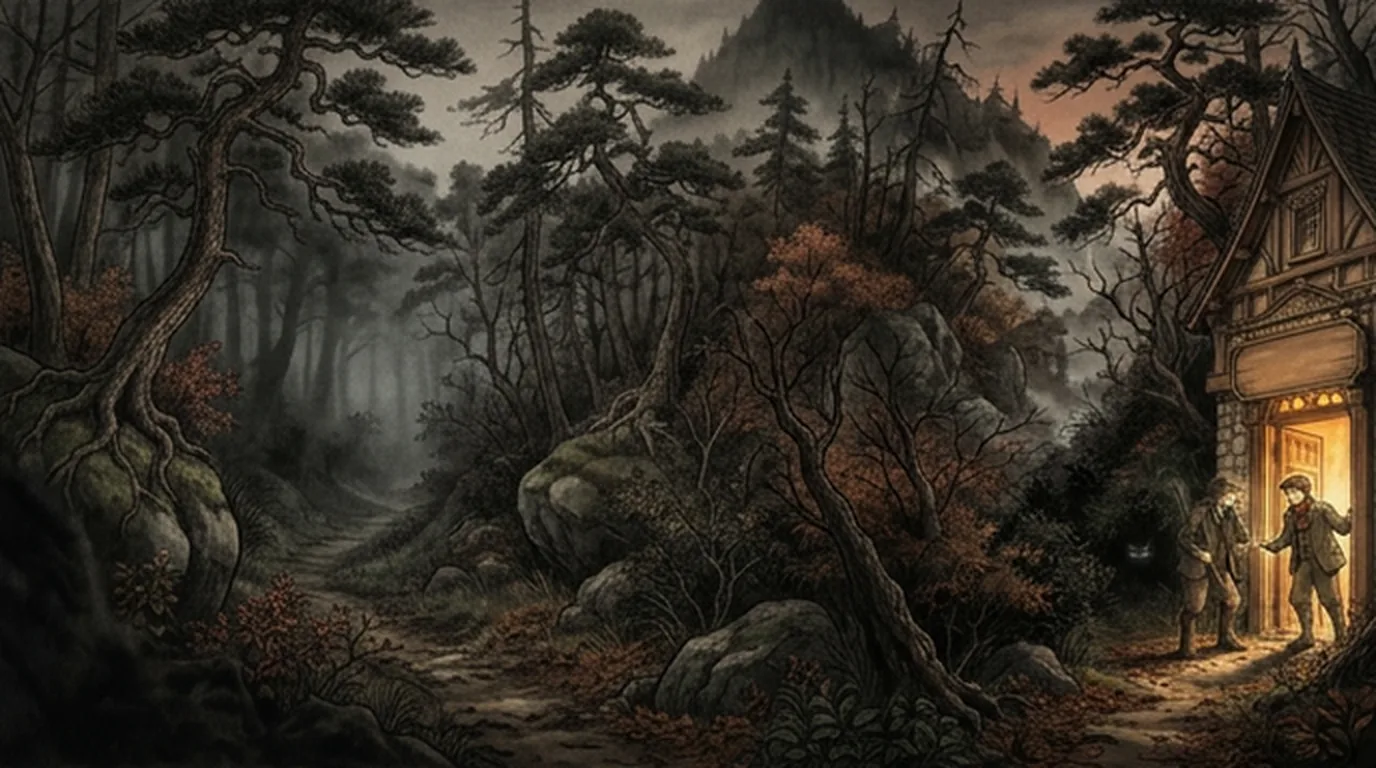
二人の若い紳士が、東京から山へ狩りに来ました。ぴかぴかの鉄砲をかつぎ、白熊のような犬を二匹つれています。ところが、鳥もけものも一匹もいません。案内の猟師とははぐれ、犬は二匹とも、めまいを起こし、泡を吐いて死んでしまいます。そのとき二人が口にしたのは、二千四百円の損害だ、二千八百円の損害だ、というお金の話でした。
Two young gentlemen came from Tokyo to the mountains to hunt. They carry shiny guns on their shoulders and have two dogs with them, dogs like polar bears. But there is not a single bird or animal. They get separated from the hunter who was guiding them, and both dogs get dizzy, foam at the mouth and die. What the two men said then was all about money: "That's a loss of 2,400 yen," "That's a loss of 2,800 yen."
道がわからなくなり、おなかもすいてきたとき、うしろに西洋料理店が現れます。名前は「山猫軒」。中に入ると、扉がいくつも続いていて、そのたびに注文が書いてあります。この店は注文の多い料理店ですから、どうかご承知ください、と。
When they have lost their way and are getting hungry too, a Western restaurant appears behind them. Its name is "Wildcat House." Inside, there is one door after another, and each time an order is written there. "This is a restaurant of many orders, so please understand that," it says.
髪をとかして、靴の泥を落とすこと。鉄砲を置くこと。帽子とコートと靴を脱ぐこと。眼鏡や財布など、金属のものをはずすこと。二人はそのたびに、うまい理由を考えます。作法のきびしい店なんだ。鉄砲を持ってものを食べる人はいないからね。きっと、よほど偉い人が来ているんだ。
Comb your hair and get the mud off your shoes. Put down your guns. Take off your hats, coats and shoes. Take off anything made of metal, such as glasses and wallets. Each time, the two men think of a good reason. "It's a restaurant with strict manners." "Nobody eats with a gun in his hands, after all." "Surely some very important person is here."
Commentary 3
Cream, salt, and the truth
注文はまだ続きます。クリームを顔や手足に塗ること。頭に香水をふりかけること。その香水は、お酢のようなにおいがしました。そして最後の扉には、こう書いてあります。からだじゅうに、つぼの中の塩を、たくさんよくもみこんでください。
The orders still go on. Spread cream on your face, hands and feet. Sprinkle perfume on your head. That perfume smelled like vinegar. And on the last door, this is written: "Please rub plenty of the salt in the pot well into your whole body."
二人はここで、やっと気がつきます。注文をしているのは、店のほうでした。料理を食べさせる店ではなく、来た人を料理にして食べる店だったのです。うしろの扉は、もう開きません。かぎ穴からは、青い目玉が二つ、こちらをのぞいています。二人は、ふるえて泣くことしかできませんでした。
Here, at last, the two men realize. The one giving the orders was the restaurant. It was not a restaurant that serves food to people; it was a restaurant that makes the people who come into food and eats them. The door behind them will not open anymore. Through the keyholes, two blue eyeballs are peering at them. The two men could do nothing but tremble and cry.
そのとき、死んだはずのあの二匹の犬が、扉をやぶって飛びこんできます。奥の暗やみで、にゃあお、という声がしました。店はけむりのように消え、二人は草の中に立っていました。猟師も戻ってきて、二人は東京へ帰ります。けれども、紙くずのようにくしゃくしゃになった顔だけは、もうもとに戻りませんでした。
Just then, those two dogs, which should have been dead, break through the door and come jumping in. In the darkness at the back, there was a cry of "Nyaao." The restaurant vanished like smoke, and the two men were standing in the grass. The hunter comes back too, and the two men go home to Tokyo. But their faces, crumpled up like waste paper, never went back to the way they were.
Commentary 4
Three things to notice
読みどころを三つ挙げます。
Here are three things to notice.
一つ目は、題名です。「注文の多い料理店」と聞けば、客がたくさん注文する、人気の店だと思います。二人もそう読みました。なかなかはやってるんだ、と。同じ言葉が、最後にはまったく逆の意味になります。
The first is the title. When you hear "The Restaurant of Many Orders," you think it is a popular restaurant where customers order a lot. The two men read it that way too. "It's doing pretty well," they say. In the end, the same words come to mean exactly the opposite.
二つ目は、二人の理由づけです。おかしな注文が出るたびに、二人は自分に都合のいい説明をつけます。クリームは、肌のひび割れを防ぐため。金属をはずすのは、料理に電気を使うから。お酢のにおいは、店の人がまちがえたから。疑うきっかけは何度もあるのに、二人は一度も立ち止まりません。
The second is the way the two men find reasons. Every time a strange order comes up, they give it an explanation that suits them. The cream is to keep their skin from cracking. Taking off metal is because electricity is used in the cooking. The smell of vinegar is because someone at the restaurant made a mistake. They have chance after chance to become suspicious, yet the two men never stop even once.
三つ目は、風の音です。店が現れる前に、風がどうと吹いてきて、草はざわざわ、木の葉はかさかさ、木はごとんごとんと鳴ります。店が消えたあとにも、まったく同じ文がもう一度出てきます。この二つの風のあいだだけ、二人は別の世界にいたのかもしれません。
The third is the sound of the wind. Before the restaurant appears, the wind comes blowing with a roar, the grass rustles, the leaves rattle, and the trees thump and thud. After the restaurant has vanished, exactly the same sentence appears once more. Perhaps it was only between these two winds that the two men were in another world.
賢治はこの作品を、村の子どもたちが、都会の文明とわがままな人たちに対して持つ反感だ、と説明しています。では、こわい思いをした二人は、東京に帰って変わったのでしょうか。それとも、何も変わらなかったのでしょうか。後半は、この問いを二人で話してみます。
Kenji explains this story as the resentment that village children feel toward the civilization of the city and its selfish people. So then, did the two men, after their frightening experience, change when they went back to Tokyo? Or did nothing change at all? In the second half, two people talk this question over.
Part 2 · Conversation: Mio and Ken
Conversation 1
Did the two men change?
ここからは二人で話します。ミオです。
From here on, it's the two of us. I'm Mio.
ケンです。さっきの問い、ミオはどう思う?あの二人、変わったのかな。
And I'm Ken. That question just now, what do you think, Mio? Did those two change, I wonder?
変わってないと思う。何も学んでない。
I don't think they've changed. They haven't learned anything.
僕は、変わったと思うんだけど。
I think they did change, though.
えっ、どこが?
What? In what way?
だって、顔がもとに戻らないんだよ。東京に帰っても、お湯に入っても。
I mean, their faces don't go back to normal. Not when they go back to Tokyo, and not when they get in a hot bath.
戻らないね。
No, they don't.
鏡を見るたびに、あの店を思い出す。忘れたくても忘れられない。
Every time they look in the mirror, they remember that restaurant. They can't forget it even if they want to.
思い出すのと、変わるのは、ちがうよ。
Remembering and changing are different things.
きびしいなあ。
You're strict.
最後のところ、よく読んで。帰り道に山鳥を買ってるの。
Read the last part carefully. On the way home, they buy mountain pheasants.
十円だけ買って帰る、ってあるね。
It says they buy just ten yen's worth and go home, doesn't it?
あれ、最初に言ってたとおりなんだよ。何もとれなかったら、買って帰ればいい、って。
That's just what they said at the start. "If we don't get anything, we can just buy some and go home."
あ、本当だ。
Oh, you're right.
食べられそうになったあとで、まだ、狩りがうまくいったふりをして東京に帰るんだよ。
After they've nearly been eaten, they still go back to Tokyo pretending the hunt went well.
それは、変わってないね。
That is not changing, is it?
でしょ。
Right?
Conversation 2
The dogs they counted in money
でも、犬のことはどう?
But what about the dogs?
犬?
The dogs?
犬が死んだとき、二人はお金の話しかしなかった。二千四百円の損害だ、って。
When the dogs died, the two of them talked about nothing but money. "That's a loss of 2,400 yen."
ひどいよね。もう一人は、ぼくは二千八百円の損害だ、って。
Awful, isn't it? And the other one says, "For me it's a loss of 2,800 yen."
高いほうを言って、ちょっと勝ってる。
He names the higher price, so he wins a little.
しかも、くやしそうに言うの。
And on top of that, he says it as if he's annoyed.
その犬に、命を助けられたんだよ。お金で数えていた犬に。
Those dogs saved their lives. The dogs they had counted in money.
そうだね。
That's true.
助けられた人は、もう前と同じ目で犬を見られないと思う。
I think someone who has been saved can't look at dogs with the same eyes as before.
でも、ありがとう、とは書いてないよ。
But it doesn't say "thank you."
書いてないか。
It doesn't, does it?
書いてない。団子を食べて、山鳥を買って、帰るだけ。
It doesn't. They eat the dumplings, buy the pheasants, and go home. That's all.
作者は、わざと書かなかったのかな。
Did the author leave it out on purpose, I wonder?
わたしはそう思う。顔だけが変わって、中は何も変わらない、という話。
I think so. It's a story where only their faces change, and nothing changes inside.
僕は逆に読んだ。中で起きたことが、顔に出てしまった。
I read it the opposite way. What happened inside came out on their faces.
なるほど。それはそれで、こわい読み方だね。
I see. That's a scary way to read it, in its own way.
Conversation 3
Which door would you stop at?
ところで、ミオなら、どの扉でおかしいと思う?
By the way, Mio, at which door would you think something was strange?
鉄砲を置いてください、のところ。
At "Please put down your guns."
早いね。
That's early.
山の中で、鉄砲を手放すんだよ。わたしはそこで帰る。
You're letting go of your gun in the middle of the mountains. I'd go home right there.
僕は、クリームまで行くと思う。
I think I'd go as far as the cream.
塗っちゃうの?
You'd put it on?
おなかがすいてるんだよ。あと少しで食べられると思ったら、理由なんていくらでも作れる。
I'd be hungry, you know. If I thought I could eat in just a little while, I could make up any number of reasons.
二人もそうだったね。偉い人が来てるんだ、って。
The two men were like that too. "Some important person is here."
しかも、残ったクリームをこっそり食べてる。
And on top of that, they secretly eat the cream that was left.
食べてた。顔に塗るふりをして。
They did. While pretending to put it on their faces.
自分が食べられる準備をしながら、つまみ食いをしてる。
They're getting themselves ready to be eaten, and sneaking a taste at the same time.
そこだけは、ちょっとかわいい。
That's the one part that's a little cute.
店のほうも、少し間が抜けてるよね。
The restaurant's side is a bit foolish too, isn't it?
扉の中の、こそこそ話す声でしょ。親分の書き方がまずい、って文句を言ってる。
You mean the voices whispering inside the door, right? They're complaining that the boss's way of writing was bad.
いろいろ注文が多くてうるさかったでしょう、なんて書くからだ、って。
"It's because he wrote things like 'All these orders must have been a bother,'" they say.
あやまらなければ、最後までうまくいったのに。
If he hadn't apologized, it would have gone well right to the end.
ていねいすぎて失敗するんだ。
He fails because he's too polite.
それに、どうせ自分たちは骨も分けてもらえない、って。
And then they say, "We won't even get a share of the bones anyway."
あっちにも、上と下があるんだね。
So there's a top and a bottom over there too.
山猫軒の中も、なかなかたいへんなの。
Things are pretty hard inside Wildcat House too.
Conversation 4
The sound of the wind
風の音には気がついた?
Did you notice the sound of the wind?
風がどうと吹いてきて、のところ?
The part that goes "the wind comes blowing with a roar"?
そう。店に入る前と、店が消えたあとに、まったく同じ文が出てくる。
Yes. Before they go into the restaurant and after the restaurant vanishes, exactly the same sentence appears.
声に出して読みたくなるよね。ざわざわ、かさかさ、ごとんごとん。
It makes you want to read it out loud, doesn't it? Zawa-zawa, kasa-kasa, goton-goton.
日本語を勉強している人には、音の言葉がたくさんあって楽しいと思う。
For people who are studying Japanese, I think it's fun because there are so many sound words.
がたがた、ぺたぺた、きょろきょろ。
Gata-gata, peta-peta, kyoro-kyoro.
で、ミオは変わらない?二人は何も学んでない、のまま?
So, Mio, you're not changing? Still "the two men haven't learned anything"?
変わらない。来年もまた、ぴかぴかの鉄砲を持って、同じ山に行くと思う。
Not changing. I think next year they'll go to the same mountains again, carrying their shiny guns.
僕は、もう行けないと思うな。あの顔を鏡で見るたびに、足が止まる。
I think they can't go anymore. Every time they see those faces in the mirror, their feet will stop.
聞いているあなたは、どう思うでしょうか。
And you, listening: what do you think?
それでは、また次の作品で。
Well then, see you at the next story.
さようなら。
Goodbye.
Commentary 1
About The Restaurant of Many Orders
山の奥に、りっぱな西洋料理店が一軒、立っています。ガラスの扉には、金色の文字でこう書いてあります。どなたもどうかお入りください。決してご遠慮はありません。おなかをすかせた二人の男は、大よろこびで扉を押しました。
Deep in the mountains stands a fine Western restaurant. On its glass door, these words are written in gold letters: "Everyone, please come in. There is no need to hold back at all." The two hungry men were delighted and pushed the door open.
今回の作品は、宮沢賢治の「注文の多い料理店」です。1924年に、同じ題名の童話集に入って出版されました。賢治が二十八歳のときです。生きているあいだに出した童話集は、この一冊だけでした。
This time, the story is Kenji Miyazawa's "The Restaurant of Many Orders." It was published in 1924, in a collection of children's stories with the same title. Kenji was twenty-eight at the time. It was the only collection of children's stories he brought out while he was alive.
賢治は、東北の岩手で、学校の先生をしながら物語を書いていました。本は千部作られましたが、ほとんどが売れ残りました。賢治は自分で二百部を買い取っています。それが今では、日本でほとんどの人が知っている話になりました。
Kenji wrote stories while working as a school teacher in Iwate, in the Tōhoku region. A thousand copies of the book were made, but most of them were left unsold. Kenji bought two hundred copies himself. Today, it has become a story that almost everyone in Japan knows.