
Grammar Patterns
Grammar patterns found in 注文の多い料理店 (The Restaurant of Many Orders), with examples from the story. JLPT levels are estimates.
-
JLPT N4 estimated
〜ながら
Meaning: "While ...ing": two actions by the same person at the same time.
Form: Verb ます-stem + ながら
In this story
-
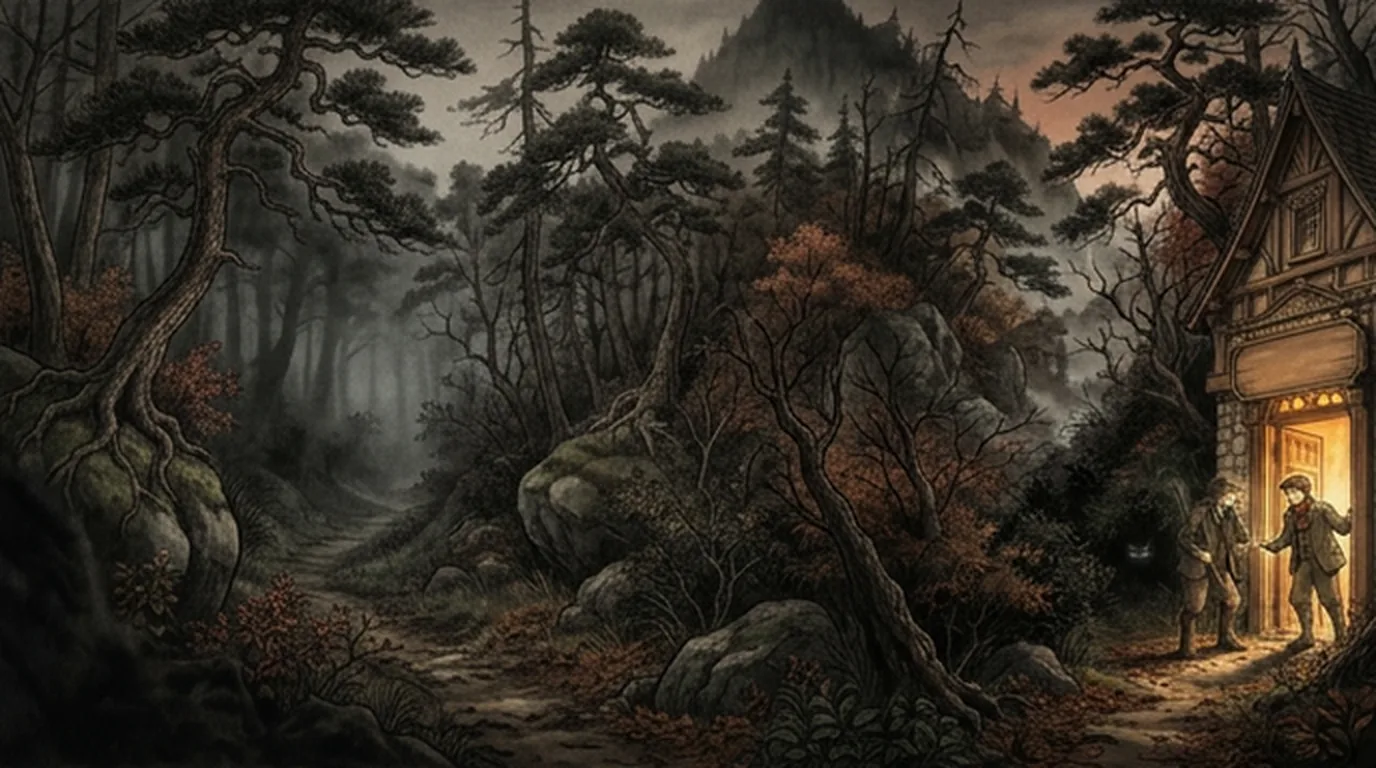
二人の若い紳士が、すっかりイギリスの兵隊のかたちをして、ぴかぴかする鉄砲をかついで、白熊のような犬を二疋つれて、だいぶ山奥の、木の葉のかさかさしたとこを、こんなことを云いながら、あるいておりました。
Two young gentlemen, dressed exactly like British soldiers, with gleaming guns on their shoulders and two dogs like polar bears at their side, were walking deep in the mountains where the dry leaves rustled, saying things like this.
-
はじめの紳士は、すこし顔いろを悪くして、じっと、もひとりの紳士の、顔つきを見ながら云いました。
The first gentleman, looking a little pale, stared at the other gentleman's face and said:
-
-
JLPT N2 estimated
〜たいものだ
Meaning: "I really want to ...": a strong wish. もんだ is the casual form.
Form: Verb ます-stem + たいものだ(たいもんだ)
In this story
-
なんでも構わないから、早くタンタアーンと、やって見たいもんだなあ。」
I don't care what it is — I just want to fire off a bang! at something soon."
-
早くどこか室の中にはいりたいもんだな。」
I'd like to get into a room somewhere soon."
-
-
JLPT N4 estimated
〜たら
Meaning: "If / when ...": a condition, often about one particular case.
Form: Verb た-form + ら
In this story
-
「鹿の黄いろな横っ腹なんぞに、二三発お見舞もうしたら、ずいぶん痛快だろうねえ。
"It would be a real thrill to put two or three shots into a deer's yellow flank.
-
-
JLPT N4 estimated
〜だろう(推量)
Meaning: "Probably ...; I bet ...": the speaker's guess (casual form of でしょう).
Form: Plain form + だろう
In this story
-
くるくるまわって、それからどたっと倒れるだろうねえ。」
It would spin round and round and then fall down with a thud."
-
-
JLPT N4 estimated
〜てしまう
Meaning: Shows that an action is completely finished, often with regret or an unwanted result.
Form: Verb て-form + しまう
In this story
-
案内してきた専門の鉄砲打ちも、ちょっとまごついて、どこかへ行ってしまったくらいの山奥でした。
It was so deep in the mountains that even the professional hunter who had been guiding them got a little lost and wandered off somewhere.
-
早く何か暖いものでもたべて、元気をつけて置かないと、もう途方もないことになってしまうと、二人とも思ったのでした。
Both of them thought that unless they ate something warm soon and got their strength back, things would get terribly bad.
-
-
JLPT N3 estimated
〜くらい(程度)
Meaning: "So ... that ...; to the extent that ...": shows degree with an example.
Form: Plain form + くらい(ぐらい)
In this story
-
案内してきた専門の鉄砲打ちも、ちょっとまごついて、どこかへ行ってしまったくらいの山奥でした。
It was so deep in the mountains that even the professional hunter who had been guiding them got a little lost and wandered off somewhere.
-
-
JLPT N4 estimated
〜てみる
Meaning: "Try ...ing; ... and see".
Form: Verb て-form + みる(見る)
In this story
-
「じつにぼくは、二千四百円の損害だ」と一人の紳士が、その犬の眼ぶたを、ちょっとかえしてみて言いました。
"That's a loss of 2,400 yen for me," said one of the gentlemen, lifting the dog's eyelid a little to look.
-
-
JLPT N4 estimated
〜ようと思う
Meaning: "I think I'll ...; I'm going to ...": the speaker's intention.
Form: Verb volitional form + と思う(とおもう)
In this story
-
「ぼくはもう戻ろうとおもう。」
"I think I'll head back now."
-
-
JLPT N4 estimated
〜し
Meaning: "... and (what's more) ...": lists reasons.
Form: Plain form + し
In this story
-
「さあ、ぼくもちょうど寒くはなったし腹は空いてきたし戻ろうとおもう。」
"Well, I'm getting cold, and I'm getting hungry, so I think I'll head back too."
-
-
JLPT N4 estimated
〜ばいい
Meaning: "All you have to do is ...; you can just ...".
Form: Verb ば-form + いい
In this story
-
なあに戻りに、昨日の宿屋で、山鳥を拾円も買って帰ればいい。」
Oh, never mind — on the way back we can just buy ten yen's worth of pheasants at yesterday's inn and take them home."
-
-
JLPT N2 estimated
〜ようじゃないか
Meaning: "Let's ...!; shall we ...?": a strong invitation or suggestion.
Form: Verb volitional form + じゃないか(ではないか)
In this story
-
では帰ろうじゃないか」
Well then, shall we go back?"
-
-
JLPT N4 estimated
〜ば
Meaning: "If ...": a condition; the result follows when the condition is met.
Form: Verb ば-form (行けば / すれば)
In this story
-
ところがどうも困ったことは、どっちへ行けば戻れるのか、いっこうに見当がつかなくなっていました。
The trouble was, though, that they no longer had any idea which way to go to get back.
-
-
JLPT N4 estimated
〜てくる
Meaning: Something comes toward the speaker, or a change starts and goes on ("it's getting ...").
Form: Verb て-form + くる
In this story
-
風がどうと吹いてきて、草はざわざわ、木の葉はかさかさ、木はごとんごとんと鳴りました。
The wind came roaring, the grass swished, the leaves rustled, and the trees creaked and knocked.
-
-
JLPT N2 estimated
〜てたまらない
Meaning: "Unbearably ...; so ... that one can't stand it".
Form: Verb / い-adj て-form + たまらない
In this story
-
さっきから横っ腹が痛くてたまらないんだ。」
My side has been aching unbearably for a while now."
-
-
JLPT N4 estimated
〜と(発見)
Meaning: "When I did ..., (I found that) ...": what one noticed right after an action.
Form: Verb (plain / polite) + と
In this story
-
その時ふとうしろを見ますと、立派な一軒の西洋造りの家がありました。
Just then, when they happened to look behind them, they saw a splendid Western-style house.
-
ずんずん廊下を進んで行きますと、こんどは水いろのペンキ塗りの扉がありました。
As they went briskly on down the corridor, this time they came to a door painted light blue.
-
-
JLPT N4 estimated
〜じゃないか(念押し)
Meaning: "..., isn't it?; ..., you know": said to the listener to point out something they should already see or know, asking them to agree. (〜ではないか, by contrast, expresses one's own surprise at a discovery.)
Form: Plain form + じゃないか(ではないか / じゃありませんか)
In this story
-
看板にそう書いてあるじゃないか」
It says so right on the sign, doesn't it?"
-
-
JLPT N4 estimated
〜そうだ(様態)
Meaning: "Looks like ...; seems about to ...": based on how something looks or feels.
Form: Verb ます-stem / Adjective stem + そうだ
In this story
-
ぼくはもう何か喰べたくて倒れそうなんだ。」
I'm so hungry I feel like I'm about to collapse."
-
-
JLPT N4 estimated
〜てある
Meaning: The result of someone's action is still there: "has been ...".
Form: Verb (transitive) て-form + ある
In this story
-
そして硝子の開き戸がたって、そこに金文字でこう書いてありました。
A glass door stood there, and on it was written in gold letters:
-
-
JLPT N4 estimated
お〜ください
Meaning: Polite request: "Please ...".
Form: お/ご + Verb ます-stem + ください(下さい)
In this story
-
「どなたもどうかお入りください。
"Everyone, please come in.
-
-
JLPT N4 estimated
〜らしい(推量)
Meaning: "It seems ...; apparently ...": a guess based on what one sees or hears.
Form: Plain form + らしい
In this story
-
「どうもそうらしい。
"It certainly seems that way.
-
-
JLPT N3 estimated
〜というのは
Meaning: "What ... means is ...; (the thing called) ...": introduces a word or phrase to explain it.
Form: Noun / Plain form + というのは
In this story
-
決してご遠慮はありませんというのはその意味だ。」
That's what 'please don't hold back' means."
-
「沢山の注文というのは、向うがこっちへ注文してるんだよ。」
"These 'many orders' are orders they're giving to us!"
-
-
JLPT N3 estimated
〜ようとする
Meaning: "Try to ...; be about to ...".
Form: Verb volitional form + とする(と致す)
In this story
-
そして二人はその扉をあけようとしますと、上に黄いろな字でこう書いてありました。
And as the two were about to open that door, they saw these words written above it in yellow letters:
-
がたがたしながら一人の紳士はうしろの戸を押そうとしましたが、どうです、戸はもう一分も動きませんでした。
Shaking, one of the gentlemen tried to push the door behind them — but what do you know, the door would not move even a fraction.
-
-
JLPT N1 estimated
〜たまえ
Meaning: Old-fashioned, masculine command to an equal or junior: "Do ...".
Form: Verb ます-stem + たまえ
In this story
-
見たまえ、東京の大きな料理屋だって大通りにはすくないだろう」
Look — even the big restaurants in Tokyo aren't often on the main streets, are they?"
-
-
JLPT N5 estimated
〜でしょう(推量)
Meaning: "Probably ...": the narrator's guess.
Form: Plain form + でしょう(でございましょう)
In this story
-
「注文はずいぶん多いでしょうがどうか一々こらえて下さい。」
"There may be quite a lot of orders, but please put up with each one."
-
「いろいろ注文が多くてうるさかったでしょう。
"All these orders must have been a nuisance.
-
-
JLPT N1 estimated
〜や否や
Meaning: "As soon as ...; the moment ...".
Form: Verb (dictionary) + や否や
In this story
-
ブラシを板の上に置くや否や、そいつがぼうっとかすんで無くなって、風がどうっと室の中に入ってきました。
The moment they put the brush down on the board, it blurred hazily and vanished, and a wind came roaring into the room.
-
-
JLPT N1 estimated
〜と見える
Meaning: "It seems (that) ...": a judgment from what one sees (old-fashioned).
Form: Plain form + と見える
In this story
-
「ははあ、何かの料理に電気をつかうと見えるね。
"Aha, it looks like they use electricity for some kind of cooking.
-
-
JLPT N4 estimated
〜かもしれない
Meaning: "Might ...; may ...": possibility.
Form: Plain form + かもしれない(かも知れません)
In this story
-
こんなとこで、案外ぼくらは、貴族とちかづきになるかも知れないよ。」
We might even get to know some aristocrats in a place like this."
-
-
JLPT N3 estimated
〜ふりをする
Meaning: "Pretend to ...".
Form: Verb (plain) / Noun + の + ふりをする
In this story
-
それでもまだ残っていましたから、それは二人ともめいめいこっそり顔へ塗るふりをしながら喰べました。
There was still some left, so each of them secretly ate it while pretending to put it on his face.
-
-
JLPT N3 estimated
〜ところだった
Meaning: "Almost ...; nearly ...": something that nearly happened but didn't.
Form: Verb (dictionary) + ところだった(とこだった)
In this story
-
あぶなく耳にひびを切らすとこだった。
I almost got chapped ears.
-
-
JLPT N2 estimated
〜ところでは
Meaning: "As far as ...; according to what ...": the source of an opinion or information.
Form: Verb (plain) + ところでは
In this story
-
「だからさ、西洋料理店というのは、ぼくの考えるところでは、西洋料理を、来た人にたべさせるのではなくて、来た人を西洋料理にして、食べてやる家とこういうことなんだ。
"That's just it — the way I see it, a 'Western restaurant' isn't a place that serves Western food to people who come, it's a place that turns the people who come into Western food and eats them.
-
-
JLPT N4 estimated
〜てやる
Meaning: Doing something for someone of equal or lower status (or an animal).
Form: Verb て-form + やる
In this story
-
「だからさ、西洋料理店というのは、ぼくの考えるところでは、西洋料理を、来た人にたべさせるのではなくて、来た人を西洋料理にして、食べてやる家とこういうことなんだ。
"That's just it — the way I see it, a 'Western restaurant' isn't a place that serves Western food to people who come, it's a place that turns the people who come into Western food and eats them.
-
-
JLPT N4 estimated
〜ようだ(推量)
Meaning: "It seems ...; looks like ...": a guess based on what one observes.
Form: Plain form + ようだ
In this story
-
塩をもみこまないようだよ。」
It looks like they're not going to rub in the salt."
-
-
JLPT N4 estimated
〜ておく
Meaning: Doing something in advance, or leaving something in a certain state.
Form: Verb て-form + おく(置く)
In this story
-
お皿も洗ってありますし、菜っ葉ももうよく塩でもんで置きました。
The plates are washed, and the greens have already been well rubbed with salt.
-
-
JLPT N4 estimated
〜てあげる
Meaning: Doing something for someone (here with mock politeness).
Form: Verb て-form + あげる
In this story
-
そんならこれから火を起してフライにしてあげましょうか。
Then shall we light a fire now and fry you up instead?
-
-
JLPT N3 estimated
〜ために(原因)
Meaning: "Because of ...; as a result of ...": the cause.
Form: Plain form + ために
In this story
-
二人はあんまり心を痛めたために、顔がまるでくしゃくしゃの紙屑のようになり、お互にその顔を見合せ、ぶるぶるふるえ、声もなく泣きました。
The two were so distressed that their faces became like crumpled wastepaper; they looked at each other, shook and shivered, and cried without a sound.
-
-
JLPT N3 estimated
〜ては
Meaning: "If you (go on) ..., (something bad will happen)": a condition with an unwanted result.
Form: Verb て-form + は
In this story
-
そんなに泣いては折角のクリームが流れるじゃありませんか。
If you cry like that, the cream you went to so much trouble to put on will run, won't it?
-
-
JLPT N3 estimated
〜られる(尊敬)
Meaning: Honorific (尊敬語): the passive form used to show respect for the person doing the action.
Form: Verb passive form(待っていられる / 行かれる)
In this story
-
親方がもうナフキンをかけて、ナイフをもって、舌なめずりして、お客さま方を待っていられます。」
The boss already has his napkin on and his knife in hand, and he's licking his lips, waiting for you, our guests."
-
-
JLPT N4 estimated
受身(〜られる)
Meaning: Passive voice: the subject receives the action.
Form: Verb passive form(追い上げられる / 沈められる)
In this story
-
戸はがたりとひらき、犬どもは吸い込まれるように飛んで行きました。
The door clattered open, and the dogs flew in as if sucked inside.
-
-
JLPT N4 estimated
〜ように(比喩)
Meaning: "Like ...; as if ...": compares something to something else.
Form: Noun + の / Verb (plain) + ように
In this story
-
戸はがたりとひらき、犬どもは吸い込まれるように飛んで行きました。
The door clattered open, and the dogs flew in as if sucked inside.
-
室はけむりのように消え、二人は寒さにぶるぶるふるえて、草の中に立っていました。
The room vanished like smoke, and the two stood in the grass, shivering with cold.
-