
Blog · The Tale of the Bamboo Cutter, Part 1
The Tale of the Bamboo Cutter, Part 1 (3): 4 Expressions
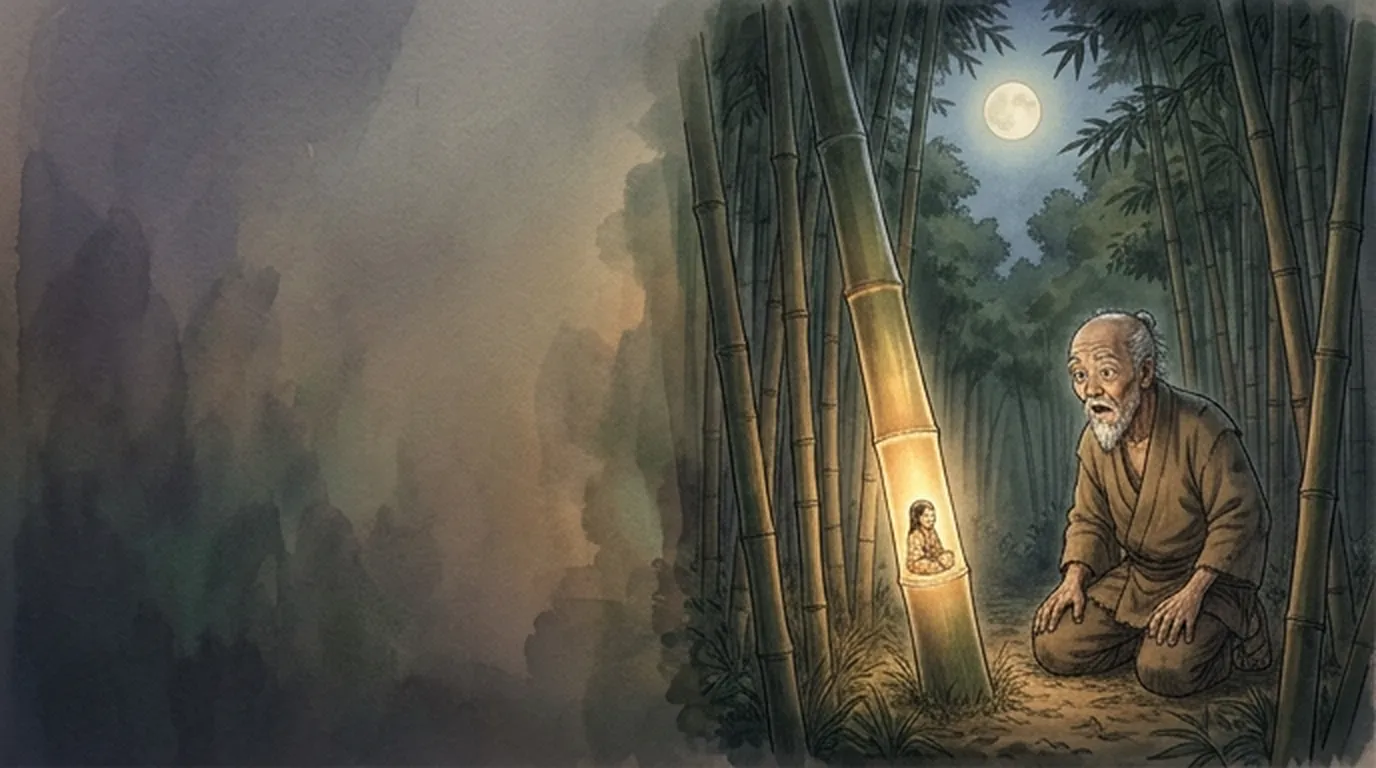
This is the last article on The Tale of the Bamboo Cutter, Part 1. In the last article, the girl grew into the beautiful Kaguya-hime, and word of her spread across the country.
Now the men arrive. Kaguya-hime will not meet any of them, and most give up. Five do not. The old man wants her to marry one of them, but she has her own idea.
1. なんとかして — somehow; by any means
なんとか means "somehow," and して makes it "by doing something, anything." It shows strong determination.
「なんとかしてかぐや姫をお嫁さんにしたい。せめて一目でいいから見てみたい」と思いました。
They thought, "Somehow, I want to make Kaguya-hime my wife. Even just one look at her would be enough."
お嫁さん is "a bride" or "a wife." お嫁さんにする is "to marry (a woman)."
Today:
- なんとかして、今日中にこの仕事を終わらせたい。
I want to finish this job today, one way or another. - なんとかしてください!
Please do something!
Tip: なんとかなる means "it'll work out somehow." It is a very common thing to say when you are worried: 大丈夫、なんとかなるよ。
2. せめて — at least
せめて means "at least" — the smallest thing you hope for when you can't have everything.
せめて一目でいいから見てみたい
"Even just one look would be enough."
一目(ひとめ)is "one look." 〜でいいから means "even just ... is fine." The men can't marry her, so they hope to at least see her.
Today:
- せめて週末くらいは、ゆっくり休みたい。
I want to rest, at least on weekends. - 行けないなら、せめて電話してね。
If you can't come, at least call me.
Tip: せめて often goes with 〜だけでも or 〜くらいは, which also carry the feeling of "at least."
3. 相手にする(あいてにする)— to pay attention to; to deal with
相手 is "the other person" — a partner, an opponent, someone you talk to. 相手にしない means "to ignore" or "not take seriously."
家の人に話しかけても、だれも相手にしてくれません。
Even when they spoke to the people of the house, no one paid them any attention.
〜てくれません adds a feeling of disappointment: they wished someone would listen, but no one did.
Today:
- 子どもの話も、ちゃんと相手にしてあげて。
Take the kids seriously when they talk to you, too. - あんな人は相手にしないほうがいい。
You'd better just ignore people like that.
Tip: 相手 appears in many words: 話し相手(someone to talk to), 結婚相手(marriage partner), 相手チーム(the other team).
4. 〜ものだ — it is natural that ...; that's how things are
〜ものだ after a plain verb states a general truth, what people usually do or should do.
この世では、男の人と女の人は結婚するものです。
"In this world, men and women are supposed to marry."
The old man is over seventy and wants to know his daughter will be taken care of. Kaguya-hime doesn't argue. She sets a test instead: she will marry the man who brings her what she wants to see.
Today:
- 人は変わるものだ。
People change. That's just how it is. - 初めては誰でも緊張するものだよ。
Everyone gets nervous the first time.
Tip: 〜ものだ can also show strong feeling about the past: 子どものころはよく遊んだものだ — "I used to play so much as a kid."
Read it in the story
What will Kaguya-hime ask for? Part 2, "The Five Treasures," will be released on Thursday, October 15.