
Blog · The Tale of the Bamboo Cutter, Part 1
The Tale of the Bamboo Cutter, Part 1 (1): 4 Expressions
The Tale of the Bamboo Cutter(竹取物語)is Japan's oldest surviving story, written more than a thousand years ago. You may know it as the story of Princess Kaguya, from the Studio Ghibli film The Tale of the Princess Kaguya. The original is in classical Japanese, which even Japanese readers cannot read without help. So LITIM Japanese has retold it in easy modern Japanese, in three parts.
This week we read Part 1 in three short articles. The Japanese is at about JLPT N4–N3 level. Today: an old man, a shining stalk of bamboo, and a very small girl.
1. 〜て暮らす(〜てくらす)— to make a living by ...
暮らす means "to live" in the sense of daily life. Verb-て+暮らす tells you how someone makes a living.
毎日、山や野原に入って竹を取り、ざるやかごを作って、それを売って暮らしていました。
Every day he went into the hills and fields, cut bamboo, made baskets, and made his living by selling them.
The old man is poor at the start of the story. Remember that — his life is about to change.
Today:
- 祖父は、野菜を作って暮らしている。
My grandfather makes his living growing vegetables. - 絵を描いて暮らせたらいいな。
It would be great if I could live off my paintings.
Tip: The noun is 暮らし, "way of life." 一人暮らし(ひとりぐらし)means "living alone," a word you will hear a lot in Japan.
2. 〜てみる — to try doing; to go and see
Verb-て+みる means "to try" or "to do something and see what happens."
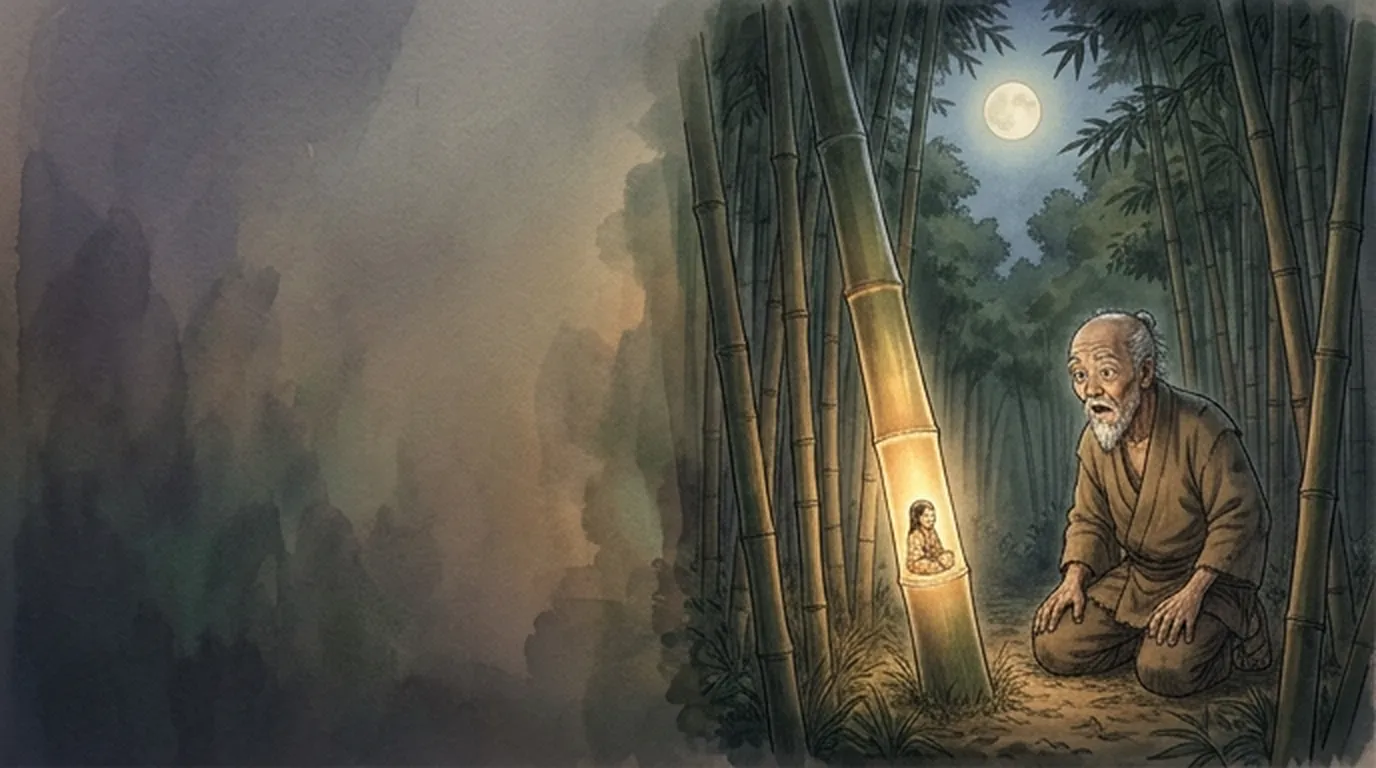
「ふしぎだなあ」と思って近くへ行ってみると、竹の中がぼんやりと光っています。
"How strange," he thought, and when he went closer to see, the inside of the bamboo was glowing softly.
〜てみると ("when I tried...") is very common in stories. It is often followed by a surprise.
Today:
- 新しいカフェに行ってみたら、とてもおいしかった。
I tried the new café, and it was really good. - この服、着てみてもいいですか。
May I try this on?
Tip: In a shop, 〜てみてもいいですか is the natural way to ask to try something: 食べてみても, 触ってみても.
3. そっと — gently; quietly
そっと describes a careful, quiet action, so you don't break or wake anything.
そっと切ってみると、中に小さな女の子が座っていました。
When he gently cut it open, a tiny girl was sitting inside.
She is only three 寸 tall, about nine centimeters. She fits in the palm of his hand.
Today:
- 赤ちゃんが寝ているので、そっとドアを閉めた。
The baby was sleeping, so I closed the door quietly. - 今はそっとしておいてあげよう。
Let's leave him alone for now.
Tip: そっとしておく means "to leave someone alone" when they are sad or upset. It is a kind thing to do.
4. それからというもの — ever since then
それから means "after that." それからというもの is stronger. It means "from that moment on, things were different."
それからというもの、おじいさんが竹を取りに行くと、ふしぎなことが何度も起こりました。
From then on, whenever the old man went to cut bamboo, strange things kept happening.
The strange thing: he keeps finding gold inside the bamboo, between the joints. The poor old man slowly becomes rich.
Today:
- 犬を飼い始めた。それからというもの、毎朝散歩している。
I got a dog. Ever since, I've been walking every morning. - 彼女に会った。それからというもの、毎日が楽しい。
I met her. Ever since then, every day has been fun.
Tip: It is a little dramatic, so it fits stories and personal writing better than business emails.
Read it in the story
Next time: the girl grows up, and her beauty becomes famous across the land.