

Blog · The Restaurant of Many Orders
5 Expressions from The Restaurant of Many Orders
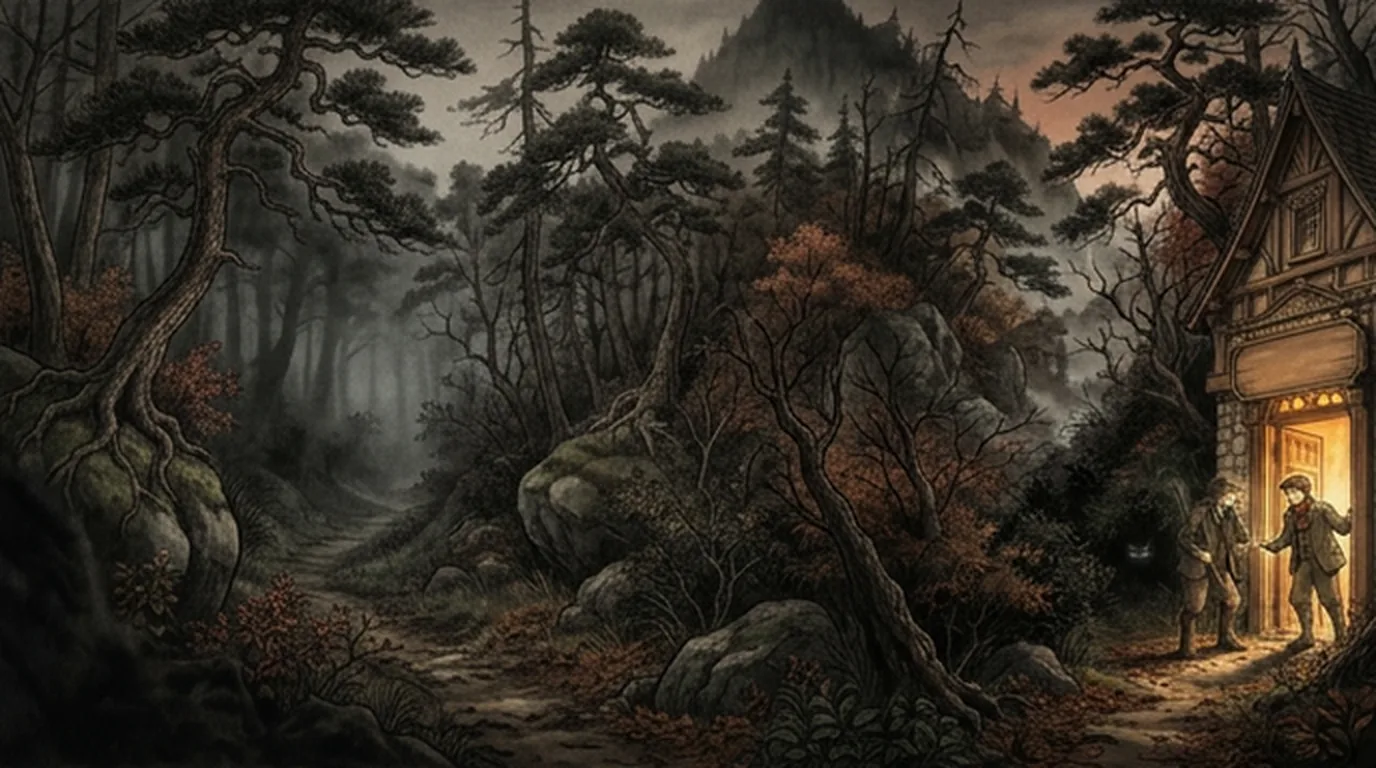
Miyazawa Kenji's The Restaurant of Many Orders (1924) begins with two young gentlemen lost in the mountains. They find an elegant Western restaurant with a sign that says "Please come in," and the list of "orders" on each door gets stranger and stranger. It is a funny, eerie story — and it is full of lively words, especially sound words. Here are five expressions from it, with the line where each one appears and examples of how people use them today.
1. 見当がつかない(けんとうがつかない)— to have no idea
見当 is "a rough aim" or "a guess." If your guess won't even attach to anything, you have no idea at all.
どっちへ行けば戻れるのか、いっこうに見当がつかなくなっていました。
They no longer had the slightest idea which way would take them back.
Today:
- 駅から出たら、どっちが北か見当がつかなかった。
When I came out of the station, I had no idea which way was north. - 彼が何を考えているのか、まったく見当がつかない。
I have absolutely no idea what he's thinking.
Tip: The positive form is 見当をつける, "to make a guess": だいたいの値段の見当をつける (to guess roughly what it costs).
2. 用意周到(よういしゅうとう)— very well prepared
A four-character compound: 用意 "preparation" + 周到 "thorough, covering everything."
ここの主人はじつに用意周到だね。
The owner here really thinks of everything, doesn't he?
The gentlemen say this with admiration. The reader already suspects what the owner is so carefully preparing for.
Today:
- 彼女は用意周到で、旅行には必ず薬と傘を持っていく。
She's always well prepared and never travels without medicine and an umbrella. - 用意周到な計画のおかげで、イベントは問題なく終わった。
Thanks to a carefully prepared plan, the event went off without a problem.
Tip: It works like a な-adjective: 用意周到だ, 用意周到な人.
3. ぎょっと — with a start
The feeling of a sudden, unpleasant surprise — your heart jumps.
こんどというこんどは二人ともぎょっとして
This time, at last, both of them were truly startled.
Today:
- 暗い部屋で急に肩をたたかれて、ぎょっとした。
Someone tapped me on the shoulder in a dark room, and I jumped. - 請求書の金額を見て、ぎょっとした。
I got a shock when I saw the amount on the bill.
Tip: びっくりする can be a happy surprise, too. ぎょっとする is almost always a bad one.
4. がたがた — shaking; rattling
A sound word with two uses: a body shaking hard (from cold or fear), and things rattling.
がたがたがたがた、ふるえだしてもうものが言えませんでした。
They began to shake and shake, and could no longer say a word.
Miyazawa doubles it to がたがたがたがた to show how badly the two men are trembling.
Today:
- 寒くて体ががたがた震えた。
I was so cold that my whole body was shaking. - 古い窓が風でがたがた鳴っている。
The old window is rattling in the wind.
Tip: The story also uses ぶるぶる for shivering. ぶるぶる is a finer, faster shake; がたがた is bigger and heavier.
5. 舌なめずり(したなめずり)— licking one's lips
Licking your lips when you see something delicious — or when you are waiting eagerly for a chance.
親方がもうナフキンをかけて、ナイフをもって、舌なめずりして、お客さま方を待っていられます。
The master already has his napkin on and his knife in hand, and is licking his lips as he waits for you, our dear guests.
This is the moment the two gentlemen — and the reader — finally understand who the meal is.
Today:
- 猫が魚を見て舌なめずりをしている。
The cat is licking its lips at the fish. - おいしそうなケーキを前に、弟は舌なめずりした。
Faced with a delicious-looking cake, my little brother licked his lips.
Read it in the story
Listen for the sound words as you read: かさかさ leaves, ざわざわ grass, ぺたぺた footsteps. Miyazawa uses them to make the forest — and the restaurant — feel alive.
Read The Restaurant of Many Orders · All expressions from this story